





- omer bar
- •
- 6 Min Read
- •
- 7 months ago


Key Points
- Pinterest’s earnings miss was amplified by tariff-driven advertising pullbacks.
- Margin pressure reflects both macro headwinds and increased AI investment.
- Strong user growth offers long-term potential, but near-term visibility remains limited.

Pinterest shares tumbled over 20% on Friday after the company delivered weaker-than-expected fourth-quarter results and flagged tariff-related disruptions to its advertising business. The selloff underscores how geopolitical trade tensions are increasingly filtering into corporate earnings, particularly for digital platforms reliant on retail ad budgets. While user growth remains robust, investors reacted sharply to softer revenue, margin pressure, and cautious forward guidance.
Tariff Shock Hits Advertising Revenue
Pinterest reported fourth-quarter revenue of $1.32 billion, slightly below analyst expectations of $1.33 billion. Net income plunged 85% year-over-year to $277 million from $1.85 billion, while adjusted EBITDA of $541.5 million also missed projections of $550 million. First-quarter guidance of $951 million to $971 million in revenue came in below consensus estimates of $980 million, further dampening sentiment.
CEO Bill Ready attributed the underperformance to what he described as an “exogenous shock” related to tariffs. Large retailers — a significant segment of Pinterest’s advertiser base — pulled back on spending as trade-related uncertainty weighed on margins and inventory strategies. Pinterest’s higher exposure to large retailers relative to peers amplified the impact, particularly in North America and Europe.
For investors, the episode highlights the second-order effects of tariffs. Even companies not directly importing goods can feel the ripple effects when clients cut discretionary expenses such as marketing.
Margins Under Pressure Amid Strategic Shift
Beyond macro pressures, Pinterest is undergoing internal restructuring. In January, the company announced plans to lay off less than 15% of its workforce and reduce office space, reallocating resources toward artificial intelligence initiatives. Management emphasized a pivot toward AI-powered products and performance-driven advertising tools.
However, increased investment in AI and rebuilding its go-to-market sales function are weighing on margins in the near term. Citi downgraded the stock from Buy to Neutral, citing limited visibility from large advertisers and operational challenges as Pinterest broadens its advertiser base. Goldman Sachs analysts similarly warned that revenue performance could remain pressured by macro headwinds, including tariffs and softer consumer spending.
This dynamic places Pinterest in a transitional phase: investing for long-term competitiveness while navigating cyclical weakness.
User Growth Remains a Bright Spot
Despite earnings pressure, operational metrics showed resilience. Global monthly active users climbed 12% year-over-year to 619 million — an all-time high — with particularly strong growth among Gen Z users. That demographic strength supports management’s long-term thesis that Pinterest can deepen monetization through automation and AI-driven ad targeting.
The contrast between user expansion and revenue softness illustrates a key investor dilemma: engagement is growing, but monetization efficiency is facing macro friction. Markets often punish uncertainty more than outright weakness, and Pinterest’s limited near-term visibility appears to have triggered a risk-off response.
Looking ahead, investors will monitor whether retailer advertising budgets stabilize and whether AI-driven monetization tools can offset external shocks. If macro conditions improve and execution strengthens, the current selloff may prove overdone. However, sustained tariff volatility or weaker consumer demand could prolong pressure on digital ad platforms.
Comparison, examination, and analysis between investment houses
Leave your details, and an expert from our team will get back to you as soon as possible
* This article, in whole or in part, does not contain any promise of investment returns, nor does it constitute professional advice to make investments in any particular field.
To read more about the full disclaimer, click here
- orshu
- •
- 8 Min Read
- •
- ago 11 hours
SKN | Five Below Wins Over Shoppers With a Major Strategy Shift: Can Its Value Model Sustain Double-Digit Growth?
Five Below is demonstrating that value retail can still generate strong growth when low prices are combined with a
- ago 11 hours
- •
- 8 Min Read

Five Below is demonstrating that value retail can still generate strong growth when low prices are combined with a

- omer bar
- •
- 7 Min Read
- •
- ago 18 hours
SKN | Foxconn Raises Third-Quarter Outlook as AI Demand Drives Stronger Server and ICT Activity
Foxconn has raised expectations for its third-quarter performance as accelerating artificial intelligence demand continues to support its server and
- ago 18 hours
- •
- 7 Min Read
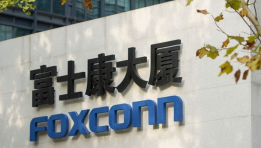
Foxconn has raised expectations for its third-quarter performance as accelerating artificial intelligence demand continues to support its server and
- omer bar
- •
- 7 Min Read
- •
- ago 1 day
SKN | Why Did Asana Stock Fall 13% Despite Beating Earnings Expectations?
Asana shares suffered a sharp sell-off after investors focused less on the company's latest earnings beat and more on the
- ago 1 day
- •
- 7 Min Read

Asana shares suffered a sharp sell-off after investors focused less on the company's latest earnings beat and more on the

- Arik Arkadi Sluzki
- •
- 8 Min Read
- •
- ago 2 days
SKN | Central Banks Keep Buying Gold as China and Poland Lead July Reserve Accumulation
Central banks continued to accumulate gold in July, reinforcing one of the most persistent structural themes in global bullion
- ago 2 days
- •
- 8 Min Read
Central banks continued to accumulate gold in July, reinforcing one of the most persistent structural themes in global bullion

