


- sagi habasov
- •
- 6 Min Read
- •
- 4 months ago
Key Points
- India approved $4.6 billion worth of electronic component projects under its incentive scheme.
- Samsung, Tata Electronics, and Foxconn are among the companies receiving subsidies.
- The projects aim to strengthen supply chains, create jobs, and support India’s $500 billion electronics output target by 2031.
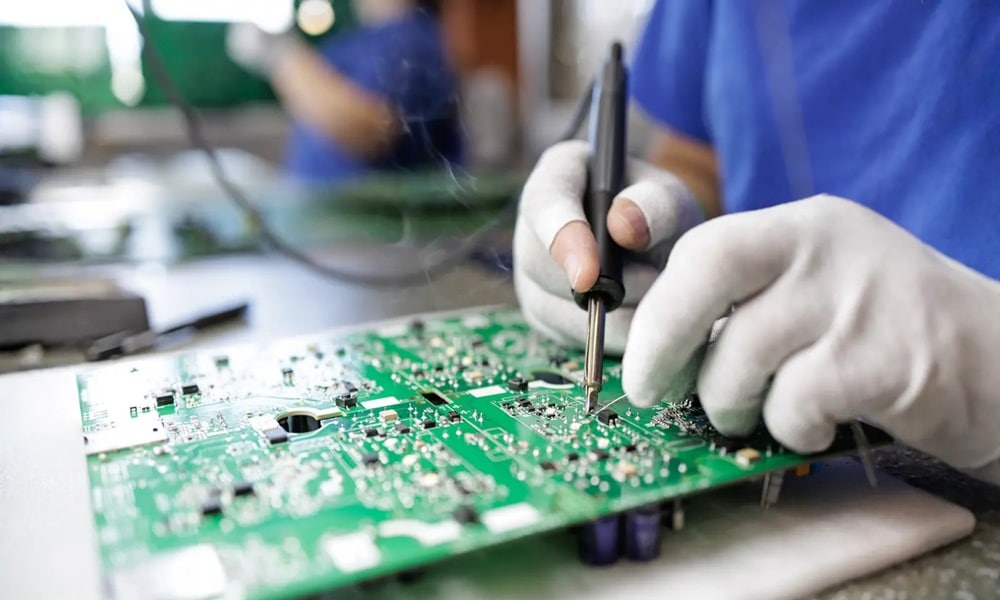
India has approved electronic component manufacturing projects worth 418.63 billion rupees ($4.64 billion) under a government incentive program designed to strengthen domestic supply chains and reduce reliance on imports. The announcement, made by the country’s IT ministry on Friday, marks a significant step in India’s broader effort to position itself as a global electronics manufacturing hub.
The approved projects fall under the Electronics Component Manufacturing Scheme, which carries a total government outlay of 229.19 billion rupees. A mix of global and domestic players are set to benefit, including Samsung Electronics, Tata Electronics, and Foxconn. These companies will receive subsidies to expand or establish facilities producing key electronic parts such as mobile phone enclosures, camera sub-assemblies, and other critical components.
Strengthening Domestic Electronics Supply Chains
The latest approvals underscore India’s aggressive push to deepen its electronics ecosystem beyond final assembly. While India has made notable gains in smartphone assembly in recent years, policymakers have increasingly focused on localizing component production, which represents a higher value-added segment of the supply chain.
According to the IT ministry, the newly approved projects are spread across eight states and are expected to generate electronic components worth about 2.58 trillion rupees ($28.62 billion) over time. The investments are also projected to create roughly 34,000 jobs, supporting regional development alongside industrial expansion.
Government Targets $500 Billion Electronics Output
India’s electronics manufacturing output reached approximately $125 billion in the fiscal year ending March 2025. The government has set an ambitious target to quadruple that figure to $500 billion by fiscal 2031, banking on a mix of incentive schemes, infrastructure investment, and policy stability to attract capital.
Programs such as the Electronics Component Manufacturing Scheme complement earlier production-linked incentive initiatives that drew major global manufacturers to India. Together, these efforts aim to reduce import dependence, particularly on components sourced from East Asia, while building resilience into supply chains increasingly exposed to geopolitical and trade disruptions.
Global Players Expand Footprint as India Scales Up
The participation of multinational firms highlights India’s growing appeal as an alternative manufacturing base. For companies like Samsung and Foxconn, expanding component production locally can improve cost efficiency and align with government requirements tied to incentives. For domestic conglomerates such as Tata, the approvals reinforce ambitions to become integrated players across electronics manufacturing and advanced technology.
As demand for smartphones, consumer electronics, and connected devices continues to rise globally, India’s strategy is to move up the value chain and capture a larger share of component manufacturing rather than remaining focused solely on assembly.
Outlook for India’s Electronics Ambitions
While execution risks remain, including infrastructure bottlenecks and skill development challenges, the scale of the newly approved projects signals strong momentum. If successfully implemented, the investments could significantly narrow India’s electronics trade deficit and enhance its role in global supply networks.
The approvals also reflect growing confidence among policymakers that targeted subsidies can catalyze private investment at scale. As India balances fiscal discipline with industrial policy, the performance of these projects will be closely watched as a benchmark for the next phase of the country’s manufacturing ambitions.
Comparison, examination, and analysis between investment houses
Leave your details, and an expert from our team will get back to you as soon as possible
* This article, in whole or in part, does not contain any promise of investment returns, nor does it constitute professional advice to make investments in any particular field.
To read more about the full disclaimer, click here
- orshu
- •
- 8 Min Read
- •
- ago 5 hours
SKN | Tel Aviv Market Weakens as Mid-Cap Selloff Deepens While Bonds Hold Steady
Israeli financial markets are trading lower as weakness in mid-cap equities weighs on broader indices, even as large-cap benchmarks show
- ago 5 hours
- •
- 8 Min Read

Israeli financial markets are trading lower as weakness in mid-cap equities weighs on broader indices, even as large-cap benchmarks show

- omer bar
- •
- 7 Min Read
- •
- ago 9 hours
SKN | Is Ryan Cohen’s Push for eBay Takeover Gaining Strategic Momentum Despite Rejection Signals?
The public exchange between activist investor Ryan Cohen and eBay has intensified after Cohen rejected signals suggesting his takeover proposal
- ago 9 hours
- •
- 7 Min Read

The public exchange between activist investor Ryan Cohen and eBay has intensified after Cohen rejected signals suggesting his takeover proposal
- orshu
- •
- 7 Min Read
- •
- ago 11 hours
SKN | Global Markets Wrap: May 13, 2026 Performance Review and Outlook for May 14, 2026 as Risk Appetite Weakens Amid Global Equity Pressure and Regional Holiday Constraints
Global markets ended May 13, 2026 on a broadly weaker note, as risk sentiment deteriorated across several major regions. While
- ago 11 hours
- •
- 7 Min Read

Global markets ended May 13, 2026 on a broadly weaker note, as risk sentiment deteriorated across several major regions. While
- omer bar
- •
- 9 Min Read
- •
- ago 13 hours
SKN | Asian Markets Advance on May 14 as South Korea, Japan, and China Lead Regional Gains While Australia Lags
Asian equity markets opened Thursday, May 14 with broadly positive momentum across the region as investors returned to risk-sensitive assets
- ago 13 hours
- •
- 9 Min Read

Asian equity markets opened Thursday, May 14 with broadly positive momentum across the region as investors returned to risk-sensitive assets


