


- sagi habasov
- •
- 7 Min Read
- •
- 3 months ago
Key Points
- China approved delivery of 120 previously ordered Airbus jets, but no new major order has yet materialized.
- Airbus continues to trail Boeing in year-to-date net orders and faces growing scrutiny over delivery reliability.
- The long-awaited 500-jet deal remains tied to geopolitical dynamics, limiting visibility for Airbus’s 2026 commercial outlook.
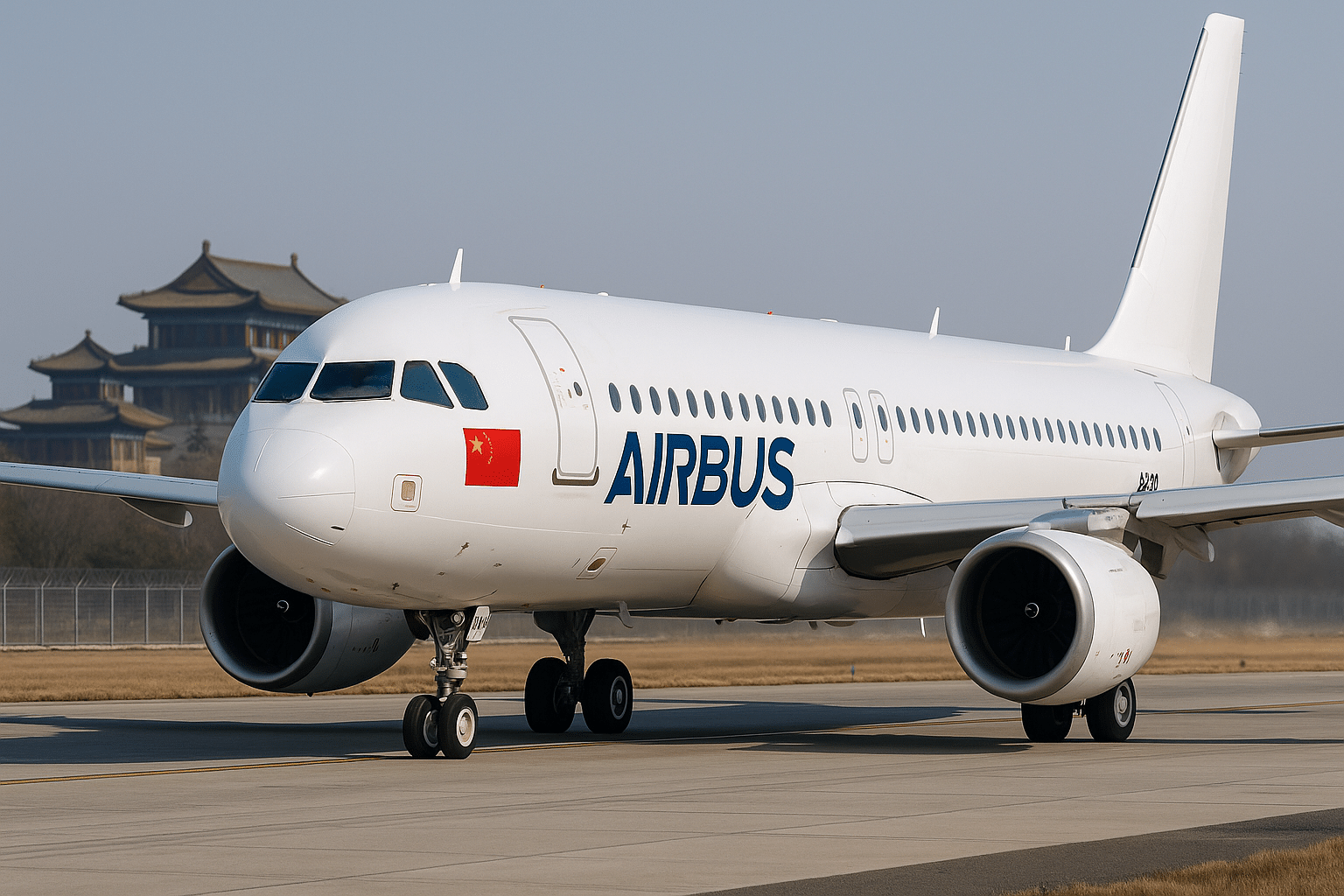
Airbus has finally secured Chinese approval to proceed with the delivery of 120 previously ordered aircraft, offering a welcome boost to the European manufacturer as it navigates a turbulent global supply chain. Yet despite the progress, the central question looming over both the aviation industry and geopolitics remains unresolved: will China move forward with the long-anticipated order of 500 jets that Airbus has been courting for more than a year?
The signing of a general terms of agreement during French President Emmanuel Macron’s recent visit to Beijing was widely interpreted in European media as a sign of fresh commercial momentum. However, Airbus quickly clarified that the deal merely authorizes delivery of aircraft already logged in its order book, rather than confirming new purchases. For a manufacturer seeking to solidify its competitive lead over Boeing in 2025 and beyond, the distinction is critical.
Deliveries Resume Amid Strategic Ambiguity
China has historically been one of Airbus’s most consequential growth engines. Its fleet expansion needs are massive, and major orders are typically linked to high-level diplomatic engagements. Yet this time, Macron’s visit yielded no headline-grabbing order — a notable departure from past state visits, which often coincided with triple-digit aircraft purchases.
Beijing’s cautious stance reflects the broader strategic backdrop. With geopolitical tensions still casting long shadows over trade ties, China is selectively managing large, politically sensitive transactions. Both Airbus and Boeing remain in limbo, each awaiting signals that Beijing is ready to re-engage fully in long-term fleet planning.
Airbus has been in on-off negotiations since at least 2024 to secure a 500-jet order that could reshape the competitive balance with its American rival. But industry sources say there are few signs that Beijing is prepared to commit to such a sizeable order this year.
Competitive Pressures Intensify as Boeing Gains Ground
The competitive narrative between the world’s two dominant planemakers continues to shift. Airbus has been consistently outpacing Boeing on deliveries for seven consecutive years, but recent supply chain disruptions — most notably fuselage panel issues — forced the European company to revise its output forecasts. By the end of November, Airbus had secured 700 net orders after cancellations, trailing Boeing’s 782 orders as of October.
The global airline industry is also expressing growing uncertainty over Airbus’s ability to meet near-term delivery commitments. The International Air Transport Association’s leadership noted on Tuesday that confidence in Airbus’s delivery performance has softened, whereas Boeing’s operational stability has shown improvement following years of regulatory and manufacturing setbacks.
China’s Role in Airbus’s Strategic Future
For Airbus, the stakes of unlocking new Chinese orders are significant. The Chinese market represents not only scale but strategic diversification as the company ramps up production across Europe, the U.S., and Tianjin. Without clarity on the 500-jet package, Airbus risks falling short of its internal target of around 1,200 aircraft orders for the year.
Still, the resumption of deliveries marks meaningful progress and suggests Beijing may be preparing the ground for more substantive engagement once geopolitical conditions stabilize. In the meantime, Airbus must manage investor expectations and operational challenges while continuing to court one of its most important customers.
Comparison, examination, and analysis between investment houses
Leave your details, and an expert from our team will get back to you as soon as possible
* This article, in whole or in part, does not contain any promise of investment returns, nor does it constitute professional advice to make investments in any particular field.
To read more about the full disclaimer, click here
- orshu
- •
- 6 Min Read
- •
- ago 7 hours
SKN | Tel Aviv Indices Retreat as Investors Weigh Economic Signals and Sector Pressures
The Tel Aviv shווקי opened lower as investors navigated mixed economic signals and sector-specific pressures. The TA-35 led the declines,
- ago 7 hours
- •
- 6 Min Read

The Tel Aviv shווקי opened lower as investors navigated mixed economic signals and sector-specific pressures. The TA-35 led the declines,
- orshu
- •
- 7 Min Read
- •
- ago 11 hours
SKN | Global Growth Resilience and Critical Inflation Data to Anchor Final Trading Week of Q1
The global financial markets enter the final full trading week of March 2026 with a dual focus on consolidating recent
- ago 11 hours
- •
- 7 Min Read

The global financial markets enter the final full trading week of March 2026 with a dual focus on consolidating recent

- sagi habasov
- •
- 6 Min Read
- •
- ago 12 hours
SKN | Stocks and Treasuries Slide as Iran Tensions Escalate: Market Wrap
Equity and bond markets fell as renewed conflict fears between the United States and Iran weighed on investor sentiment. The
- ago 12 hours
- •
- 6 Min Read

Equity and bond markets fell as renewed conflict fears between the United States and Iran weighed on investor sentiment. The
- sagi habasov
- •
- 6 Min Read
- •
- ago 14 hours
SKN | Asian Markets Open Lower with Tech and Export Stocks Under Pressure
Asian equities opened lower on Monday, March 23, as investors assessed mixed economic signals and weighed currency pressures against regional
- ago 14 hours
- •
- 6 Min Read

Asian equities opened lower on Monday, March 23, as investors assessed mixed economic signals and weighed currency pressures against regional

