


- sagi habasov
- •
- 6 Min Read
- •
- 4 months ago
Key Points
- Nvidia’s strong earnings failed to stabilize the AI trade, exposing deeper investor concerns.
- Valuation stress, rising debt, and ROI uncertainty now dominate market sentiment.
- The next stage of AI investment is likely to be more volatile, with higher stakes for mega-cap tech.
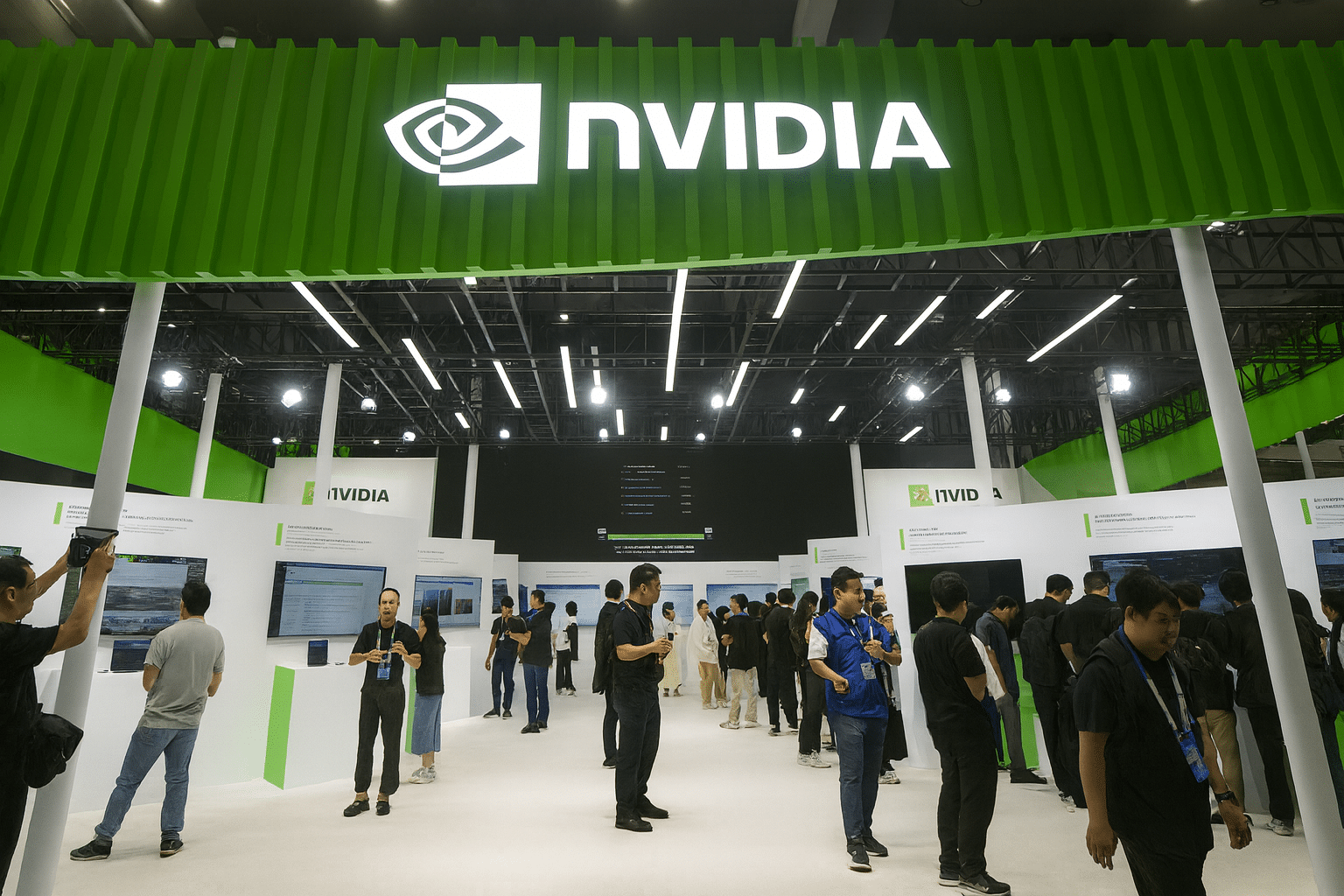
Wall Street entered Nvidia’s earnings week expecting the chipmaker’s stellar performance to reassure investors that the artificial intelligence boom remains intact. Instead, the sharp reversal in Nvidia’s stock — and the broader market — underscored a deeper debate about the sustainability of AI valuations and the financial strain behind the sector’s rapid expansion. For many investors, the question has shifted from whether demand for AI infrastructure is booming, to whether the economics of the entire trade can hold together.
The Skeptic’s View: Valuations, Leverage, and Systemic Fragility
AI skeptics argue that the extraordinary surge in market caps across the AI ecosystem has outpaced fundamentals. They point to capital expenditure plans exceeding $440 billion across Microsoft, Amazon, Meta, and Alphabet over the next year — a figure equal to the annual GDP of a mid-sized economy. To sustain this race, companies increasingly rely on debt markets and circular financing arrangements that intertwine AI developers, cloud providers, and hardware partners.
Such interdependence introduces risk: weakness in any one player could ripple across the entire AI value chain. The November selloff in high-profile names — Oracle plunging 24%, CoreWeave down 46%, and AMD sliding over 20% — has renewed concerns that momentum-driven trades may be vulnerable to even modest shifts in investor sentiment. In this view, Nvidia’s exceptional quarter did little to resolve the broader structural issues now surfacing.
The Optimist’s View: A Healthy Reset in an Early-Stage Capital Cycle
Optimists see the pullback as a natural correction in a long-term growth cycle. To them, mega-cap tech firms remain committed to AI development not out of hype, but because demand is accelerating across enterprise software, cloud infrastructure, cybersecurity, and automation. With the regulatory environment still broadly supportive and global competition intensifying — particularly from China — investors expect spending to remain elevated.
They note that Nvidia’s forward guidance exceeded consensus expectations and that the firm remains the “lynchpin” of the global AI infrastructure build-out. For believers in the cycle, near-term volatility does not diminish the structural trajectory toward stronger monetization of AI tools, nor the eventual integration of AI across every major industry.
Volatility Marks the Next Phase of the AI Trade
The violent intraday reversal following Nvidia’s earnings reflected this growing philosophical divide. Relief over strong demand quickly gave way to questions about power constraints, infrastructure costs, and the timeline for meaningful returns on AI investment. Meanwhile, semiconductor stocks are heading for their worst month since 2022, signaling a market increasingly sensitive to any hint of slowing momentum.
Strategists warn that more choppiness is likely. With crypto markets weakening, interest-rate uncertainty lingering, and investors questioning AI’s return-on-investment timeline, the sector may face a bumpy path. Still, both bulls and bears agree on one point: the AI trade is far from over, and its volatility may only intensify as the technology enters a more complex and capital-intensive stage.
Comparison, examination, and analysis between investment houses
Leave your details, and an expert from our team will get back to you as soon as possible
* This article, in whole or in part, does not contain any promise of investment returns, nor does it constitute professional advice to make investments in any particular field.
To read more about the full disclaimer, click here
- Ronny Mor
- •
- 8 Min Read
- •
- ago 6 minutes
SKN | Asian Markets Split as Korea and Japan Rally While China and Hong Kong Slide in Tuesday Morning Trade
Asian equities opened Tuesday’s trading session with mixed momentum as investors weighed diverging economic signals across the region. While Japan
- ago 6 minutes
- •
- 8 Min Read

Asian equities opened Tuesday’s trading session with mixed momentum as investors weighed diverging economic signals across the region. While Japan

- orshu
- •
- 6 Min Read
- •
- ago 17 hours
SKN | Tel Aviv Indices Retreat as Investors Weigh Economic Signals and Sector Pressures
The Tel Aviv shווקי opened lower as investors navigated mixed economic signals and sector-specific pressures. The TA-35 led the declines,
- ago 17 hours
- •
- 6 Min Read

The Tel Aviv shווקי opened lower as investors navigated mixed economic signals and sector-specific pressures. The TA-35 led the declines,
- orshu
- •
- 7 Min Read
- •
- ago 22 hours
SKN | Global Growth Resilience and Critical Inflation Data to Anchor Final Trading Week of Q1
The global financial markets enter the final full trading week of March 2026 with a dual focus on consolidating recent
- ago 22 hours
- •
- 7 Min Read
The global financial markets enter the final full trading week of March 2026 with a dual focus on consolidating recent

- sagi habasov
- •
- 6 Min Read
- •
- ago 23 hours
SKN | Stocks and Treasuries Slide as Iran Tensions Escalate: Market Wrap
Equity and bond markets fell as renewed conflict fears between the United States and Iran weighed on investor sentiment. The
- ago 23 hours
- •
- 6 Min Read

Equity and bond markets fell as renewed conflict fears between the United States and Iran weighed on investor sentiment. The

