




- Ronny Mor
- •
- 11 Min Read
- •
- 10 months ago


Key Points
- Brent crude fell below $64 a barrel as narrowing spreads signal easing supply tightness and softer market fundamentals.
- OPEC and the International Energy Agency (IEA) are set to release key reports this week, expected to confirm a growing global surplus.
- U.S. sanctions on Russian oil firms and India’s shifting import patterns add new geopolitical dynamics to the energy outlook.

Oil prices fell on Tuesday as traders weighed signs of a softening market against expectations of higher supply heading into 2026. The narrowing of key pricing spreads a telltale indicator of market tightness pointed toward increasingly balanced, if not oversupplied, conditions across global crude markets.
Brent crude slipped below $64 a barrel, reversing two days of modest gains, while West Texas Intermediate (WTI) hovered near $60. The decline underscores how rapidly sentiment has shifted in recent weeks, with traders turning cautious ahead of crucial reports from OPEC and the International Energy Agency (IEA) later this week.
Market Signals Point to Softer Supply Conditions
One of the clearest indicators of waning market strength is the narrowing WTI prompt spread the difference between the front-month and next-month futures contracts. The spread tightened to just 9 cents a barrel in backwardation, its narrowest level since February.
A narrowing spread typically implies that traders expect ample near-term supply or weaker demand growth, signaling a cooling market.
“Backwardation flattening at this pace usually precedes a shift toward surplus,” said Andrew Lebow, senior energy strategist at Commodity Research Group. “It’s not yet contango territory, but the warning signs are flashing that inventories are starting to build.”
The shift comes amid broader expectations that global oil markets may face a surplus as early as next year, with both OPEC and non-OPEC producers ramping up output.
OPEC and IEA Reports to Set the Tone
Markets are now fixated on the OPEC Monthly Oil Market Report (MOMR) and the IEA’s annual energy outlook, both due this week. OPEC’s report, out Wednesday, will likely confirm that member nations have been gradually boosting production, particularly from Saudi Arabia and the United Arab Emirates, in response to easing U.S. sanctions pressure and improving refining margins.
The IEA, which releases its monthly snapshot on Thursday, has already warned of a record supply glut in 2026. Early drafts of its outlook suggest global supply growth could exceed demand by up to 1.4 million barrels per day next year, the largest annual imbalance since 2019.
“Supply expansion is no longer just an OPEC story,” said Caroline Bain, chief commodities economist at Capital Economics. “U.S., Brazilian, and Guyanese barrels are hitting the market faster than expected, just as global demand is plateauing under weaker industrial growth.”
Geopolitics: U.S.-India Energy Talks and Russian Sanctions
Beyond fundamentals, geopolitics remains a key driver of oil sentiment. U.S. President Donald Trump said on Monday that Washington is “pretty close” to finalizing a trade agreement with India a deal that reportedly includes curbs on Russian oil imports.
India, the world’s third-largest crude importer, has been under U.S. pressure to cut its purchases from Moscow, aligning more closely with Western sanctions designed to restrict Russian energy revenues.
At the same time, the U.S. Treasury recently sanctioned Russian giants Lukoil PJSC and Rosneft PJSC, further tightening Moscow’s ability to export oil through global markets. Lukoil has already declared force majeure on shipments from Iraq’s West Qurna 2 field, disrupting supply from one of the Middle East’s major export terminals.
However, analysts say these disruptions have so far been insufficient to offset broader supply growth. “Every geopolitical flare-up is being met with more barrels elsewhere,” said Vivek Dhar, energy analyst at Commonwealth Bank of Australia. “That’s why prices are struggling to find sustained support.”
Investor Focus: Surplus Fears vs. Demand Uncertainty
WTI futures have now fallen roughly 16% year-to-date, marking a fourth consecutive month of declines. Traders cite a confluence of factors: an improving U.S. production outlook, weaker Chinese industrial demand, and signs that refinery utilization rates are leveling off in Asia and Europe.
The energy complex remains caught between two opposing narratives supply growth outpacing expectations versus lingering risks of geopolitical disruption and potential demand rebounds in emerging markets.
If OPEC’s and the IEA’s forthcoming reports confirm a rising surplus trajectory, analysts expect further downward pressure on crude benchmarks, possibly testing $58 support levels for WTI in the near term.
“The market is transitioning from tightness to balance,” said Rebecca Babin, senior energy trader at CIBC Private Wealth. “The question now is whether that balance holds or tips toward oversupply and for how long.”
Outlook: A Fragile Equilibrium in the Making
For now, traders appear to be bracing for a new phase of lower volatility and moderate prices, with global oil supply looking more resilient than previously feared. If economic conditions in the U.S. and China remain soft, the balance of risk could shift decisively toward a sustained oversupply through early 2026.
Still, potential wildcards from U.S. sanctions enforcement to unexpected OPEC production shifts could reintroduce price volatility.
Until then, oil’s latest retreat reflects a market searching for its footing between structural oversupply and cyclical uncertainty a precarious balance that will define the next chapter in global energy pricing.
Comparison, examination, and analysis between investment houses
Leave your details, and an expert from our team will get back to you as soon as possible
* This article, in whole or in part, does not contain any promise of investment returns, nor does it constitute professional advice to make investments in any particular field.
To read more about the full disclaimer, click here
- Ronny Mor
- •
- 6 Min Read
- •
- ago 15 hours
SKN | Sempra Secures Petrobras in 20-Year U.S. LNG Supply Agreement
Sempra Infrastructure has secured Petrobras as a long-term buyer of U.S. liquefied natural gas, signing a 20-year sales and purchase
- ago 15 hours
- •
- 6 Min Read

Sempra Infrastructure has secured Petrobras as a long-term buyer of U.S. liquefied natural gas, signing a 20-year sales and purchase

- omer bar
- •
- 8 Min Read
- •
- ago 19 hours
SKN | Exxon Mobil Shuts Joliet Refinery After Power Outage as US Fuel Markets Remain Tight
Exxon Mobil took its Joliet, Illinois, refinery offline on September 14 after a power outage disrupted operations at the
- ago 19 hours
- •
- 8 Min Read
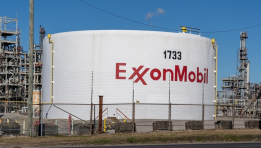
Exxon Mobil took its Joliet, Illinois, refinery offline on September 14 after a power outage disrupted operations at the

- Arik Arkadi Sluzki
- •
- 8 Min Read
- •
- ago 20 hours
SKN | US Oil Export Ban Unlikely to Lower Energy Prices as Refining Constraints Deepen
The Trump administration is facing growing pressure to contain US energy prices, but Interior Secretary Doug Burgum said September
- ago 20 hours
- •
- 8 Min Read

The Trump administration is facing growing pressure to contain US energy prices, but Interior Secretary Doug Burgum said September

- sagi habasov
- •
- 6 Min Read
- •
- ago 2 days
SKN | Oil Prices Jump Above $107 as Saudi Strikes and Hormuz Attacks Raise Global Supply Risks
Oil prices climbed more than 2% on September 14 as new attacks on Saudi Arabia and vessels in the Gulf
- ago 2 days
- •
- 6 Min Read

Oil prices climbed more than 2% on September 14 as new attacks on Saudi Arabia and vessels in the Gulf
