





- Articles
- •
- 11 Min Read
- •
- 10 months ago
Key Points
- Interest rate expectations and trade tensions fueled a significant weakening of the US currency in the first half of the year.
- Despite the measured decline, the dollar remains historically strong and continues to be the anchor of global financial liquidity.
- The dollar's weakening impacts global commodity prices and intensifies the discussion around the "de-dollarization" of the world economy.

The US dollar has weakened significantly during the first half of the year, a trend that introduces uncertainty into the foreign exchange and commodity markets. This article examines the key erosion factors—from tariff announcements to changes in interest rate expectations—and analyzes how the dollar, despite its measured decline, remains historically strong compared to most major world currencies. We assess the global economic implications: Is this the beginning of a global shift toward “de-dollarization” or merely a cyclical correction before it continues its dominance as the central financial anchor?
For many years, the US dollar has served as the unquestioned anchor of the global financial system. It has been the primary reserve currency, the currency for commodity trade (especially energy), and the main benchmark for assessing risk and safety in the markets. However, as data from the past year shows, even its resilience is not immune to fluctuations. During the first half of the year, the dollar experienced a measured erosion against a basket of major currencies, a move that once again raised the question of its future status and the impact of the change on stock, bond, and commodity markets. A full analysis of the current trend requires examining not only the decline data but also placing that decline in a broader historical context, evaluating it against decades of dominance.
Erosion Data: Background and Cyclical Factors
The weakening of the dollar in 2024, as noted by leading financial institutions, concentrated mainly in the first half of the year, evident in the DXY Index (Dollar Index)—which measures the dollar’s value against a basket of six major global currencies. This decline stemmed from a combination of monetary, economic, and political factors.
A central factor is expectations for a change in Federal Reserve (Fed) policy: Once the Fed signaled a slowdown in the pace of rate hikes, or even hinted at a future cut, the major upward pressure supporting the dollar was removed. The dollar has historically been supported by the “interest rate differential”—the fact that US interest rates were higher than those in the Eurozone or Japan, making dollar-denominated assets more attractive. When this differential narrows, the dollar tends to weaken.
In addition, tariff announcements and global trade tensions are influential factors: Specific events such as “the April 2 tariff announcements” created a shock that hurt not only US stocks and Treasury bonds but the dollar itself. Tariffs and restrictive trade measures increase economic uncertainty, and in the short term, trigger harmful market reactions.
A third factor lies in the economic recovery outside the US: As the Eurozone or East Asian economies show relative economic resilience or improvement in growth data, demand for their currencies increases, which relatively weakens the dollar. Renewed capital flows into emerging markets also diminish the dominant flight-to-safety demand for the dollar.
The Dollar in Historical Context: Strong Despite the Erosion
In historical perspective, even though the dollar weakened significantly from the beginning of the year until mid-year, it still remains “historically strong against other major currencies.” The dollar’s current level, around 99.5 on the DXY Index, is significantly higher than the low points recorded in the middle of the previous decade or after the 2008 financial crisis.
This resilience stems from the structural status of the US economy. First, deep liquidity: US capital and debt markets remain the largest and most liquid in the world, providing exceptional stability during times of crisis. Second, safe haven: During periods of global uncertainty (such as geopolitical tension or economic crises), a built-in “flight to quality” mechanism still occurs, where money flows into US government bonds, increasing demand for the dollar. Therefore, the current erosion primarily reflects a cyclical correction following a period of dramatic strengthening, and not necessarily a collapse of the dollar’s status.
Global Implications: Commodities, Inflation, and “De-Dollarization”
A decline in the dollar’s value has immediate and far-reaching effects on the global economy, especially in three areas.
One significant area is the commodity market: Most commodities, especially crude oil, are priced in dollars. When the dollar’s value falls, the same commodity becomes cheaper for countries holding other currencies. This means relief for commodity-import-dependent economies such as Japan and Europe. It can also lead to an increase in commodity prices quoted in the dollar itself, as more dollars are needed to purchase a given amount of oil or gold.
Another area is inflation and the debt market: A weak dollar can ease deflationary pressures in some parts of the world, but in the US, it may contribute to inflationary pressure by making imports more expensive. For developing countries, a dollar decline is usually good news, as it eases the burden of their dollar-denominated debt.
Finally, there is the “de-dollarization” discourse: The dollar’s weakness fuels the geopolitical conversation about “de-dollarization,” meaning the shift by countries (such as the BRICS nations) to conduct trade transactions in local currencies instead of the dollar. While the current decline is cyclical, it reinforces the need for these countries to diversify their reserve assets and reduce their reliance on US financial oversight. However, for now, there is no alternative currency or basket of currencies with the necessary liquidity, institutionalism, and trust to replace the dollar on a global scale.
Summary and Future Outlook
The central insight from analyzing the dollar’s trend is that the US currency is in the midst of a normalization process following a period of exceptional strength. The decline in the first half of the year reflects the adjustment of interest rate expectations and specific trade tensions. Looking ahead, the dollar’s strength now depends primarily on the growth differentials between the US and the rest of the world: If the US economy continues to show superior resilience over Europe and Asia, the dollar is likely to find a significant support point again. We may see greater volatility as more economic power centers gain influence, but the transition to a Multipolar Currency System is a slow, structural, and long-term process, not an event that occurs suddenly. Therefore, despite the erosion, the dollar remains a dominant force, albeit one more vulnerable to global policy changes and economic expectations.
Comparison, examination, and analysis between investment houses
Leave your details, and an expert from our team will get back to you as soon as possible
* This article, in whole or in part, does not contain any promise of investment returns, nor does it constitute professional advice to make investments in any particular field.
To read more about the full disclaimer, click here
- Ronny Mor
- •
- 7 Min Read
- •
- ago 9 hours
SKN | Yen Intervention Back in Focus as Bessent Signals Readiness for Coordinated Action and Calls for Stronger Federal Reserve Support
Recent comments from U.S. Treasury Secretary Scott Bessent have renewed attention on global currency markets after he expressed readiness to
- ago 9 hours
- •
- 7 Min Read

Recent comments from U.S. Treasury Secretary Scott Bessent have renewed attention on global currency markets after he expressed readiness to
- Ronny Mor
- •
- 8 Min Read
- •
- ago 19 hours
SKN | The Bond Vigilantes: How Investors Are Doing the Federal Reserve’s Dirty Work
Capital markets in the United States are currently facing a fascinating dynamic where market forces are seizing the reins
- ago 19 hours
- •
- 8 Min Read
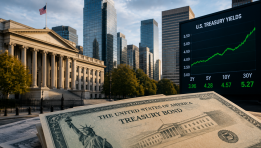
Capital markets in the United States are currently facing a fascinating dynamic where market forces are seizing the reins

- sagi habasov
- •
- 6 Min Read
- •
- ago 1 day
SKN | Could a Coordinated U.S.-Japan Yen Strategy Reshape Global Markets?
Global investors are closely monitoring reports that the United States and Japan could unveil a coordinated initiative to strengthen
- ago 1 day
- •
- 6 Min Read
Global investors are closely monitoring reports that the United States and Japan could unveil a coordinated initiative to strengthen
- sagi habasov
- •
- 6 Min Read
- •
- ago 2 days
SKN | Japan and the U.S. Reportedly Prepare Joint Yen Strategy as Currency Markets Face Rising Intervention Risk
The Japanese yen experienced a sharp rally after reports suggested that Japan and the United States could unveil a
- ago 2 days
- •
- 6 Min Read
The Japanese yen experienced a sharp rally after reports suggested that Japan and the United States could unveil a


