





- Ronny Mor
- •
- 7 Min Read
- •
- 39 seconds ago


Key Points
- Tariff concerns intensify market pressure: The US proposed new country-specific tariffs on 14 trading partners, including India, Japan and the European Union, alongside an additional 20% tariff on Chinese imports.
- Volatility surges: The VIX has risen more than 60% in November, putting it on track for one of its largest monthly increases since February 2020.
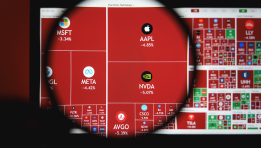
- Technology shares remain under pressure: The Nasdaq declined 2% on Wednesday and has fallen nearly 20% from its early October record, while semiconductor stocks have dropped 21% this month.

Tariff Uncertainty Adds to Market Instability
Investors are facing renewed volatility as the latest US tariff proposals add another source of uncertainty to markets already weakened by a significant selloff in artificial intelligence-related stocks.
The Trump administration announced proposed country-specific tariffs on goods from 14 major trading partners, including India, Japan and the European Union. The measures also include an additional 20% tariff on imports from China.
Although the immediate market impact of the proposals may be limited, the announcement reinforces concerns that the administration intends to maintain its protectionist trade approach. For investors, the timing is particularly challenging as markets approach the end of the year and reassess positions following recent gains.
The renewed trade uncertainty has encouraged investors to seek defensive assets rather than increase exposure to risk-sensitive equities.
Technology Selloff Deepens Investor Concerns
The tariff developments arrive as technology stocks continue to struggle with questions surrounding AI valuations, infrastructure spending and the potential returns from the sector’s rapid expansion.
The Nasdaq fell 2% on Wednesday and is now almost 20% below its record high from early October, bringing the index close to bear-market territory.
The latest selling has also erased gains associated with Nvidia’s surprise decision to reinstate Jensen Huang as chief executive on Monday. His return initially generated optimism, but that reaction has not been enough to overcome broader concerns about the sustainability of AI-related valuations.
The Philadelphia Semiconductor Index has declined 21% in November and stands 50% below its June record. The Roundhill Magnificent Seven exchange-traded fund, which tracks major US technology companies, has fallen 8%.
Anthropic’s shares have also traded well below their recent listing price, with the absence of a strong buying response highlighting investor caution toward AI-related equities.
Volatility Gauge Signals Growing Unease
The Cboe Volatility Index, commonly known as Wall Street’s fear gauge, has climbed more than 60% in November. The increase puts it on track for one of its largest monthly jumps since the COVID-19 market shock in February 2020.
The surge reflects growing difficulty among investors in assessing market risks, including the possibility that global interest rates could continue rising.
The combination of trade uncertainty and pressure on technology valuations has weakened confidence in the broader equity outlook. Some portfolio managers have responded by reducing stock exposure, while European equities are increasingly being considered as a potential alternative to US technology-heavy markets.
Bonds and Safe-Haven Currencies Attract Attention
The move toward defensive assets was also visible in bond and foreign exchange markets.
US 10-year Treasury yields declined 6 basis points to 4.84%, while German 10-year government bond yields fell 4 basis points to 3.22%. The Swiss franc, traditionally viewed as a safe-haven currency, strengthened against most major currencies despite Switzerland being among the countries affected by the latest US tariff proposals.
European equity markets have also emerged as a potential source of diversification. Their lower exposure to major US technology companies has helped the region outperform during parts of the recent technology selloff, although proposed US tariffs on European goods remain a risk.
What Investors Should Watch Next
The next phase of market performance will depend on how tariff proposals develop, whether technology valuations stabilize and how expectations for global interest rates evolve. Investors will also assess whether the weakness in semiconductor and AI-related shares spreads into other sectors.
With US markets closed on Thursday for Thanksgiving and scheduled for a shortened trading session on Friday, trading conditions may remain sensitive to developments and positioning. The balance between defensive assets, European equities and US technology shares will provide an important indication of how investors are adjusting portfolios amid elevated uncertainty.
Comparison, examination, and analysis between investment houses
Leave your details, and an expert from our team will get back to you as soon as possible
* This article, in whole or in part, does not contain any promise of investment returns, nor does it constitute professional advice to make investments in any particular field.
To read more about the full disclaimer, click here
- orshu
- •
- 7 Min Read
- •
- ago 19 minutes
SKN | Nasdaq and S&P 500 Pare Sharp Losses as Investors Step In After Technology Selloff
U.S. stocks moved sharply off their session lows on November 25 as investors stepped in after a heavy technology-led
- ago 19 minutes
- •
- 7 Min Read
U.S. stocks moved sharply off their session lows on November 25 as investors stepped in after a heavy technology-led
- orshu
- •
- 6 Min Read
- •
- ago 56 minutes
SKN | Americas Market Overview: IBOVESPA Rises 1.58% as Nasdaq Falls 0.62%
U.S. Equities Deliver Mixed Results U.S. equity benchmarks showed divergent movements, with gains in the Dow and Russell 2000 offset
- ago 56 minutes
- •
- 6 Min Read

U.S. Equities Deliver Mixed Results U.S. equity benchmarks showed divergent movements, with gains in the Dow and Russell 2000 offset
- orshu
- •
- 6 Min Read
- •
- ago 6 hours
SKN | European Markets Retreat as Eurozone Benchmarks Lead Regional Losses
European markets closed broadly lower on November 25, as selling pressure affected several major equity benchmarks across the region.
- ago 6 hours
- •
- 6 Min Read

European markets closed broadly lower on November 25, as selling pressure affected several major equity benchmarks across the region.
- orshu
- •
- 7 Min Read
- •
- ago 6 hours
SKN | Tel Aviv Market Splits as Small-Cap Stocks Surge While TA-35 Declines
Large-Cap Weakness Contrasts With Stronger Performance Elsewhere The Tel Aviv Stock Exchange delivered a mixed performance on Tuesday, November 24,
- ago 6 hours
- •
- 7 Min Read

Large-Cap Weakness Contrasts With Stronger Performance Elsewhere The Tel Aviv Stock Exchange delivered a mixed performance on Tuesday, November 24,

