





- Ronny Mor
- •
- 7 Min Read
- •
- 35 seconds ago


Key Points
- Asian equity benchmarks slipped on Monday, November 2, pressured by persistent skepticism surrounding the sustainability of massive artificial intelligence capital expenditures and rising corporate credit-default costs.
- Regional hardware hubs absorbed selling pressure, with Japan’s Nikkei 225 slipping 0.5% and South Korea’s KOSPI dropping 0.8%, following a bruising October that saw the tech-heavy Nasdaq shed nearly 7%.
- For international allocators and Israeli tech-heavy portfolios, upcoming Apple earnings represent a decisive sentiment barometer for consumer device health and generative software monetization.

Asian share markets retreated on Monday, November 2, 2026, as institutional investors extended their reassessment of the generative artificial intelligence investment boom into a new trading month. Following a turbulent October in which Wall Street’s tech-heavy Nasdaq logged its steepest monthly decline in eighteen months, regional hardware and semiconductor bourses fell under selling pressure. The ongoing de-risking highlights how market scrutiny has pivoted from gross infrastructure expansion toward corporate balance-sheet durability, leaving trading desks heavily focused on upcoming financial disclosures from Apple Inc. to gauge end-market consumer resilience.
Capex Fatigue and Credit Spread Widening Pressure Tech Multiples
The downward drift across Asian bourses reflects compounding anxiety over cash burn at leading cloud hyperscalers. Sizable capital outlays detailed by mega-cap technology firms last week—marked by negative free cash flow swings and surging data center power commitments—have sparked concern that capital returns will face an extended gestation period. Consequently, MSCI’s broadest index of Asia-Pacific shares outside Japan eased 0.4%, while the KOSPI slid 0.8% after dropping 16% in October, and the Nikkei 225 trimmed 0.5%.
The repercussions of heavy capital intensity are increasingly visible across secondary credit markets. The cost of insuring against corporate debt default widened notably last week as institutional fixed-income desks priced in the risk of sustained bond issuance required to finance multi-hundred-billion-dollar compute clusters. Although U.S. index futures displayed a modest stabilization—with Nasdaq futures rebounding 0.6% and S&P 500 futures up 0.4%—investors remain hesitant to establish unhedged equity longs without clear evidence of expanding operating margins outside specialized semiconductor fabricators.
Apple’s Balancing Act and Cross-Border Linkages to Israeli Portfolios
Against this backdrop of capex skepticism, Apple’s upcoming quarterly report has assumed outsized significance for global equity allocators. The consumer electronics titan recently reclaimed its standing as the world’s most valuable publicly traded company, benefiting from defensive portfolio rotations favoring its robust balance sheet and disciplined infrastructure spending. Market participants are scrutinizing whether the initial rollout of consumer-facing AI features can spark a durable hardware upgrade cycle or if elevated memory component pricing will compress operating margins.
For Israeli institutional allocators and the domestic technology ecosystem, this pivot toward corporate profitability carries direct portfolio consequences. The Tel Aviv Stock Exchange’s (TASE) technology benchmarks remain tightly coupled with global tech multiples, leaving domestic software ventures sensitive to overseas valuation adjustments. Furthermore, Israel’s advanced fabless chip design, computer vision, and sensor developers maintain deep operational linkages with Apple’s global supply chain and regional R&D centers. Institutional managers are consequently demanding strict capital discipline from local portfolio companies, balancing equity exposure against short-duration fixed income as U.S. 10-year Treasury yields consolidate around 4.95%.
Outlook: Central Bank Decisions, Nonfarm Payrolls, and Hardware Uptake
Looking into subsequent trading sessions, global markets face a packed docket of macroeconomic catalysts alongside mega-cap corporate disclosures. Investors will navigate interest rate decisions from the Reserve Bank of Australia and the Bank of England, alongside critical U.S. ISM manufacturing surveys and the October nonfarm payrolls report on Friday. Crucially, trading desks will evaluate Apple’s forward hardware guidance and holiday revenue projections to determine whether consumer end-demand can absorb higher device price points. A resilient earnings delivery could help stabilize global technology valuations, whereas any indication of demand deceleration would likely prolong equity multiple compression across international markets.
Comparison, examination, and analysis between investment houses
Leave your details, and an expert from our team will get back to you as soon as possible
* This article, in whole or in part, does not contain any promise of investment returns, nor does it constitute professional advice to make investments in any particular field.
To read more about the full disclaimer, click here
- orshu
- •
- 7 Min Read
- •
- ago 3 days
SKN | Nvidia in Talks to Back Nscale’s Anthropic Deal: Is Vendor Financing Powering the AI Boom?
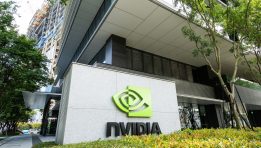
Nvidia Corporation is in talks to provide billions of dollars in credit guarantees to specialized cloud infrastructure provider Nscale, according
- ago 3 days
- •
- 7 Min Read
Nvidia Corporation is in talks to provide billions of dollars in credit guarantees to specialized cloud infrastructure provider Nscale, according

- sagi habasov
- •
- 8 Min Read
- •
- ago 3 days
SKN | Tech Multiple Jitters and Macro Data Pull Equities and Yields Lower: Are Allocators Repricing the Cycle?
Global financial markets experienced synchronized pressure on Friday, October 30, 2026, as equity benchmarks retreated alongside sovereign bond yields in
- ago 3 days
- •
- 8 Min Read

Global financial markets experienced synchronized pressure on Friday, October 30, 2026, as equity benchmarks retreated alongside sovereign bond yields in

- Ronny Mor
- •
- 6 Min Read
- •
- ago 4 days
SKN | Tech Multiple Jitters Sweep Asia as Alphabet Profit Miss Knocks Wall Street Futures
Asian equity benchmarks retreated on Thursday, October 29, 2026, as a steep selloff in Alphabet Inc. shares knocked Wall Street
- ago 4 days
- •
- 6 Min Read

Asian equity benchmarks retreated on Thursday, October 29, 2026, as a steep selloff in Alphabet Inc. shares knocked Wall Street

- omer bar
- •
- 6 Min Read
- •
- ago 4 days
SKN | Cash Flow Is King Again: How Investors Are Drawing New Battle Lines in Big Tech’s AI Capex Race
Global equity markets are redrawing the investment landscape around artificial intelligence, shifting scrutiny from sheer computational ambition toward the durability
- ago 4 days
- •
- 6 Min Read

Global equity markets are redrawing the investment landscape around artificial intelligence, shifting scrutiny from sheer computational ambition toward the durability

