





- omer bar
- •
- 6 Min Read
- •
- 25 seconds ago


Key Points
- Global equity benchmarks advanced on Wednesday, driven by an artificial intelligence rally sparked by record earnings from South Korean semiconductor bellwether SK Hynix.
- The U.S. Dollar Index held steady near two-week highs around 102.37 as interest rate markets priced in a greater than 90% likelihood of a Federal Reserve policy pause.
- For international desks and Israeli institutional allocators, resilient U.S. bond yields and dollar strength maintain elevated currency hedging hurdles alongside equity multiple scrutiny.

Global equity markets rebounded on Wednesday, October 28, 2026, as an artificial intelligence-led rally across semiconductor hardware balanced cautious positioning in foreign exchange and fixed-income desks. Surging earnings from regional memory chipmakers revitalized sentiment across Asia-Pacific and European trading sessions, lifting major indexes following a volatile stretch of cross-asset consolidation. Concurrently, the U.S. dollar held firm near multi-week highs as institutional market participants refrained from aggressive positioning ahead of the Federal Reserve’s impending interest rate announcement.
Artificial Intelligence Hardware Demand Re-Ignites Equity Momentum
The primary catalyst driving Wednesday’s equity gains emerged from the technology hardware supply chain, where South Korea’s SK Hynix delivered record third-quarter operating profits fueled by unrelenting enterprise orders for high-bandwidth memory. South Korea’s KOSPI surged nearly 5.9%, leading gains across North Asian exchanges, while Japan’s Nikkei 225 climbed over 1.1% to reflect renewed confidence in the longevity of the generative AI infrastructure buildout. The upbeat results offered tangible evidence that enterprise capital expenditure in data center expansion and advanced silicon continues to generate high-margin revenue for primary suppliers.
Western equity futures tracked the Asian advance higher, with European and Wall Street contracts trading in positive territory. However, broad market breadth remained selective, pointing to targeted capital allocation rather than unhedged risk tolerance. While specialized hardware and semiconductor fabricators led the advance, software application developers and consumer-facing sectors experienced modest gains, reflecting ongoing debate among institutional allocators regarding when hyperscaler capital expenditure will convert into broad software monetization.
Dollar Steadiness and Central Bank Monetary Crossroads
In currency and debt markets, the U.S. Dollar Index consolidated near a two-week peak of 102.37, supported by benchmark 10-year Treasury yields trading near 4.99%. Pricing across fed funds futures indicates that market participants assign a greater than 90% probability that the Federal Open Market Committee will keep benchmark rates unchanged within the 3.75% to 4.00% target range. Consequently, trading desks are focusing primarily on the policy statement’s forward language to evaluate whether persistent service inflation or elevated energy prices will prompt an additional quarter-point hike before year-end.
For Israeli financial markets and global cross-asset allocators, this currency resilience carries significant portfolio implications. The U.S. dollar’s continued strength against the New Israeli Shekel (USD/ILS hovering higher) introduces upward pressure on imported goods and industrial energy costs, narrowing the Bank of Israel’s latitude to enact domestic monetary easing. At the same time, elevated risk-free yields on short-term U.S. paper raise the hurdle rate for Tel Aviv Stock Exchange (TASE) technology equities, compelling domestic asset managers to maintain substantial currency hedges on overseas allocations.
Outlook: Forward Guidance, Hyperscaler Disclosures, and Rate Trajectories
Looking into subsequent trading sessions, market participants will monitor whether the Federal Reserve validates expectations of a patient policy pause or signals renewed hawkish vigilance. Beyond the central bank’s communication, upcoming quarterly earnings reports from megacap technology leaders Microsoft and Alphabet will serve as decisive tests for current equity multiples. Investors should track whether revenue growth across enterprise cloud segments matches accelerating data-center capital outlays, while closely observing sovereign yield spreads and currency pairs for indications of shifting cross-asset liquidity into year-end.
Comparison, examination, and analysis between investment houses
Leave your details, and an expert from our team will get back to you as soon as possible
* This article, in whole or in part, does not contain any promise of investment returns, nor does it constitute professional advice to make investments in any particular field.
To read more about the full disclaimer, click here
- sagi habasov
- •
- 6 Min Read
- •
- ago 2 hours
SKN | Tech Momentum Drives Global Equities Higher as Fed Decision and Megacap Earnings Converge
Global equity markets advanced across major trading centers on Tuesday as investors positioned for a high-stakes convergence of corporate reporting
- ago 2 hours
- •
- 6 Min Read
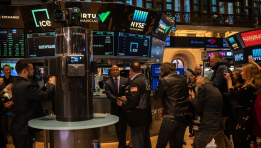
Global equity markets advanced across major trading centers on Tuesday as investors positioned for a high-stakes convergence of corporate reporting

- Ronny Mor
- •
- 6 Min Read
- •
- ago 1 day
SKN | From Cloud Giants to Sovereign Billions: Who Owns Anthropic Ahead of Its Capital Milestones?
The escalating race to finance frontier foundation models has turned private AI capitalization into a balance-sheet confrontation between Silicon Valley’s
- ago 1 day
- •
- 6 Min Read

The escalating race to finance frontier foundation models has turned private AI capitalization into a balance-sheet confrontation between Silicon Valley’s

- Lior mor
- •
- 6 Min Read
- •
- ago 4 days
SKN | Is Instacart Becoming a Strategic Acquisition Target for Uber or DoorDash?
Instacart is exploring a potential sale as consolidation pressures reshape the U.S. online delivery and e-commerce landscape, according to
- ago 4 days
- •
- 6 Min Read

Instacart is exploring a potential sale as consolidation pressures reshape the U.S. online delivery and e-commerce landscape, according to
- sagi habasov
- •
- 7 Min Read
- •
- ago 5 days
SKN | Meta approves new non-voting shares for Mark Zuckerberg, linking billions in potential liquidity to an eight-year residency commitment.
Meta Platforms has approved a new share structure that gives CEO Mark Zuckerberg greater financial flexibility while reinforcing his long-term
- ago 5 days
- •
- 7 Min Read

Meta Platforms has approved a new share structure that gives CEO Mark Zuckerberg greater financial flexibility while reinforcing his long-term

