




- Lior mor
- •
- 6 Min Read
- •
- 8 seconds ago


Key Points
- Microsoft expands its in-house chip strategy: The company plans to make its Maia accelerators the primary architecture for running AI models, reducing its reliance on Nvidia for selected workloads.
- Maia 300 targets greater efficiency: Microsoft expects to install 96 Maia 300 chips per data center rack, with up to seven times more AI tokens per rack and 40% more tokens per megawatt than GPUs, according to the company.
- Production begins in 2027: Microsoft is targeting deployments totaling multiple gigawatts across the Maia family, although the company has not provided a timeline for reaching that scale.
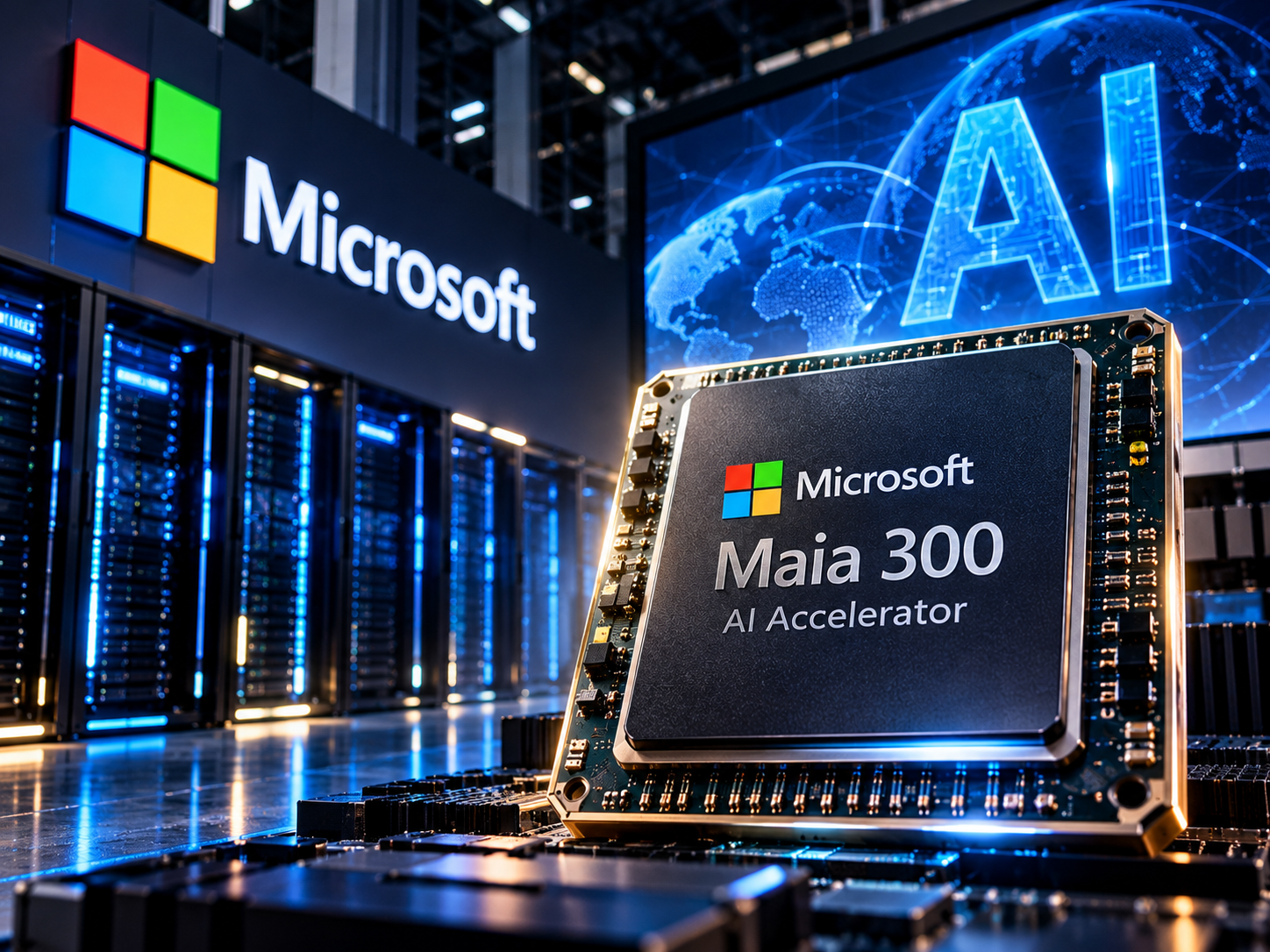
Microsoft Deepens Its Strategy to Control AI Infrastructure
Microsoft is accelerating its effort to develop proprietary artificial intelligence chips as demand for computing capacity continues to rise. The software and cloud giant unveiled its third-generation Maia AI accelerator on Monday, signaling a broader push to rely on its own silicon for running AI models rather than depending as heavily on Nvidia’s graphics processing units.
The strategy builds on Microsoft’s position in cloud computing through Azure, which provides AI models and infrastructure to customers, as well as its Microsoft 365 Copilot and GitHub Copilot services. Controlling more of the underlying hardware could help the company manage computing costs, improve operational efficiency and strengthen the economics of its AI products.
Nvidia remains central to Microsoft’s existing infrastructure, including systems used to train models developed by OpenAI and Anthropic. However, growing demand for advanced processors has encouraged major technology companies to diversify their hardware strategies. Microsoft is joining Amazon, Google and other industry participants in developing or deploying alternatives to Nvidia’s widely used GPUs.
Maia 300 Targets Higher Computing Efficiency
Microsoft plans to begin production of Maia 300 in 2027. According to executive vice president Scott Guthrie, the company ultimately expects to deploy multiple gigawatts of computing capacity using chips from the Maia family, although management has not committed to a specific timeline.
The company expects each data center rack to accommodate 96 Maia 300 chips, twice the number planned for Maia 200 racks. Microsoft says the newer design can process up to seven times more AI tokens per rack and deliver 40% more tokens per megawatt than GPUs.
These targets address two important constraints facing AI infrastructure providers: computing throughput and electricity consumption. As data centers expand, power availability and operating expenses increasingly influence how quickly companies can scale services. Improving the amount of AI processing delivered per unit of electricity could therefore help Microsoft serve more requests without increasing power consumption proportionately.
The company has also reported earlier efficiency gains. Chief executive Satya Nadella said in July that Maia 200 delivered 30% better performance per dollar than the latest-generation hardware in Microsoft’s fleet and was already handling OpenAI models.
Cost Savings Could Strengthen Azure and Copilot Economics
Microsoft’s proprietary chip strategy could have implications beyond hardware procurement. More efficient inference systems may help reduce the cost of running AI assistants and other services, potentially improving margins as usage increases.
Chief financial officer Amy Hood previously said the company’s use of its own chips had contributed to margin improvement over the course of a decade. Evercore ISI analysts estimated that Maia would account for approximately 10% of Microsoft’s AI-chip spending by the first quarter of 2027, according to a client note cited in the supplied report.
Nevertheless, the shift will not eliminate Microsoft’s reliance on external suppliers. The company continues to work with Nvidia and AMD on model training and other computing requirements. Its accelerators also cannot currently be rented by outside companies on an hourly basis, unlike certain offerings from Google and Amazon.
Comparison, examination, and analysis between investment houses
Leave your details, and an expert from our team will get back to you as soon as possible
* This article, in whole or in part, does not contain any promise of investment returns, nor does it constitute professional advice to make investments in any particular field.
To read more about the full disclaimer, click here
- Lior mor
- •
- 5 Min Read
- •
- ago 5 hours
SKN | An “Emergency Brake” for AI: Microsoft CEO Demands Human Control Over Advanced Models
Microsoft Chairman and CEO Satya Nadella is drawing new boundaries for the artificial intelligence industry. In a post on the
- ago 5 hours
- •
- 5 Min Read

Microsoft Chairman and CEO Satya Nadella is drawing new boundaries for the artificial intelligence industry. In a post on the

- Ronny Mor
- •
- 5 Min Read
- •
- ago 7 hours
SKN | Will Amazon’s $7 Billion Decart Deal Secure Its Lead in the AI Chip Race?
The relentless cycle of capital deployment and strategic acquisitions across the artificial intelligence landscape is reaching a new threshold,
- ago 7 hours
- •
- 5 Min Read

The relentless cycle of capital deployment and strategic acquisitions across the artificial intelligence landscape is reaching a new threshold,
- Lior mor
- •
- 7 Min Read
- •
- ago 18 hours
SKN | Amazon Reportedly Eyes $7 Billion Decart AI Deal as Trainium Challenges Nvidia GPUs
Amazon is reportedly considering a roughly $7 billion acquisition of Decart, an AI startup developing real-time video generation technology and
- ago 18 hours
- •
- 7 Min Read

Amazon is reportedly considering a roughly $7 billion acquisition of Decart, an AI startup developing real-time video generation technology and

- sagi habasov
- •
- 7 Min Read
- •
- ago 18 hours
SKN | Microsoft Expands AI Beyond Data Centers as Surface Plays a Smaller Role in Its Strategy
Microsoft is pushing artificial intelligence beyond large data centers and into personal computers, seeking to make AI tools more powerful,
- ago 18 hours
- •
- 7 Min Read
Microsoft is pushing artificial intelligence beyond large data centers and into personal computers, seeking to make AI tools more powerful,
