





- omer bar
- •
- 6 Min Read
- •
- 22 seconds ago


Key Points
- The US Dollar Index (DX-Y.NYB) recorded a daily session advance of 0.02% (0.02 points) to close at 102.23, while securing a 5-day weekly net gain of 0.06%.
- A dynamic foreign exchange trading session on ICE Futures saw the U.S. Dollar benchmark open at 102.13 and navigate an intraday channel between 101.92 and 102.33 from a previous close of 102.21.
- The currency index trades near the upper boundary of its 52-week corridor of 95.55 to 102.54, as trading volume remained unrecorded on the index level against an average daily volume of 0.

The US Dollar Index (DX-Y.NYB) finished the trading session on October 9, 2026, slightly higher, advancing 0.02% (0.02 points) to settle near 102.23. The modest single-day price action extended a 5-day weekly net gain of 0.06%, as foreign exchange market participants evaluated U.S. Federal Reserve monetary policy interest rate expectations, U.S. Treasury yield curve movements, global trade dynamics, and shifting G10 interest rate differentials relative to European, Asian, and emerging market central banks. For global investors, including institutional asset managers in Israel tracking U.S. Dollar currency overlays, trade-weighted exchange rate dynamics, and multi-currency portfolio management, the US Dollar Index serves as the premier global benchmark for measuring U.S. Dollar valuation relative to a trade-weighted basket of major foreign currencies.
Intraday Channel Navigation and 52-Week Range Metrics
During the October 9 session, the benchmark index opened at 102.13 and traversed an intraday trading channel bounded between a floor of 101.92 and a session peak of 102.33 before settling up 0.02 points (or 0.02%) relative to its previous close of 102.21. Spot volume remained unrecorded on the index level against an average daily volume of 0. The closing quote leaves the U.S. Dollar currency benchmark positioned near the absolute top of its broader 52-week trading corridor of 95.55 to 102.54[cite: 20], testing key multi-month resistance baselines.
Federal Reserve Monetary Policy and Macro Drivers
A primary structural factor shaping recent US Dollar Index momentum is the relative monetary policy trajectory of the U.S. Federal Reserve alongside domestic economic performance and inflation indicators. Divergent central bank interest rate policies across the European Central Bank, Bank of England, and Bank of Japan continue calibrating cross-border capital flows toward dollar-denominated assets. Global asset managers continue evaluating these currency trends within broader strategic asset allocation models to optimize multi-currency overlays across resilient capital markets.
Macro Dynamics, Treasury Yields, and Foreign Exchange Volatility
While near-term technical support above 101.92 has held firmly, foreign exchange allocators continue closely tracking potential macroeconomic friction points. Key variables include U.S. Treasury yield curve shifts, sovereign debt market liquidity, bilateral trade flows, and persistent currency volatility across foreign exchange channels—particularly USD/ILS, EUR/USD, GBP/USD, and USD/JPY currency pairs. Furthermore, geopolitical developments and international trade policy updates introduce ongoing variables for currency translation into institutional portfolios. Israeli institutional allocators managing multi-currency portfolios remain focused on tracking these macroeconomic variables to evaluate risk-adjusted return profiles accurately.
Outlook: The outlook for the US Dollar Index remains neutrally balanced with a cautious bullish bias, with technical momentum testing upper resistance near its 52-week peak past 102.54 while maintaining firm consolidation above core support baselines to foster broader economic stabilization. Sustainable upside expansion past 102.54 will likely depend on verified U.S. economic acceleration, favorable central bank yield spreads, or safe-haven capital inflows. However, professional asset allocators should remain highly attentive to prominent downside risks, including potential central bank rate easing, unexpected macroeconomic deceleration, or broader foreign exchange market pullbacks. Ultimately, future index performance will depend on the delicate balance between Federal Reserve policy execution and evolving global macroeconomic conditions.
Comparison, examination, and analysis between investment houses
Leave your details, and an expert from our team will get back to you as soon as possible
* This article, in whole or in part, does not contain any promise of investment returns, nor does it constitute professional advice to make investments in any particular field.
To read more about the full disclaimer, click here
- sagi habasov
- •
- 7 Min Read
- •
- ago 8 hours
SKN | Four Warning Signs Point to Further Stress in the U.S. Bond Market
The U.S. Treasury market is entering a period of heightened pressure as rapidly rising yields raise concerns that bond
- ago 8 hours
- •
- 7 Min Read
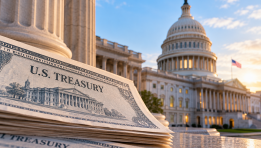
The U.S. Treasury market is entering a period of heightened pressure as rapidly rising yields raise concerns that bond

- omer bar
- •
- 6 Min Read
- •
- ago 8 hours
SKN | Lockheed Martin Unveils PAC-3 Edge to Counter Hypersonic and Advanced Missile Threats
Lockheed Martin has unveiled a new generation of missile-defense technology as the U.S. military seeks to strengthen its ability
- ago 8 hours
- •
- 6 Min Read

Lockheed Martin has unveiled a new generation of missile-defense technology as the U.S. military seeks to strengthen its ability

- Lior mor
- •
- 6 Min Read
- •
- ago 9 hours
SKN | Netflix Plans 5% Workforce Reduction as Streaming Competition Intensifies
Netflix is reportedly preparing to reduce its workforce by approximately 5%, according to Puck News, in what would represent
- ago 9 hours
- •
- 6 Min Read

Netflix is reportedly preparing to reduce its workforce by approximately 5%, according to Puck News, in what would represent
- omer bar
- •
- 6 Min Read
- •
- ago 11 hours
SKN | Bessent to Skip IMF and World Bank Meetings as U.S. Delegation Heads to Bangkok
U.S. Treasury Secretary Scott Bessent will not attend next week's annual meetings of the International Monetary Fund and World
- ago 11 hours
- •
- 6 Min Read

U.S. Treasury Secretary Scott Bessent will not attend next week's annual meetings of the International Monetary Fund and World

