




- Arik Arkadi Sluzki
- •
- 6 Min Read
- •
- 17 hours ago


Key Points
- Volatility-control funds have pushed equity allocations to the 98th percentile, according to Deutsche Bank data, after the S&P 500 gained 12% this year.
- Barclays estimates that a relatively modest increase in market volatility could force these strategies to sell more than $100 billion in equities.
- Trend-following CTAs are also heavily exposed to stocks, making systematic fund positioning an important market variable ahead of the US midterm elections.
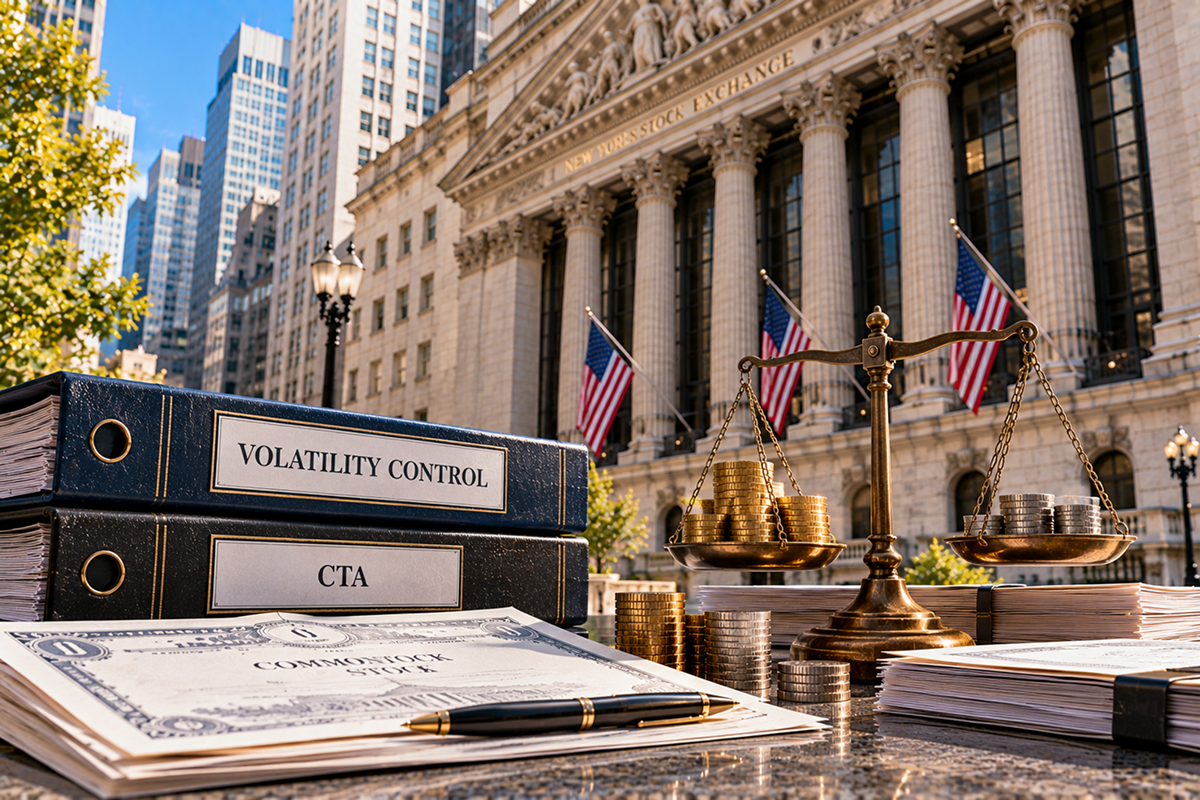
The strong rally in US equities has left several systematic investment strategies with unusually high exposure to stocks, creating a potential source of additional selling pressure if market volatility rises. According to Reuters, volatility-control funds have accumulated equity positions as the S&P 500 advanced 12% this year, raising questions about how quickly these strategies could reduce exposure during a market reversal.
Calm Markets Have Driven Equity Exposure Higher
Volatility-control funds are systematic strategies designed to adjust their portfolios according to market volatility. When volatility remains subdued, these funds can increase equity exposure, while a rise in volatility can trigger reductions in stock positions. The mechanism is intended to maintain a predetermined level of portfolio risk, but it can also create synchronized buying or selling across markets.
Deutsche Bank data cited by Reuters shows that equity allocations among volatility-control funds are now around the 98th percentile. The elevated positioning reflects the impact of this year’s equity rally and relatively contained volatility, which have encouraged these strategies to maintain substantial stock exposure.
A Modest Volatility Shock Could Trigger Large Sales
The main concern is what happens if market conditions change quickly. Barclays estimates that even a mild increase in volatility could prompt more than $100 billion of equity selling from volatility-control strategies. Such selling would not necessarily reflect a fundamental reassessment of individual companies; instead, it would result from the mechanical rules governing portfolio risk.
This distinction is important for understanding potential market dynamics. If prices begin falling and volatility rises at the same time, systematic funds could reduce equity exposure as part of their risk-management processes. That selling could place additional pressure on prices, potentially creating a feedback loop in which declining markets generate higher volatility and higher volatility generates further selling.
CTAs Add Another Systematic Positioning Risk
Volatility-control funds are not the only systematic strategies attracting attention. Commodity trading advisors, commonly known as CTAs or trend-following funds, are also reported to have significant equity exposure. These strategies generally respond to established market trends, meaning a sustained change in the direction of stocks could eventually influence their positioning.
The overlap between different systematic strategies matters because multiple groups can respond to the same market signal at roughly the same time. That does not mean a selloff is inevitable, but it increases the importance of fund positioning when assessing the potential magnitude of market moves.
Why Positioning Matters for Global Investors
Systematic fund exposure has broader implications because US equities remain a major driver of global risk sentiment. A sharp adjustment in US stocks could affect international markets through portfolio flows, currencies and changes in investor risk appetite, including in Israel.
With the US midterm elections approaching, analysts cited by Reuters are paying closer attention to positioning and potential volatility. Investors will be watching whether equity volatility remains subdued enough to support existing allocations or rises sufficiently to trigger systematic deleveraging. The key issue is therefore not simply the current level of equity exposure, but how quickly large rules-based strategies might be required to respond if market conditions change.
Comparison, examination, and analysis between investment houses
Leave your details, and an expert from our team will get back to you as soon as possible
* This article, in whole or in part, does not contain any promise of investment returns, nor does it constitute professional advice to make investments in any particular field.
To read more about the full disclaimer, click here
- orshu
- •
- 6 Min Read
- •
- ago 2 hours
SKN | U.S. Markets Advance Broadly as Nasdaq Leads Strong Gains Across Major Benchmarks
U.S. markets are trading broadly higher on October 2, with gains extending across major equity benchmarks and regional markets.
- ago 2 hours
- •
- 6 Min Read

U.S. markets are trading broadly higher on October 2, with gains extending across major equity benchmarks and regional markets.
- orshu
- •
- 4 Min Read
- •
- ago 8 hours
SKN | European Markets Rebound as Major Benchmarks Recover From Sharp Losses
European markets moved higher on October 2, 2026, with all major equity benchmarks in the supplied data posting gains. The
- ago 8 hours
- •
- 4 Min Read

European markets moved higher on October 2, 2026, with all major equity benchmarks in the supplied data posting gains. The

- sagi habasov
- •
- 6 Min Read
- •
- ago 17 hours
SKN | S&P 1500 Hides Broad September Weakness as Large-Cap Leadership Masks Sector Declines
A Flat Market Masks a Wide Performance Gap The September performance breakdown for the S&P Composite 1500 shows a market
- ago 17 hours
- •
- 6 Min Read

A Flat Market Masks a Wide Performance Gap The September performance breakdown for the S&P Composite 1500 shows a market

- Lior mor
- •
- 7 Min Read
- •
- ago 18 hours
SKN | Stocks Find Footing as Treasury Yields Ease After Seven-Day Surge
US stocks found some stability on Thursday as Treasury yields retreated from multi-year highs, allowing Wall Street to close
- ago 18 hours
- •
- 7 Min Read

US stocks found some stability on Thursday as Treasury yields retreated from multi-year highs, allowing Wall Street to close
