




- Lior mor
- •
- 7 Min Read
- •
- 18 hours ago


Key Points
- Wall Street closed modestly higher as the benchmark US Treasury yield retreated from multi-year highs.
- The 10-year Treasury yield snapped a seven-session streak of gains after reaching its highest level in 24 years.
- Markets are now focused on the September US employment report, expected to show 90,000 new jobs and a 4.1% unemployment rate.
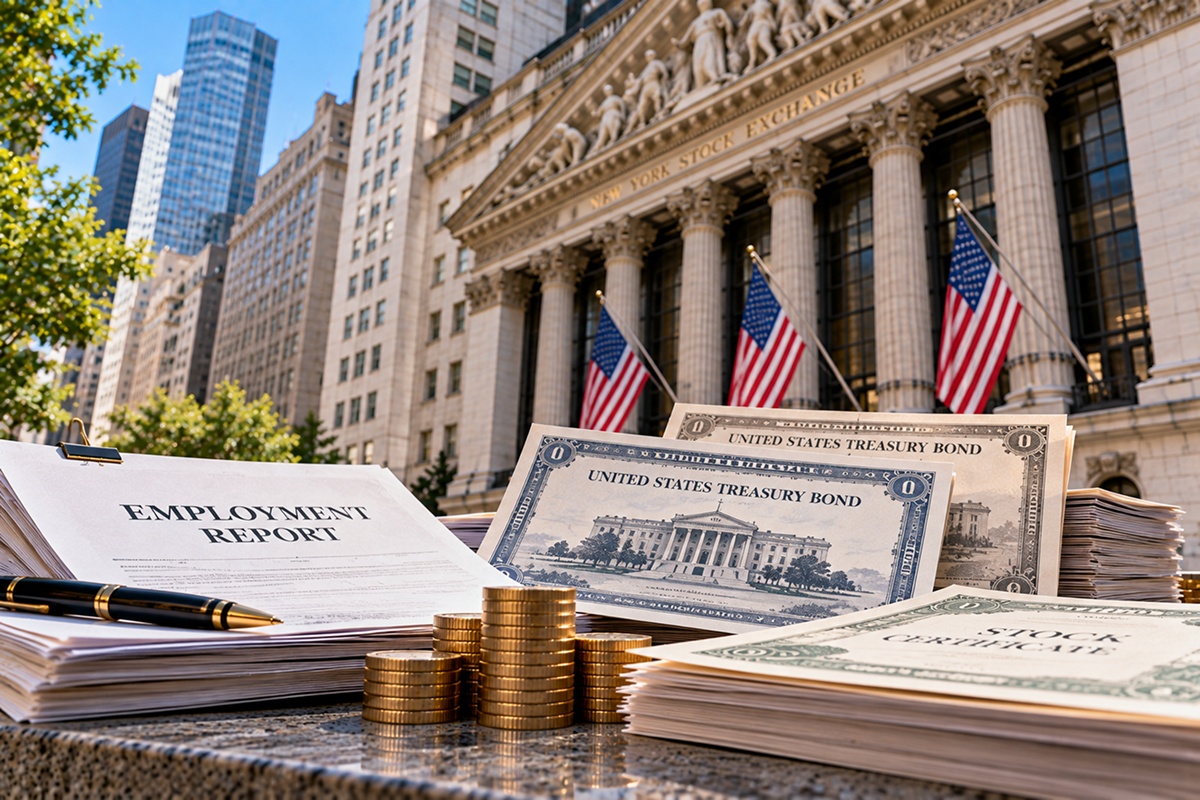
US stocks found some stability on Thursday as Treasury yields retreated from multi-year highs, allowing Wall Street to close the opening session of the new quarter modestly higher. The move came after a week of rising borrowing costs had increased pressure on equities, while a series of generally upbeat economic indicators kept attention on the outlook for inflation and Federal Reserve policy.
Treasury Yields Retreat After Seven Sessions of Gains
The benchmark US Treasury yield pulled back after reaching a 24-year high, snapping a seven-session advance as buyers returned to the government bond market. The reversal provided some relief for equities because longer-term Treasury yields play a central role in determining financing conditions and the valuation of risk assets.
The bond-market move was particularly important after yields had climbed sharply in recent sessions. Rising yields can increase the relative attractiveness of fixed-income assets while raising the discount rate applied to future corporate earnings. Thursday’s retreat therefore helped Wall Street reverse an earlier decline and close the session in positive territory.
Economic Data Keeps Rate Expectations in Focus
The backdrop remains complicated by economic data that has generally pointed to a resilient US economy. Stronger activity can support corporate earnings and employment, but it can also make it more difficult for inflation to return sustainably toward the Federal Reserve’s objective.
That tension is increasingly central to markets. Investors are assessing whether economic resilience will allow the US economy to absorb higher borrowing costs or whether persistent price pressures could keep monetary policy restrictive for longer. The direction of Treasury yields has consequently become an important signal for equity markets.
Jobs Report Becomes the Next Major Market Test
Attention now turns to Friday’s September employment report. The Reuters report said economists expected the US economy to have added 90,000 jobs during the month, while the unemployment rate was expected to remain at 4.1%.
The employment figures could influence expectations for the path of interest rates because labor-market conditions remain closely linked to both economic growth and inflation. A stronger-than-expected labor market could reinforce expectations for persistent demand, while weaker employment data could increase attention on the possibility of softer economic activity and changing monetary-policy expectations.
Global Markets Remain Sensitive to US Rates
The US bond market is also influencing conditions beyond Wall Street. The dollar reached a 17-month high against the euro amid rising bond yields and higher oil prices, while European stocks closed at three-month lows. For global investors, the combination of higher US yields and a stronger dollar can affect capital flows, financing costs and valuations across international markets, including Israel.
Other markets are adding to the uncertainty. Crude prices settled higher after China halted oil-product exports, while gold gained as expectations for further Federal Reserve rate increases moderated. These cross-asset moves highlight how closely equities are currently connected to developments in bonds, energy and currencies.
Markets will now focus on the US employment data, Treasury yields, energy prices and developments in the Middle East. For equities, the key question is whether the recent decline in yields represents a temporary pause or the beginning of a more sustained stabilization in borrowing costs. The answer will help shape expectations for valuations, corporate financing conditions and global risk appetite as the new quarter develops.
Comparison, examination, and analysis between investment houses
Leave your details, and an expert from our team will get back to you as soon as possible
* This article, in whole or in part, does not contain any promise of investment returns, nor does it constitute professional advice to make investments in any particular field.
To read more about the full disclaimer, click here
- orshu
- •
- 6 Min Read
- •
- ago 2 hours
SKN | U.S. Markets Advance Broadly as Nasdaq Leads Strong Gains Across Major Benchmarks
U.S. markets are trading broadly higher on October 2, with gains extending across major equity benchmarks and regional markets.
- ago 2 hours
- •
- 6 Min Read

U.S. markets are trading broadly higher on October 2, with gains extending across major equity benchmarks and regional markets.
- orshu
- •
- 4 Min Read
- •
- ago 8 hours
SKN | European Markets Rebound as Major Benchmarks Recover From Sharp Losses
European markets moved higher on October 2, 2026, with all major equity benchmarks in the supplied data posting gains. The
- ago 8 hours
- •
- 4 Min Read

European markets moved higher on October 2, 2026, with all major equity benchmarks in the supplied data posting gains. The

- sagi habasov
- •
- 6 Min Read
- •
- ago 17 hours
SKN | S&P 1500 Hides Broad September Weakness as Large-Cap Leadership Masks Sector Declines
A Flat Market Masks a Wide Performance Gap The September performance breakdown for the S&P Composite 1500 shows a market
- ago 17 hours
- •
- 6 Min Read
A Flat Market Masks a Wide Performance Gap The September performance breakdown for the S&P Composite 1500 shows a market

- Arik Arkadi Sluzki
- •
- 6 Min Read
- •
- ago 17 hours
SKN | Volatility-Control Funds Near Record Equity Exposure, Raising Risk of Amplified Selloffs
The strong rally in US equities has left several systematic investment strategies with unusually high exposure to stocks, creating
- ago 17 hours
- •
- 6 Min Read

The strong rally in US equities has left several systematic investment strategies with unusually high exposure to stocks, creating
