




- Ronny Mor
- •
- 10 Min Read
- •
- 23 seconds ago


Key Points
- Global bonds face a difficult September: Rising government debt, heavy issuance and persistent inflation pressures have pushed major sovereign yields sharply higher.
- Equities remain surprisingly resilient: Asian and U.S. stocks have largely absorbed the bond-market shock, supported by corporate earnings, economic growth and continued AI investment.
- The dollar is strengthening: Higher U.S. yields have supported the dollar, while the euro and sterling are heading toward significant monthly declines.

Global bond markets are heading toward one of their most challenging months in years as investors contend with deteriorating government finances, heavy issuance and renewed inflation pressure. Higher energy costs linked to the prolonged conflict in the Middle East have added another layer of uncertainty to the outlook for inflation and interest rates.
The pressure is particularly visible in the U.S. Treasury market. The 10-year Treasury yield remained near 5.23% in Asian trading, close to its highest level since 2007, and was on course for an increase of almost 50 basis points during September. That would represent its largest monthly increase in roughly two years.
Higher Yields Could Become a Structural Shift
The increase in borrowing costs is important well beyond government bonds. Sovereign yields serve as reference rates for mortgages, corporate financing and valuations across risk assets, meaning a persistent increase can gradually alter the economics of investment throughout the global financial system.
The two-year Treasury yield held around 4.889% after New York Federal Reserve President John Williams pushed back against expectations for earlier monetary-policy tightening. Even so, the yield remained more than 50 basis points higher for the month.
The move has prompted some investors to consider whether the market is entering a period of structurally higher yields rather than simply repricing expectations for the next few central-bank meetings.
Europe and Japan Also See Elevated Yields
The shift is not confined to the United States. Japanese government bond yields remain near multi-decade highs, while 10-year yields in Germany and France reached 17-year and 18-year highs, respectively, during the week.
Japan’s 10-year government bond yield was on course for a 42-basis-point increase during the quarter. The synchronized rise across major bond markets suggests investors are reassessing the global cost of capital rather than responding to a single country’s monetary-policy outlook.
Stocks Continue to Defy the Bond Selloff
Equity markets have so far demonstrated considerable resilience despite the sharp rise in risk-free rates. MSCI’s broad Asia-Pacific index excluding Japan gained 0.4% and was heading for a monthly decline of nearly 1%.
Japan’s Nikkei jumped 2.1% and was set for a monthly gain of 0.8%, although it remained on course for a 4.7% quarterly decline. South Korea’s Kospi was heading for a 0.7% monthly increase but a much larger 19% quarterly decline.
U.S. equity futures were also positive, with Nasdaq futures up 0.13% and S&P 500 futures gaining 0.24%. European markets showed similar strength, with Euro Stoxx 50, DAX and FTSE futures all moving higher.
AI and Earnings Are Cushioning Equity Markets
Strong corporate earnings, resilient global economic activity and continued enthusiasm surrounding artificial intelligence have helped equities absorb higher yields. The resilience has been particularly visible in technology stocks, where expectations for earnings growth and AI-related investment remain powerful drivers of investor sentiment.
However, investors are increasingly asking how far yields can rise before corporate investment and equity valuations respond more forcefully. Questions surrounding hyperscalers and whether higher financing costs could eventually lead to reduced capital expenditure are becoming increasingly relevant.
China Faces a Different Market Backdrop
Chinese equities remain considerably weaker. The CSI 300 gained 0.2% in morning trading but remained close to a one-year low and was heading for a quarterly decline of approximately 13%, its largest quarterly fall since the height of the Covid-19 lockdowns.
The Shanghai Composite also rose 0.3% by midday but was on track for a 6.2% quarterly decline, which would represent its largest quarterly drop in four years. The divergence highlights how local economic and market conditions can outweigh broader global equity resilience.
Dollar Strength Adds Pressure on Major Currencies
The dollar is benefiting from higher U.S. yields and was on course for a monthly gain of about 2%. The euro traded near $1.1336, close to a 16-month low, and was heading for a 2.4% monthly decline as energy pressures and European political uncertainty weighed on the currency.
Sterling was also weaker and headed for a 2.4% monthly loss, while the yen stabilized around 157.115 per dollar. Investors remain cautious about pushing the yen significantly lower amid concerns about potential coordinated intervention by Japan and the United States.
Oil Keeps Inflation Risks Elevated
Energy markets remain central to the bond and currency outlook. U.S. crude rose 0.19% to $89.55 a barrel, while Brent gained 0.53% to $103.13. Both benchmarks were heading toward monthly gains as investors continued to assess the possibility of prolonged supply disruptions.
For global markets, the key question is whether elevated energy prices keep inflation expectations high enough to prevent yields from stabilizing. If borrowing costs remain structurally elevated while oil prices continue to rise, the pressure on valuations could eventually become harder for equities to absorb.
What Investors Should Watch Next
The current market backdrop presents a significant divergence: bonds are pricing a more expensive cost of capital, while stocks continue to price relatively strong earnings and economic growth. That gap can persist, but the longer it remains, the more important the level of Treasury yields becomes for equity valuations.
Investors will be watching the 10-year Treasury yield, energy prices, corporate capital spending and earnings expectations for signs of whether the bond-market shock is beginning to spread more broadly. The performance of technology stocks will be particularly important because continued AI investment has been one of the strongest supports for equity sentiment.
Comparison, examination, and analysis between investment houses
Leave your details, and an expert from our team will get back to you as soon as possible
* This article, in whole or in part, does not contain any promise of investment returns, nor does it constitute professional advice to make investments in any particular field.
To read more about the full disclaimer, click here
- omer bar
- •
- 6 Min Read
- •
- ago 9 hours
SKN | Fed Rate-Hike Odds Fall After Williams Remarks as Bond Traders Face a Critical Test
Rate-Hike Expectations Reverse Sharply Federal Reserve policy expectations have shifted significantly during September. The chart tracking the probability of a
- ago 9 hours
- •
- 6 Min Read

Rate-Hike Expectations Reverse Sharply Federal Reserve policy expectations have shifted significantly during September. The chart tracking the probability of a

- sagi habasov
- •
- 6 Min Read
- •
- ago 12 hours
SKN | Fed Communication Strategy Faces Volatility Test as Musalem Warns Against Excessive Silence
Federal Reserve communication is becoming an increasingly important variable for financial markets as policymakers reassess how much guidance the
- ago 12 hours
- •
- 6 Min Read
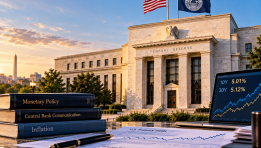
Federal Reserve communication is becoming an increasingly important variable for financial markets as policymakers reassess how much guidance the

- Ronny Mor
- •
- 6 Min Read
- •
- ago 13 hours
SKN | Could 30-Year Treasury Yields Above 5.6% Deepen Pressure on U.S. Stocks?
Long-Term Treasury Yields Reach a 23-Year High U.S. stocks came under pressure Tuesday as long-term Treasury yields continued to rise,
- ago 13 hours
- •
- 6 Min Read

Long-Term Treasury Yields Reach a 23-Year High U.S. stocks came under pressure Tuesday as long-term Treasury yields continued to rise,
- sagi habasov
- •
- 7 Min Read
- •
- ago 1 day
SKN | Could Energy Prices and Political Risk Keep the Euro Under Pressure Against the Dollar?
The euro’s strong performance earlier in the year is facing a more complicated environment as higher energy prices and political
- ago 1 day
- •
- 7 Min Read

The euro’s strong performance earlier in the year is facing a more complicated environment as higher energy prices and political
