





- Lior mor
- •
- 7 Min Read
- •
- 6 minutes ago


Key Points
- Intel shares climbed 37.4% from September 1 through September 25, putting the stock on track for one of its strongest monthly performances in decades.
- The rally has been supported by accelerating AI infrastructure demand, stronger data-center performance and renewed interest in CPUs for AI inference.
- Intel's improving fundamentals are being weighed against capacity constraints, valuation risk and the execution requirements of its manufacturing and foundry strategy.

Intel has emerged as one of the semiconductor market’s notable performers in September, with its shares rising 37.4% between September 1 and September 25, according to the market data shown in the attached source. The move reflects a broader shift in investor attention toward the role of CPUs in the rapidly expanding AI infrastructure market, following a period in which GPUs dominated the sector narrative.
AI Infrastructure Is Expanding Intel’s Opportunity
Intel’s latest operating results provide a fundamental backdrop to the stock’s advance. The company reported second-quarter 2026 revenue of $16.1 billion, up 25% year over year, while Data Center and AI revenue increased 59% to $6.3 billion. Total Intel Products revenue rose 28% to $15.1 billion, demonstrating stronger demand across its core product portfolio. Intel also reported a substantial improvement in gross margin, which reached 40.4%, compared with 27.5% a year earlier.
The company has increasingly positioned its processors as an important component of AI infrastructure rather than a separate market from accelerated computing. Intel’s Xeon processors, for example, are being used as host CPUs in NVIDIA’s DGX Rubin NVL8 systems, where CPUs handle functions including orchestration, memory access and workload distribution alongside GPUs.
CPU Demand Adds Another Layer to the AI Trade
Recent market activity suggests that investors are reassessing how AI growth translates into semiconductor demand. Reuters reported that Intel, AMD and other chipmakers rallied sharply on September 21 as enthusiasm around AI infrastructure returned to the market. Intel gained 12.1% that session, contributing to a 4.3% advance in the PHLX Semiconductor Index.
Demand has also become sufficiently strong to create supply constraints. Intel CEO Lip-Bu Tan said in September that the company could currently supply only about 50% of the processor demand being requested by customers. Intel’s own second-quarter filing separately noted that market demand exceeded available product supply during the first half of 2026, although the company expected those constraints to ease during the second half.
The development is significant because AI workloads are increasingly moving from model training toward inference and agentic applications. As AI systems interact continuously with users, software and external tools, computing demand is distributed across GPUs, CPUs, networking and memory rather than concentrated exclusively in accelerator hardware.
Intel’s Recovery Still Depends on Execution
The stronger demand environment does not eliminate Intel’s longer-term execution challenges. The company is simultaneously attempting to expand its product competitiveness and rebuild its manufacturing and foundry position, requiring substantial investment in equipment, clean-room capacity and substrates. Intel raised its expected 2026 capital expenditures from $18 billion to approximately $20 billion as it works to support anticipated growth in products and foundry operations.
Intel’s second-quarter results also show that the recovery remains uneven. While Data Center and AI revenue increased 59%, Intel Foundry generated $5.8 billion of revenue but recorded a $2.1 billion operating loss in the quarter. External foundry revenue was only $293 million, highlighting the scale of the challenge involved in building a profitable third-party manufacturing business.
That distinction matters for the stock because the September rally has substantially changed the market’s expectations. Intel’s shares closed at $123 on September 25, according to recent market data, after trading as high as $127.39 during the preceding month. The shares were therefore reflecting significantly greater optimism about future earnings and AI-related demand than they were at the beginning of September.
Going forward, investors will likely focus on whether Intel can convert the current AI-driven demand surge into sustained revenue, margins and free cash flow. The next quarterly results, CPU supply availability, progress in advanced manufacturing and foundry customer commitments will be particularly important indicators. The September rally has demonstrated how quickly expectations can change around semiconductor companies, but maintaining that momentum will ultimately depend on whether operational improvements keep pace with the market’s higher expectations.
Comparison, examination, and analysis between investment houses
Leave your details, and an expert from our team will get back to you as soon as possible
* This article, in whole or in part, does not contain any promise of investment returns, nor does it constitute professional advice to make investments in any particular field.
To read more about the full disclaimer, click here
- omer bar
- •
- 7 Min Read
- •
- ago 6 minutes
SKN | Micron Earnings Set to Test AI Memory Demand as Q4 Results Approach
Micron Technology is approaching its September 30 fiscal fourth-quarter earnings report with expectations elevated by strong artificial intelligence-related demand
- ago 6 minutes
- •
- 7 Min Read
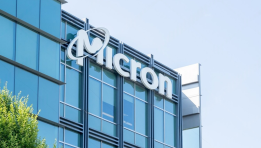
Micron Technology is approaching its September 30 fiscal fourth-quarter earnings report with expectations elevated by strong artificial intelligence-related demand

- Arik Arkadi Sluzki
- •
- 6 Min Read
- •
- ago 6 minutes
SKN | Nike Revenue Falls Nearly 10% From Its Peak: Can the Turnaround Restore Growth?
Nike's revenue remains below its recent peak as the world's largest sportswear company works through a broad business reset.
- ago 6 minutes
- •
- 6 Min Read

Nike's revenue remains below its recent peak as the world's largest sportswear company works through a broad business reset.

- Ronny Mor
- •
- 7 Min Read
- •
- ago 1 hour
SKN | Meta and Microsoft Lead Tech Stocks Higher as Equities Absorb Surging Bond Yields
Technology stocks extended their gains last week, with Meta Platforms and Microsoft among the companies helping the sector advance
- ago 1 hour
- •
- 7 Min Read

Technology stocks extended their gains last week, with Meta Platforms and Microsoft among the companies helping the sector advance

- Lior mor
- •
- 7 Min Read
- •
- ago 4 hours
SKN | Apple Faces Record $5.7 Billion Patent Verdict Over Haptic Technology
Apple has been ordered by a US jury to pay more than $5.7 billion to Taction in a patent
- ago 4 hours
- •
- 7 Min Read

Apple has been ordered by a US jury to pay more than $5.7 billion to Taction in a patent

