




- sagi habasov
- •
- 8 Min Read
- •
- 22 seconds ago


Key Points
- Goldman Sachs forecasts Chinese crude imports will remain subdued as Beijing pivots toward domestic energy alternatives amid elevated global prices.
- A dramatic structural shift is underway, with the Asian powerhouse sharply reducing purchases of Russian and Iranian crude in favor of openly traded benchmarks.
- The primary upside risk to oil prices stems from geopolitical escalations in the Middle East, overshadowing any anticipated resurgence in Chinese demand.

The global energy market has spent recent months looking East, anticipating a resurgence in Chinese crude demand that could catalyze a broader commodities rally. However, expectations for a sharp, V-shaped recovery in consumption appear increasingly misplaced. A comprehensive analysis by investment banking giant Goldman Sachs suggests that China’s crude oil imports will remain at depressed levels in the near term, provided barrel prices stay elevated. This fundamental shift not only reshapes macroeconomic forecasts but also alters how institutional traders price short-to-medium-term risks within a complex interest rate environment.
The Cooling of Chinese Demand and Global Market Implications
Over the past six months, the world’s second-largest economy has recorded a sharp, sustained decline in crude oil imports. Paradoxically, this deflationary trend has helped anchor the global oil market, preventing unchecked price spikes as the Asian consumer opts for cost-effective domestic alternatives over premium-priced barrels. Policymakers in Beijing have strategically pivoted toward increased domestic electricity generation and coal consumption, coupled with a calculated drawdown of existing crude inventories amassed during periods of favorable pricing. On a broader scale, global data reflects a persistent stagnation; oil exports from the Persian Gulf remain approximately six million barrels per day below pre-war levels, despite a transient uptick observed in September. From a behavioral finance perspective, investors are internalizing that the traditional “China effect”—where localized slowdowns were reliably followed by massive compensatory consumer surges—is yielding to a disciplined, cost-benefit-driven purchasing strategy.
Structural Import Shifts and Their Geopolitical Weight
Beyond the absolute decline in import volumes, the composition of China’s energy basket is undergoing a tectonic shift. Although total seaborne crude imports edged up by six percent sequentially in September, the aggregate figure remains nearly three million barrels per day below established seasonal norms. The most compelling development for market analysts lies in the changing origin of these supplies. The market share of crude imported from Russia and Iran, which constituted roughly half of China’s total imports in August, plummeted to less than one-third by September. This sudden pivot away from heavily sanctioned energy sources has triggered an immediate scramble for conventional alternatives, thereby boosting the demand for publicly traded global crude benchmarks. This transition underscores the strategic agility of the Chinese economy, which is carefully navigating complex international geopolitical constraints while hedging against volatile free-market fluctuations to minimize exposure.
Goldman Sachs’ Dual-Model Forecasting Approach
To anchor their macroeconomic projections and strip away systemic market biases, Goldman Sachs economists deployed two independent quantitative methodologies. The first approach examines the balance of crude and refined product inventories within China, projecting an anemic recovery in total crude imports of just six hundred thousand barrels per day in the fourth quarter compared to the third. This marginal increase is largely attributed to elevated refined product exports and a deceleration in stockpile withdrawals, even as domestic gasoline and diesel reserves sit at precarious lows not seen since mid-2019. The second methodology relies on a multifaceted statistical model incorporating the imported crude price basket, long-term seasonal trends, and demand lag patterns. While this model identified a transient opportunistic bump in September’s purchasing activity, it decisively projects a swift reversion to the depressed import levels characteristic of August as the final quarter of the year deepens.
Looking Ahead: Energy Markets Shadowed by Security Risks
Integrating these data points into financial models reveals a critical rule of thumb: a sustained one million barrel per day fluctuation in Chinese net imports over a six-month period shifts the fair value of Brent crude by approximately four dollars per barrel. Yet, as Wall Street gazes toward the upcoming fiscal year, a complex narrative emerges where Chinese consumer behavior is eclipsed by far more rigid risk factors. Trading desks now assess that the primary catalyst for energy price volatility is no longer Asian growth metrics, but rather a deeply entrenched geopolitical risk premium. A systemic escalation in the Middle East, carrying the potential to directly disrupt core production infrastructure and critical export choke points, commands the lion’s share of institutional focus. Goldman Sachs unequivocally categorizes regional security tensions as the dominant upside risk to its pricing forecast, positioning China’s macroeconomic moderation as a stabilizing force rather than the spark for the market’s next structural rally.
Comparison, examination, and analysis between investment houses
Leave your details, and an expert from our team will get back to you as soon as possible
* This article, in whole or in part, does not contain any promise of investment returns, nor does it constitute professional advice to make investments in any particular field.
To read more about the full disclaimer, click here
- Ronny Mor
- •
- 6 Min Read
- •
- ago 11 hours
SKN | Oil Slips Below $100 as Gulf Supply Recovers: Can U.S.-Iran Talks Ease Energy Market Pressure?
Oil prices edged lower on September 23 as improving Gulf supply prospects and renewed hopes for U.S.-Iran negotiations reduced some
- ago 11 hours
- •
- 6 Min Read

Oil prices edged lower on September 23 as improving Gulf supply prospects and renewed hopes for U.S.-Iran negotiations reduced some

- sagi habasov
- •
- 6 Min Read
- •
- ago 13 hours
SKN | Trump Proposes $5 Billion Gulf Energy Fund: Could It Reshape Regional Infrastructure and Oil Flows?
The Trump administration has proposed a $5 billion U.S. contribution to a new fund designed to help rebuild energy infrastructure
- ago 13 hours
- •
- 6 Min Read
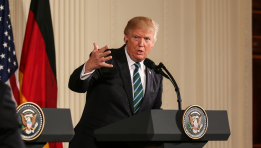
The Trump administration has proposed a $5 billion U.S. contribution to a new fund designed to help rebuild energy infrastructure
- Ronny Mor
- •
- 7 Min Read
- •
- ago 16 hours
SKN | Saudi Arabia Restarts East-West Oil Pipeline as Global Crude Supply Risks Ease
Saudi Arabia has restarted operations on its strategically important East-West Pipeline, easing some of the supply concerns that have
- ago 16 hours
- •
- 7 Min Read

Saudi Arabia has restarted operations on its strategically important East-West Pipeline, easing some of the supply concerns that have
- Ronny Mor
- •
- 6 Min Read
- •
- ago 21 hours
SKN | Oil’s Next Move Remains Unclear as Wall Street Turns to Energy Stocks With More Resilient Fundamentals
The oil market is entering another period in which the range of possible outcomes appears unusually wide. CNBC energy
- ago 21 hours
- •
- 6 Min Read

The oil market is entering another period in which the range of possible outcomes appears unusually wide. CNBC energy
