




- omer bar
- •
- 8 Min Read
- •
- 2 minutes ago


Key Points
- Porsche, once Volkswagen’s most dependable profit engine, is now a major source of financial pressure after weaker expectations triggered a €6 billion impairment.
- Volkswagen has cut its 2026 operating-margin outlook to 1% at best, compared with its previous forecast of 4% to 5.5%.
- Weak demand in China, U.S. tariffs and costly adjustments to Porsche’s electric-vehicle strategy are challenging Volkswagen’s broader restructuring plan.
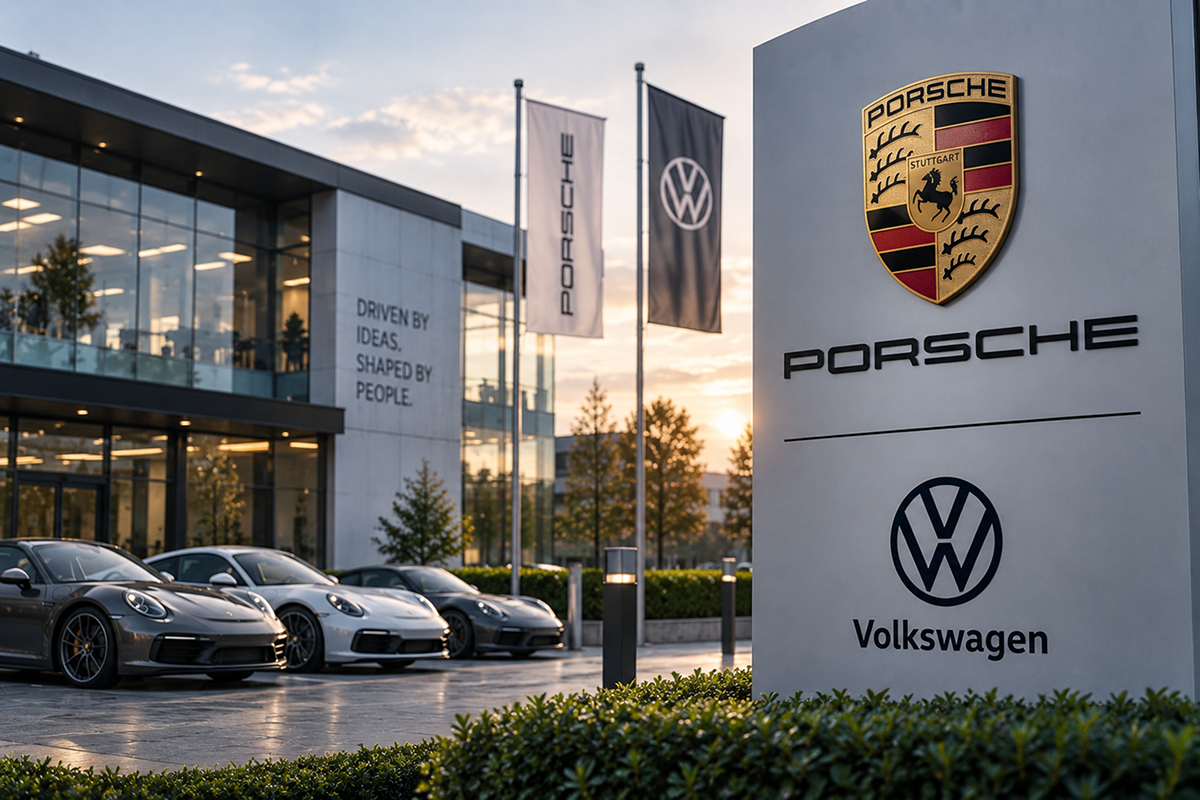
Volkswagen’s luxury sports-car division Porsche has shifted from one of the group’s most valuable profit drivers to a central source of financial pressure, exposing the difficulties facing Europe’s largest automaker. Less than four years after Porsche’s high-profile stock-market listing, weaker sales expectations, a difficult Chinese market and strategic reversals in electric vehicles have forced Volkswagen to reassess the brand’s contribution to its wider restructuring strategy.
€6 Billion Impairment Deepens Volkswagen’s Profit Warning
Volkswagen’s latest profit warning included approximately €10 billion in one-off costs, with about €6 billion linked to a writedown of its 75% stake in Porsche. The impairment followed a €2.7 billion writedown the previous year and reflects significantly weaker expectations for Porsche’s future financial performance. Volkswagen consequently reduced its 2026 operating-margin forecast to no more than 1%, down from a previous range of 4% to 5.5%.
The deterioration represents a substantial change for Porsche, which was valued at a premium when it was listed in 2022. Volkswagen’s goodwill associated with Porsche has now fallen to about €10 billion, compared with €18.8 billion in the year of the listing. The decline indicates that the financial expectations attached to the luxury brand have been materially reset.
China and Electric Vehicles Expose Strategic Weaknesses
Porsche’s problems reflect two structural challenges affecting Volkswagen and other European manufacturers. In China, the world’s largest automotive market, demand for foreign luxury brands has weakened while domestic manufacturers have expanded their technological capabilities and market share. Volkswagen has also warned of a 20% contraction in the Chinese market, adding pressure to a group that historically relied heavily on the region.
The transition toward electric vehicles has created another complication. Volkswagen said an accelerated shift in consumer demand toward battery-electric vehicles was contributing to lower expectations for its Audi and Volkswagen passenger-car businesses, while Porsche has had to reassess elements of its EV strategy. The combination of weaker volumes and expensive strategic adjustments has reduced the financial benefit of Porsche’s historically high-margin model.
Porsche’s Smaller Volume Strategy Faces a Cash-Flow Test
Porsche CEO Michael Leiters continues to defend a medium-term operating-margin target of 10% to 15%. However, Reuters reported that the company’s retreat from China, including reductions in its dealership network, and pressure on its U.S. business from tariffs have raised questions over the sales volumes required to generate sufficient cash for both Porsche and its parent.
The issue is particularly important because Porsche has pursued a “value over volume” strategy focused on higher-margin vehicles. While that approach can preserve unit economics, lower sales volumes can still reduce overall profit and cash generation. Volkswagen therefore faces a difficult balance between protecting Porsche’s premium positioning and restoring the scale needed to support the group’s broader restructuring.
Skoda Emerges as an Unexpected Profit Benchmark
The reversal is also visible within Volkswagen’s own portfolio. Porsche’s margins have fallen below those of the wider group and have been overtaken by Skoda, Volkswagen’s Czech mass-market brand. That shift illustrates how rapidly profitability has changed across the group’s brands and gives management another benchmark as it evaluates capital allocation and operational efficiency.
Volkswagen has already agreed to a sweeping restructuring program involving up to 50,000 additional job reductions, while Porsche has an existing restructuring plan covering 9,000 layoffs. Porsche CEO Leiters separately told employees that there were currently no plans for an additional 4,000 job cuts beyond the measures already approved, despite reports of further reductions being considered.
The next test will be whether Volkswagen can restore profitability while simultaneously navigating Chinese competition, U.S. tariffs, the EV transition and substantial restructuring costs. Management is targeting a 9% operating margin by the end of the decade, compared with a maximum of 1% expected in 2026. Whether Porsche can return to double-digit margins and generate sufficient cash will be a key factor in determining how credible that wider turnaround objective remains.
Comparison, examination, and analysis between investment houses
Leave your details, and an expert from our team will get back to you as soon as possible
* This article, in whole or in part, does not contain any promise of investment returns, nor does it constitute professional advice to make investments in any particular field.
To read more about the full disclaimer, click here
- Arik Arkadi Sluzki
- •
- 7 Min Read
- •
- ago 1 minute
SKN | S&P 500 Holds Key Technical Support as Investors Assess Path Toward New Highs
The S&P 500 emerged from last week’s volatility without breaching the technical levels that would have signaled a more
- ago 1 minute
- •
- 7 Min Read
The S&P 500 emerged from last week’s volatility without breaching the technical levels that would have signaled a more

- Lior mor
- •
- 7 Min Read
- •
- ago 1 minute
SKN | OpenAI Calls for U.S. Leadership on Global Technical Standards for Frontier AI
OpenAI has called for the United States to take the lead in establishing international technical standards for frontier artificial
- ago 1 minute
- •
- 7 Min Read

OpenAI has called for the United States to take the lead in establishing international technical standards for frontier artificial
- Lior mor
- •
- 7 Min Read
- •
- ago 53 minutes
SKN | AMD Joins the $1 Trillion Club as AI Demand Drives Chipmaker Rally
Advanced Micro Devices has joined an increasingly exclusive group of U.S. semiconductor companies valued at more than $1 trillion,
- ago 53 minutes
- •
- 7 Min Read
Advanced Micro Devices has joined an increasingly exclusive group of U.S. semiconductor companies valued at more than $1 trillion,

- sagi habasov
- •
- 7 Min Read
- •
- ago 53 minutes
SKN | Yen Weakens as BOJ Signals Caution and Markets Watch for Currency Intervention
The Japanese yen weakened on Monday as markets assessed the possibility of official intervention following a recent decline that
- ago 53 minutes
- •
- 7 Min Read

The Japanese yen weakened on Monday as markets assessed the possibility of official intervention following a recent decline that
