





- Ronny Mor
- •
- 8 Min Read
- •
- 1 minute ago


Key Points
- St. Louis Fed President Alberto Musalem said further interest-rate increases are likely necessary to bring inflation back toward the Federal Reserve’s 2% target.
- Musalem considers the current 3.75%–4.00% federal funds target range to remain on the accommodative side and favors earlier, incremental tightening.
- Persistent domestic demand and broader commodity-cost pressures are complicating the Fed’s inflation fight even as the labor market remains stable.

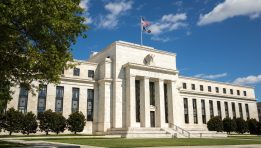
The Federal Reserve may need to raise interest rates further as persistent demand and broader supply pressures keep U.S. inflation materially above the central bank’s 2% objective. St. Louis Fed President Alberto Musalem said policy should become more restrictive sooner rather than later, adding another hawkish signal for global bond and currency markets following last week’s rate increase.
Fed Policy Remains Restrictive but Not Enough for Musalem
Musalem said the current federal funds target range of 3.75% to 4.00%, following the quarter-point increase last week, remains on the accommodative side because it is not yet sufficiently restrictive to slow inflationary pressures. His assessment differs in tone from the Federal Open Market Committee’s median projections, which indicated that policymakers expected only one additional rate increase this year.
The St. Louis Fed president is not currently a voting member of the rate-setting FOMC, meaning his comments do not directly determine the next policy decision. Nevertheless, his remarks provide insight into the debate within the central bank over whether the recent inflation resurgence can fade without additional monetary restraint. Musalem argued that earlier and incremental tightening would be less disruptive than waiting until larger policy adjustments become necessary.
Inflation Pressures Extend Beyond Energy
The challenge for policymakers is that current inflation cannot be attributed solely to higher oil prices. The Personal Consumption Expenditures Price Index, the Fed’s preferred inflation measure, reached 3.7% year over year in July, up from a recent low of 2.3% in April 2025. Musalem said underlying inflation, even after excluding oil and other supply-related factors, remains roughly one percentage point above the Fed’s target and has been moving in the wrong direction.
Commodity pressures have also broadened. While the Middle East conflict has contributed to higher fuel costs, Musalem pointed to rising prices for commodities such as copper, partly associated with strong investment linked to artificial intelligence infrastructure. Businesses in the St. Louis Fed district have also reported higher costs for fuel, raw materials, transportation, insurance and skilled labor, with some companies preparing to pass those expenses through to customers.
Strong Demand Complicates the Inflation Outlook
One of the more important elements of Musalem’s assessment is the resilience of U.S. domestic demand. Consumer spending and investment have remained strong, creating a combination of robust economic activity and persistent price pressures that gives the Fed less reason to rely solely on the expectation that supply shocks will eventually fade.
Musalem also argued that the labor market is not currently the primary source of inflation and described employment conditions as stable, balanced and close to full employment. This distinction matters because it suggests additional monetary tightening could be aimed principally at containing prices rather than responding to an overheating labor market. Minneapolis Fed President Neel Kashkari similarly said inflation remains elevated across the U.S. economy, including in services, rather than being limited to energy prices.
Markets Reassess the Path for Interest Rates
Financial markets are already pricing a more aggressive path than the Fed’s median projections. Reuters reported that investors were pricing the possibility of three additional quarter-point increases through April 2027, while the probability of another move as soon as October was close to even. The divergence highlights uncertainty over how quickly inflation can return to target and how much monetary restraint will ultimately be required.
For global investors, the implications extend beyond U.S. rates. A prolonged period of higher Federal Reserve rates can influence U.S. Treasury yields, the dollar, global borrowing costs and capital flows, particularly for economies that depend heavily on dollar financing. The next inflation releases, labor-market data and Fed communications will therefore be central to determining whether Musalem’s call for incremental tightening gains broader support or remains a minority view within the central bank.
Comparison, examination, and analysis between investment houses
Leave your details, and an expert from our team will get back to you as soon as possible
* This article, in whole or in part, does not contain any promise of investment returns, nor does it constitute professional advice to make investments in any particular field.
To read more about the full disclaimer, click here
- omer bar
- •
- 6 Min Read
- •
- ago 18 hours
SKN | Fed’s Kashkari Warns Inflation Remains Too High Across the US Economy
Minneapolis Federal Reserve President Neel Kashkari said inflation remains too high across the U.S. economy, arguing that price pressures extend
- ago 18 hours
- •
- 6 Min Read
Minneapolis Federal Reserve President Neel Kashkari said inflation remains too high across the U.S. economy, arguing that price pressures extend

- Lior mor
- •
- 6 Min Read
- •
- ago 18 hours
SKN | Yen Volatility Puts Japan Back on Intervention Watch as Global Currencies Steady
The yen has returned to the center of global currency markets after a sharp decline last week revived speculation that
- ago 18 hours
- •
- 6 Min Read

The yen has returned to the center of global currency markets after a sharp decline last week revived speculation that
- omer bar
- •
- 6 Min Read
- •
- ago 19 hours
SKN | Social Security 2027 COLA Could Reach 3.6% — How Much Will Retirees Actually Keep?
Social Security recipients could receive their largest cost-of-living adjustment in three years in 2027, with current estimates ranging from 3.5%
- ago 19 hours
- •
- 6 Min Read

Social Security recipients could receive their largest cost-of-living adjustment in three years in 2027, with current estimates ranging from 3.5%
- omer bar
- •
- 8 Min Read
- •
- ago 2 days
SKN | U.S. Budget Deficit Nears $2 Trillion: Is America Entering a New Era of Fiscal Pressure?
The U.S. federal budget deficit reached approximately $1.97 trillion through August, putting the fiscal 2026 shortfall above the full-year
- ago 2 days
- •
- 8 Min Read

The U.S. federal budget deficit reached approximately $1.97 trillion through August, putting the fiscal 2026 shortfall above the full-year

