





- Arik Arkadi Sluzki
- •
- 6 Min Read
- •
- 45 minutes ago


Key Points
- Wells Fargo has warned that U.S. equities could face a sharper pullback as elevated valuations leave markets increasingly sensitive to negative catalysts.
- Investors continue to balance resilient corporate earnings and economic activity against interest-rate, inflation, fiscal, and geopolitical risks.
- For Israeli investors, a potential correction in U.S. equities could have broader implications for global portfolios, the dollar, and risk appetite across international markets.

The warning from Wells Fargo highlights a growing tension in global equity markets: strong corporate fundamentals and enthusiasm around technology and artificial intelligence remain supportive, but elevated valuations may leave major indexes vulnerable to a sudden repricing. The broader market backdrop remains relatively resilient, yet investors are increasingly focused on whether earnings growth can continue to justify current valuations as monetary and fiscal uncertainties persist.
Valuations Increase Sensitivity to Market Shocks
U.S. equities have benefited from strong earnings expectations and continued investor demand for large-cap companies, particularly within technology and artificial intelligence. However, the longer valuations remain elevated, the greater the potential sensitivity to disappointing earnings guidance, higher bond yields, or changes in expectations for Federal Reserve policy.
A market decline does not necessarily require a fundamental deterioration in the economy. A shift in positioning, reduced liquidity, or a reassessment of growth expectations could amplify an initially modest negative catalyst. This is particularly relevant for sectors where share prices already incorporate substantial expectations for future earnings expansion.
Interest Rates and Inflation Remain Critical Variables
The outlook for Federal Reserve monetary policy remains one of the most important factors for equity valuations. While expectations for eventual policy easing can support risk assets, persistent inflation pressures or stronger-than-expected economic data could delay that process and keep Treasury yields elevated.
Higher long-term yields can place pressure on equity valuations by increasing the discount rate applied to future corporate cash flows. At the same time, rising oil prices, fiscal uncertainty, and geopolitical tensions could reinforce inflation risks and complicate the policy environment. These factors create a more asymmetric backdrop in which markets may react sharply to economic data that changes expectations about interest rates.
Implications for Global and Israeli Investors
For Israeli investors, developments in U.S. equities remain particularly important because American stocks represent a substantial component of global pension, ETF, and institutional portfolios. A sharp correction in Wall Street could therefore affect international allocations, while changes in the U.S. dollar could further influence returns when translated into shekels.
At the same time, a market pullback would not necessarily signal a broad deterioration in corporate fundamentals. The key distinction for professional investors is likely to be between a valuation-driven correction and a decline caused by weakening earnings or economic activity. This distinction could determine whether volatility remains contained or develops into a broader risk-off cycle.
Outlook: The near-term outlook for global equities remains constructive but increasingly sensitive to downside risks. Investors are likely to monitor corporate earnings, Treasury yields, inflation data, Federal Reserve guidance, and geopolitical developments for evidence that current valuations remain sustainable. A combination of weaker earnings, renewed inflation pressure, higher bond yields, or geopolitical escalation could increase the probability of a sharper correction. Conversely, continued earnings resilience and improving clarity around monetary policy could help absorb periods of volatility. For global and Israeli asset allocators, maintaining a balanced assessment of valuation, currency, fiscal, and geopolitical risks remains important as markets approach the next phase of the economic cycle.
Comparison, examination, and analysis between investment houses
Leave your details, and an expert from our team will get back to you as soon as possible
* This article, in whole or in part, does not contain any promise of investment returns, nor does it constitute professional advice to make investments in any particular field.
To read more about the full disclaimer, click here
- orshu
- •
- 6 Min Read
- •
- ago 1 hour
SKN | US Stocks Edge Lower as Dollar Gains and Investors Assess Market Risks
US equity markets are trading lower on September 15 as investors adopt a more cautious stance across major benchmarks.
- ago 1 hour
- •
- 6 Min Read

US equity markets are trading lower on September 15 as investors adopt a more cautious stance across major benchmarks.
- orshu
- •
- 6 Min Read
- •
- ago 5 hours
SKN | Asian Markets Extend Losses on September 15, 2026 as Hong Kong and Australia Lead Declines
Asian markets extended their broadly defensive tone on September 15, 2026, with every reported market indicator closing lower. Hong Kong,
- ago 5 hours
- •
- 6 Min Read
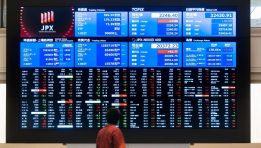
Asian markets extended their broadly defensive tone on September 15, 2026, with every reported market indicator closing lower. Hong Kong,
- orshu
- •
- 4 Min Read
- •
- ago 6 hours
SKN | European Markets Extend Declines as Major Benchmarks Fall Nearly 1%
European markets moved sharply lower on September 15, 2026, extending the weakness recorded in the previous session. All major equity
- ago 6 hours
- •
- 4 Min Read

European markets moved sharply lower on September 15, 2026, extending the weakness recorded in the previous session. All major equity

- sagi habasov
- •
- 6 Min Read
- •
- ago 15 hours
SKN | Could a Break Below 7,600 Trigger a Deeper S&P 500 Correction?
Why 7,600 Has Become a Critical Level The S&P 500 is entering a potentially important technical phase as the index
- ago 15 hours
- •
- 6 Min Read

Why 7,600 Has Become a Critical Level The S&P 500 is entering a potentially important technical phase as the index

