




- Ronny Mor
- •
- 7 Min Read
- •
- 9 seconds ago


Key Points
- The Euronext 100 Index (^N100) concluded the trading week at 1,901.51, securing a Friday session rebound of 14.82 points (0.79%) despite a 5-day net contraction of 0.47%.
- Trading moved within an intraday range of 1,888.44 to 1,909.04, lifting from an opening price of 1,888.44 to close near 1,901.51 above the previous close of 1,886.69.
- For global and Israeli asset allocators, this pan-European blue-chip price action underscores the necessity of managing Eurozone equity exposure, balancing European Central Bank (ECB) monetary policy parameters against persistent shekel volatility and transatlantic yield differentials.
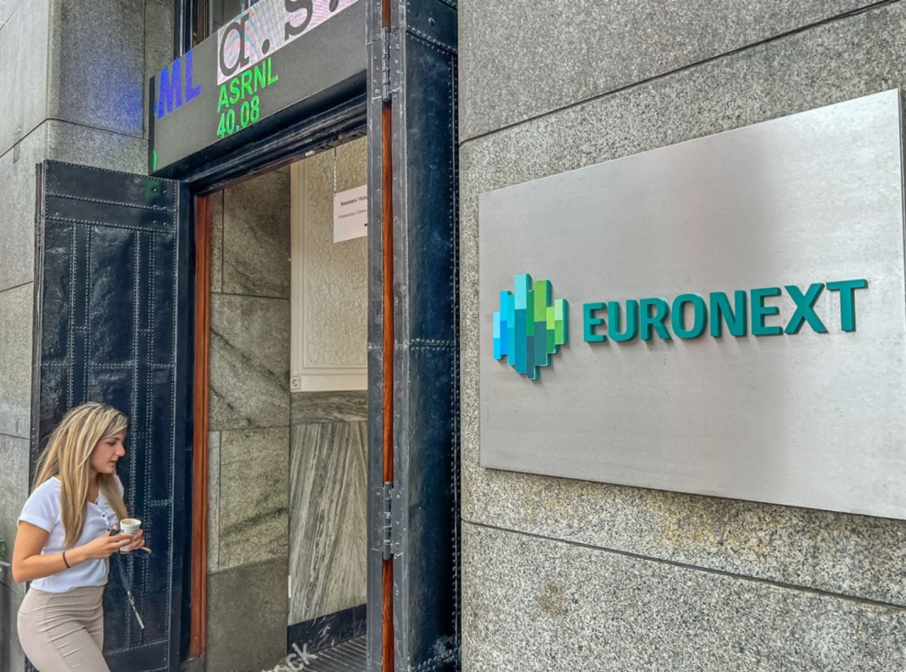
The Euronext 100 Index (^N100) exhibited structural resilience to close out the trading week across Paris and Amsterdam bourses, advancing 0.79% on Friday to settle at 1,901.51. Despite this late-week surge across Europe’s premier large-cap benchmark, the index registered a 5-day net contraction of 0.47%, reflecting a period of institutional re-balancing as market participants evaluate pan-European corporate profit margins, rising energy import costs, and interest rate guidance from the European Central Bank.
Deciphering Intraday Volatility and Support Floor Testing
Trading activity across the 100 constituent blue-chip equities was defined by mid-week selling pressure that pulled the index down from early-week peaks above 1,920 to probe a technical support floor near 1,885 on September 10th. However, a decisive late-week accumulation wave emerged on Friday, propelling the benchmark back up by 14.82 points (0.79%) from the previous close of 1,886.69 to close at 1,901.51. Operating in the upper quadrant of its 52-week trading bounds of 1,612.07 to 1,984.60, Friday’s price action navigated a daily band of 1,888.44 to 1,909.04 against a 3-month average daily volume of 337.94 million shares. This technical structure confirms that while buyers actively defended the 1,885 baseline, overhead supply near 1,910 capped broader breakout momentum ahead of the weekend.
Macroeconomic Drivers, European Corporate Leaders, and ECB Rate Parameters
As the primary standard tracking the 100 largest and most liquid mega-cap enterprises listed across Euronext exchanges—spanning luxury giants (LVMH, Hermès), semiconductor equipment leaders (ASML), energy majors (TotalEnergies), and financial institutions (BNP Paribas, ING Group)—the valuation framework of the Euronext 100 is deeply anchored to export demand, Eurozone inflation metrics, and relative yield differentials. The weekly contraction reflected market digestion of the ECB’s decision to raise key interest rates by 25 basis points to 2.65% amid energy-driven inflation pressures. Nevertheless, strong late-week earnings resilience across luxury and technology constituents provided vital tailwinds, encouraging dip-buying interest across key European equity channels.
Strategic Portfolio Implications for the Israeli Ecosystem
For globally active portfolio managers and the interconnected Tel Aviv institutional community, tracking Euronext 100 dynamics provides essential direction for managing pan-European equity allocations, Euro-denominated dividend strategies, and international risk budgets. Because major Israeli pension funds and asset managers hold substantial active and passive allocations in Eurozone blue-chips, shifts in ^N100 momentum directly impact domestic investment returns and foreign currency risk overlays. Israeli allocators must systematically cross-examine this European equity volatility against persistent domestic shekel volatility, regional security risk premiums, and cross-border yield curves. Implementing disciplined currency hedging frameworks remains vital, as unexpected foreign exchange rate swings across the EUR, USD, and ILS can directly affect localized net portfolio performance.
Looking forward, the immediate structural trajectory centers on whether the Euronext 100 Index can firmly establish technical support above the 1,900 psychological baseline or if overhead resistance near 1,920 will trigger a mean-reversion toward lower quarterly support bands near 1,870. Market participants must remain highly attentive to upcoming European Central Bank policy statements, Eurozone CPI inflation prints, and global trade volume trends, which are poised to act as primary directional catalysts. The broader macroeconomic landscape presents a highly conditional outlook; while Friday’s rebound underscores robust dip-buying interest across top-tier European equities, asset allocators must maintain a rigorous, probability-based framework, actively managing downside risks and monitoring sovereign yield curves to safeguard long-term portfolio performance over the coming financial quarters.
Comparison, examination, and analysis between investment houses
Leave your details, and an expert from our team will get back to you as soon as possible
* This article, in whole or in part, does not contain any promise of investment returns, nor does it constitute professional advice to make investments in any particular field.
To read more about the full disclaimer, click here
- sagi habasov
- •
- 6 Min Read
- •
- ago 41 minutes
SKN | Ford Recalls More Than 223,000 U.S. Vehicles Over Fuel Tank Safety Risks
Ford is recalling 223,472 vehicles in the United States after regulators identified potential problems involving fuel tanks that could
- ago 41 minutes
- •
- 6 Min Read

Ford is recalling 223,472 vehicles in the United States after regulators identified potential problems involving fuel tanks that could

- omer bar
- •
- 7 Min Read
- •
- ago 54 minutes
SKN | DAX P Rebounds 0.82% to 25,568.56: Are German Blue-Chips Finding a Floor Despite 1.83% Weekly Contraction?
The DAX P Index (^GDAXI) exhibited defensive structural resilience to close out the trading week on the XETRA exchange, advancing
- ago 54 minutes
- •
- 7 Min Read

The DAX P Index (^GDAXI) exhibited defensive structural resilience to close out the trading week on the XETRA exchange, advancing

- Lior mor
- •
- 7 Min Read
- •
- ago 2 hours
SKN | CBOE Volatility Index (^VIX) Plunges 11.21% Daily to 15.84: Is Wall Street Fear Receding as Equity Volatility Normalizes?
The CBOE Volatility Index (^VIX) experienced a sharp downside repricing to end the trading week, falling 11.21% (2.00 points)
- ago 2 hours
- •
- 7 Min Read

The CBOE Volatility Index (^VIX) experienced a sharp downside repricing to end the trading week, falling 11.21% (2.00 points)

- Arik Arkadi Sluzki
- •
- 6 Min Read
- •
- ago 3 hours
SKN | US Dollar Index (DX-Y.NYB) Settles at 99.10: Is Greenback Consolidation Base Building Ahead of Federal Reserve Policy Signals?
The US Dollar Index (DX-Y.NYB) exhibited range-bound consolidation over the trading week, ultimately settling at 99.10 to record a
- ago 3 hours
- •
- 6 Min Read

The US Dollar Index (DX-Y.NYB) exhibited range-bound consolidation over the trading week, ultimately settling at 99.10 to record a
