





- Ronny Mor
- •
- 8 Min Read
- •
- 4 weeks ago


Key Points
- A proposed $5,000 payment to U.S. adults could add to inflationary pressure by increasing consumer spending while energy and other supply-side costs are already elevated.
- Economists warn that a large fiscal transfer could worsen deficits and borrowing costs, potentially offsetting some of the short-term relief households would receive.
- The proposal faces significant policy uncertainty, as similar direct-payment ideas previously discussed by the administration did not become law and broad distributions would require congressional action.

Trump’s Dividend Proposal Meets a Difficult Economic Backdrop
President Donald Trump’s proposal to provide a $5,000 election “dividend” to every adult U.S. citizen arrives as households remain under pressure from elevated prices and borrowing costs. The proposal has attracted attention because direct payments could offer immediate financial relief, but economists argue that injecting substantial purchasing power into the economy could also reinforce inflation at a time when price growth remains above the Federal Reserve’s target.
The potential scale is significant. The proposal could require more than $1 trillion, according to the cited economic analysis, at a time when the U.S. federal deficit is approaching $1.8 trillion. That creates a difficult policy equation: a payment designed to improve household finances could simultaneously increase government borrowing requirements and add demand to an economy already facing supply-side constraints.
Why Direct Payments Could Add to Price Pressures
The inflation concern is particularly relevant because energy prices are already elevated. Crude oil recently moved above $100 a barrel amid the U.S.-Iran conflict, while trade tensions are contributing to additional supply uncertainty. Adding consumer spending to those constraints could increase competition for goods and services, potentially allowing businesses to pass higher costs through to consumers.
There is a recent precedent. Research from the Federal Reserve Bank of St. Louis estimated that pandemic-era fiscal stimulus contributed approximately 2.6 percentage points to U.S. inflation. Economists have also argued that the American Rescue Plan indirectly increased prices by placing additional money in consumers’ hands. Consumer inflation subsequently reached 9.1% in June 2022, although numerous economic forces contributed to that episode.
Short-Term Relief Could Create Longer-Term Costs
For households struggling with grocery, gasoline and other essential expenses, a $5,000 payment would provide meaningful immediate liquidity. Yet economists interviewed in the source argue that the benefit could prove less powerful if higher demand pushes prices upward.
Higher inflation could also influence monetary policy. With inflation already above the Fed’s 2% target and market expectations for a September rate increase rising, another large fiscal injection could make the central bank’s task more difficult. If policymakers respond with higher interest rates, consumers could face increased borrowing costs for mortgages, vehicles, credit cards and other forms of financing.
The interaction between fiscal and monetary policy is therefore critical. A government payment may boost household purchasing power in the short term, but if it contributes to higher inflation, the resulting increase in interest rates could reduce the benefit for households and businesses over time.
Political Promise Faces Legislative Hurdles
There is also considerable uncertainty over whether the proposed dividend could become actual policy. Broad-based direct payments would require legislation from Congress, limiting the president’s ability to implement such a program unilaterally. Previous proposals for a $5,000 “DOGE dividend” and a $2,000 tariff rebate did not become law.
That makes the economic impact largely hypothetical for now. Nevertheless, the proposal is arriving at a particularly sensitive moment for financial markets, where investors are already assessing inflation, government deficits, energy prices and the direction of Federal Reserve policy.
Inflation and Fiscal Credibility Remain the Key Risks
The debate over the dividend ultimately extends beyond the size of the proposed check. The larger question is whether additional fiscal stimulus can improve household affordability without worsening the inflation and borrowing-cost pressures that are already weighing on consumers. If enacted, markets would likely scrutinize its funding mechanism, timing and effect on consumer demand.
For now, investors should focus on inflation data, Treasury yields, oil prices and Federal Reserve expectations. A substantial fiscal expansion alongside elevated energy costs could strengthen the case for tighter monetary policy, while failure to advance the proposal would leave its economic effects largely confined to political debate. The balance between short-term consumer relief and long-term price stability will remain central to the market’s assessment of any future dividend program.
Comparison, examination, and analysis between investment houses
Leave your details, and an expert from our team will get back to you as soon as possible
* This article, in whole or in part, does not contain any promise of investment returns, nor does it constitute professional advice to make investments in any particular field.
To read more about the full disclaimer, click here
- omer bar
- •
- 6 Min Read
- •
- ago 20 hours
SKN | U.S. Consumer Sentiment Falls to 46.3 as Inflation Concerns Weigh on Household Confidence
Consumer Confidence Weakens Further The University of Michigan’s October consumer sentiment index fell to 46.3, below the expected 47.6 and
- ago 20 hours
- •
- 6 Min Read

Consumer Confidence Weakens Further The University of Michigan’s October consumer sentiment index fell to 46.3, below the expected 47.6 and

- orshu
- •
- 7 Min Read
- •
- ago 20 hours
SKN | Germany Seeks ECB Executive Board Seat as Succession Debate Takes Shape
Germany is preparing to put forward a candidate for a vacant seat on the European Central Bank’s executive board,
- ago 20 hours
- •
- 7 Min Read

Germany is preparing to put forward a candidate for a vacant seat on the European Central Bank’s executive board,

- Lior mor
- •
- 6 Min Read
- •
- ago 20 hours
SKN | Wall Street Ends Week Higher as Earnings and Inflation Data Take Center Stage
Wall Street closed higher on Friday as investors shifted their attention toward the next stage of the market calendar,
- ago 20 hours
- •
- 6 Min Read

Wall Street closed higher on Friday as investors shifted their attention toward the next stage of the market calendar,
- orshu
- •
- 7 Min Read
- •
- ago 22 hours
SKN | Wall Street Faces Busy Week as Bank Earnings and Inflation Data Test Market Rally
U.S. equity markets enter a particularly important week as investors prepare to assess the strength of corporate earnings alongside
- ago 22 hours
- •
- 7 Min Read
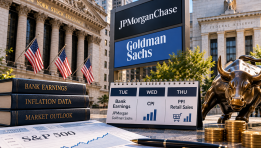
U.S. equity markets enter a particularly important week as investors prepare to assess the strength of corporate earnings alongside

