




- Ronny Mor
- •
- 6 Min Read
- •
- 10 seconds ago


Key Points
- SAIC is expected to report fiscal second-quarter earnings of $2.31 per share, compared with $3.63 a year earlier, while revenue is projected at $1.76 billion.
- At an annual dividend of $1.48 per share and a 1.15% yield, generating $500 per month would require roughly 4,054 shares.
- The dividend strategy requires approximately $522,804 in capital, highlighting the trade-off between income generation, capital efficiency and stock-price risk.
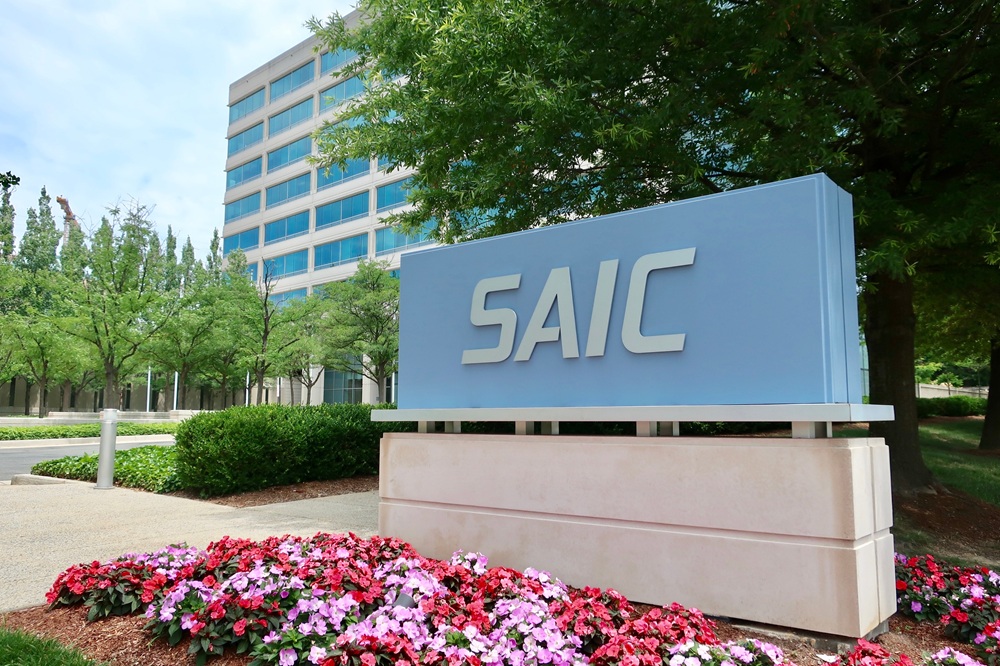
Science Applications International Corporation is scheduled to release its second-quarter earnings before the U.S. market opens on Monday, August 31, placing its operating performance and shareholder-return profile under renewed scrutiny. Analysts expect earnings of $2.31 per share, down sharply from $3.63 in the year-ago quarter, while revenue is forecast at $1.76 billion, broadly consistent with the $1.77 billion reported a year earlier.
The earnings setup matters for income-focused investors because dividend returns cannot be viewed independently from the underlying business. A weaker earnings performance could affect investor sentiment and the stock price even if the dividend remains unchanged. SAIC also recently appointed David Benson and David Cush to its board, adding another corporate-development element for investors to monitor.
What It Takes to Generate $500 a Month
SAIC currently pays a quarterly dividend of $0.37 per share, equivalent to $1.48 annually. Based on the stated 1.15% dividend yield, an investor seeking $500 per month, or $6,000 annually, would need approximately 4,054 shares.
Using the annual dividend, the calculation is straightforward: $6,000 divided by $1.48 produces roughly 4,054 shares. Based on the stock value implied by the source figures, that represents approximately $522,804 of invested capital. For comparison, generating $100 per month, or $1,200 annually, would require approximately 811 shares and about $104,587 in capital.
The numbers demonstrate how a relatively modest dividend yield requires substantial capital to produce meaningful monthly income. For investors building an income portfolio, this can make diversification and the balance between yield and growth particularly important.
Dividend Yield Can Change With the Stock Price
The 1.15% yield should not be treated as a fixed return. Dividend yield is calculated by dividing the annual dividend by the share price, meaning changes in SAIC’s stock price can alter the indicated yield even when the company maintains its $1.48 annual payout.
If the stock price rises while the dividend remains unchanged, the yield declines. Conversely, a falling share price increases the indicated yield but simultaneously reduces the market value of an existing investment. A dividend increase could also improve the income profile, while any reduction would have the opposite effect.
What Investors Should Watch Next
The upcoming earnings report could provide greater clarity on whether SAIC’s earnings trajectory supports continued shareholder distributions and how investors value the stock relative to its income potential. The key consideration is not simply whether SAIC can generate $500 a month, but whether committing more than $500,000 to achieve that income represents an attractive risk-adjusted opportunity. Earnings growth, dividend sustainability and share-price performance will remain critical variables for investors assessing SAIC as an income-producing holding.
Comparison, examination, and analysis between investment houses
Leave your details, and an expert from our team will get back to you as soon as possible
* This article, in whole or in part, does not contain any promise of investment returns, nor does it constitute professional advice to make investments in any particular field.
To read more about the full disclaimer, click here
- Lior mor
- •
- 7 Min Read
- •
- ago 7 hours
SKN | BYD Highlights Why Chinese Carmakers Are Looking Overseas to Escape the Domestic Slump
BYD’s latest financial results highlight a major shift taking place across China’s automotive industry: growth is increasingly being found outside
- ago 7 hours
- •
- 7 Min Read

BYD’s latest financial results highlight a major shift taking place across China’s automotive industry: growth is increasingly being found outside

- sagi habasov
- •
- 6 Min Read
- •
- ago 7 hours
SKN | Is Merck Stock Outperforming the Nasdaq? What Is Driving MRK’s Relative Performance?
Merck stock remains under scrutiny as investors compare the pharmaceutical company’s performance with the technology-heavy Nasdaq. The comparison is increasingly
- ago 7 hours
- •
- 6 Min Read
Merck stock remains under scrutiny as investors compare the pharmaceutical company’s performance with the technology-heavy Nasdaq. The comparison is increasingly
- Lior mor
- •
- 6 Min Read
- •
- ago 8 hours
SKN | Chevron Stock Underperforms? What Could Be Driving CVX’s Position in the Energy Sector
Chevron stock remains under close scrutiny as investors assess whether the energy giant is keeping pace with the broader oil
- ago 8 hours
- •
- 6 Min Read

Chevron stock remains under close scrutiny as investors assess whether the energy giant is keeping pace with the broader oil

- Arik Arkadi Sluzki
- •
- 7 Min Read
- •
- ago 16 hours
SKN | China Eastern Airlines Reports Wider Loss Despite Revenue Recovery in First Half of 2026
China Eastern Airlines reported a larger net loss for the first half of 2026 despite stronger revenue growth, reflecting
- ago 16 hours
- •
- 7 Min Read

China Eastern Airlines reported a larger net loss for the first half of 2026 despite stronger revenue growth, reflecting
