





- Ronny Mor
- •
- 9 Min Read
- •
- 5 hours ago
Key Points
- Meta's revenue is growing at approximately 28% year over year, but its AI infrastructure spending has increased dramatically, raising questions about the returns on capital expenditure.
- Meta's annual capital expenditure has risen from approximately $28 billion in 2023 to an expected $130 billion to $145 billion in 2026.
- The central question for investors is whether AI-driven revenue growth can eventually outpace the cost of building and operating the infrastructure required to support it.
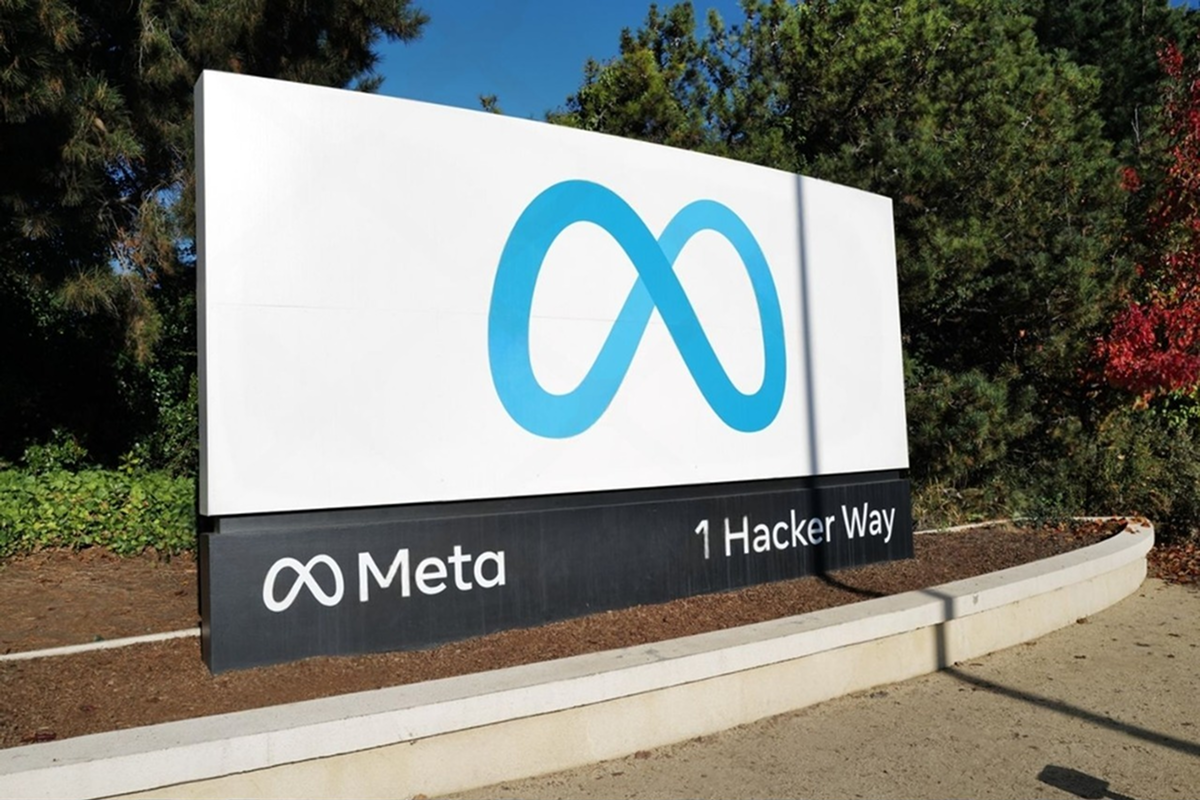
Meta Platforms is entering a critical phase of its artificial intelligence investment cycle as rapidly expanding revenue is being accompanied by an even more aggressive increase in capital expenditure. The attached market analysis highlights a fundamental question increasingly facing Big Tech: how much economic value is being created by AI relative to the cost of building the infrastructure required to support it?
Meta’s latest results show that the core advertising business remains highly productive, but the scale of AI investment is changing the company’s financial profile. The issue is no longer simply whether AI can increase revenue, but whether the incremental profits generated by AI-related improvements can justify the enormous capital commitments now being made.
Revenue Growth Is Strong, but the Investment Curve Is Steeper
Meta’s revenue is currently growing at approximately 28% year over year, according to the figures referenced in the attached analysis. That is a substantial growth rate for a company of Meta’s scale and suggests that its advertising ecosystem continues to benefit from improvements in targeting, engagement, and artificial intelligence.
However, the growth in capital expenditure has been considerably more dramatic. Meta spent approximately $28 billion in 2023, followed by roughly $39 billion in 2024 and about $72 billion in 2025. For 2026, the company is targeting capital expenditure of approximately $130 billion to $145 billion, according to the source material.
That represents a fundamental transformation in the company’s investment profile. Meta was historically an asset-light technology platform capable of producing substantial cash flow without requiring infrastructure spending on the scale now associated with hyperscalers. AI is changing that equation by requiring massive investments in data centers, servers, networking equipment, and computing capacity.
The Return on AI Infrastructure Is Becoming the Key Question
The attached analysis attempts to isolate the economic return generated by Meta’s accelerating investment. It estimates that if Meta had simply grown in line with the broader social advertising market, its revenue growth would have been closer to 16% to 18% rather than approximately 28%. Under that framework, the difference represents an estimated 10 to 12 percentage points of excess growth.
The analysis then applies an estimated incremental operating margin of approximately 70% to 90% to that excess growth. Under those assumptions, the incremental annual operating profit attributable to the company’s stronger performance could potentially reach approximately $16 billion to $25 billion.
These figures are analytical estimates rather than Meta’s reported AI revenue or official company guidance. Meta does not separately disclose how much revenue is generated directly by AI. The analysis therefore uses a counterfactual comparison with broader market growth to estimate the potential economic contribution of AI-related improvements.
That distinction is important because not all of Meta’s incremental growth can automatically be attributed to AI. Advertising demand, pricing, user engagement, product improvements, geographic expansion, and broader digital advertising trends can all influence revenue.
AI Spending Could Become More Efficient Over Time
The most important consideration is that the economics of AI infrastructure are unlikely to remain static. The attached analysis estimates cumulative incremental capital expenditure of approximately $157 billion to $172 billion when 2023 is used as the pre-AI investment baseline.
Against estimated annual incremental operating profit of approximately $16 billion to $25 billion, the analysis suggests a potential investment payback period of roughly six to 11 years, with approximately eight years representing a midpoint. Again, this is an illustrative framework rather than a company forecast.
The economics could improve if Meta’s infrastructure generates additional revenue streams or becomes more productive over time. Better advertising performance, greater user engagement, new AI products, improved recommendation systems, and potentially monetizable AI services could increase returns without requiring capital expenditure to rise at the same pace.
There is also an important timing consideration. Some of the infrastructure being built today may not immediately generate its full economic return because computing capacity is being deployed ahead of demand. As utilization rises, the return on existing infrastructure could increase even if annual capital expenditure eventually slows.
For institutional investors in Israel and globally, Meta therefore represents a broader test of the AI investment cycle. The market is increasingly moving beyond the question of whether artificial intelligence works and toward the more demanding question of whether AI infrastructure can generate returns above its cost of capital.
Looking ahead, investors will closely monitor Meta’s capital expenditure, free cash flow, advertising growth, operating margins, AI-driven engagement improvements, and the pace at which new infrastructure becomes productive. The most important signal may not be the absolute size of AI spending, but whether spending growth eventually decelerates while revenue and operating profit continue expanding. If that occurs, the economics of the AI buildout could become increasingly attractive; if investment continues accelerating without a corresponding improvement in cash generation, scrutiny of Meta’s capital allocation is likely to intensify.
Comparison, examination, and analysis between investment houses
Leave your details, and an expert from our team will get back to you as soon as possible
* This article, in whole or in part, does not contain any promise of investment returns, nor does it constitute professional advice to make investments in any particular field.
To read more about the full disclaimer, click here
- orshu
- •
- 8 Min Read
- •
- ago 3 hours
SKN | ServiceNow’s AI Growth Story Faces a New Test: Can Revenue Expansion Restore Its Former Valuation?
ServiceNow (NYSE: NOW) has become a focal point of the debate over whether enterprise software stocks have been unfairly
- ago 3 hours
- •
- 8 Min Read
ServiceNow (NYSE: NOW) has become a focal point of the debate over whether enterprise software stocks have been unfairly

- Ronny Mor
- •
- 7 Min Read
- •
- ago 3 hours
SKN | Rocket Lab Heads Toward Another Record Quarter as Space and Defense Demand Accelerate
Rocket Lab USA (NASDAQ: RKLB) is approaching another potentially record-setting quarter as demand for launch services, satellites and national-security
- ago 3 hours
- •
- 7 Min Read
Rocket Lab USA (NASDAQ: RKLB) is approaching another potentially record-setting quarter as demand for launch services, satellites and national-security

- Arik Arkadi Sluzki
- •
- 7 Min Read
- •
- ago 3 hours
SKN | Can Microsoft’s AI Growth and Dividend Discipline Support the Next Leg Higher?
Microsoft (NASDAQ: MSFT) is being highlighted in market commentary as one of several dividend-paying stocks with substantial potential upside,
- ago 3 hours
- •
- 7 Min Read

Microsoft (NASDAQ: MSFT) is being highlighted in market commentary as one of several dividend-paying stocks with substantial potential upside,

- Lior mor
- •
- 7 Min Read
- •
- ago 3 hours
SKN | Could Ondas Be Emerging as a Key Autonomous Defense Platform With Strong Growth Potential?
Ondas Inc. (NASDAQ: ONDS) is increasingly attracting attention as the global defense industry accelerates its adoption of autonomous systems,
- ago 3 hours
- •
- 7 Min Read
Ondas Inc. (NASDAQ: ONDS) is increasingly attracting attention as the global defense industry accelerates its adoption of autonomous systems,


