





- Ronny Mor
- •
- 7 Min Read
- •
- 55 minutes ago
Key Points
- Rocket Lab generated record quarterly revenue of $200.3 million in the first quarter of 2026, up 63.5% year over year, and guided for $225 million to $240 million in the second quarter.
- A $90 million U.S. Space Force satellite contract and three upcoming NASA Electron launches highlight expanding demand across government and defense markets.
- The key test is whether Rocket Lab can convert its rapidly expanding backlog and launch pipeline into sustained revenue growth while scaling its broader space-systems business.
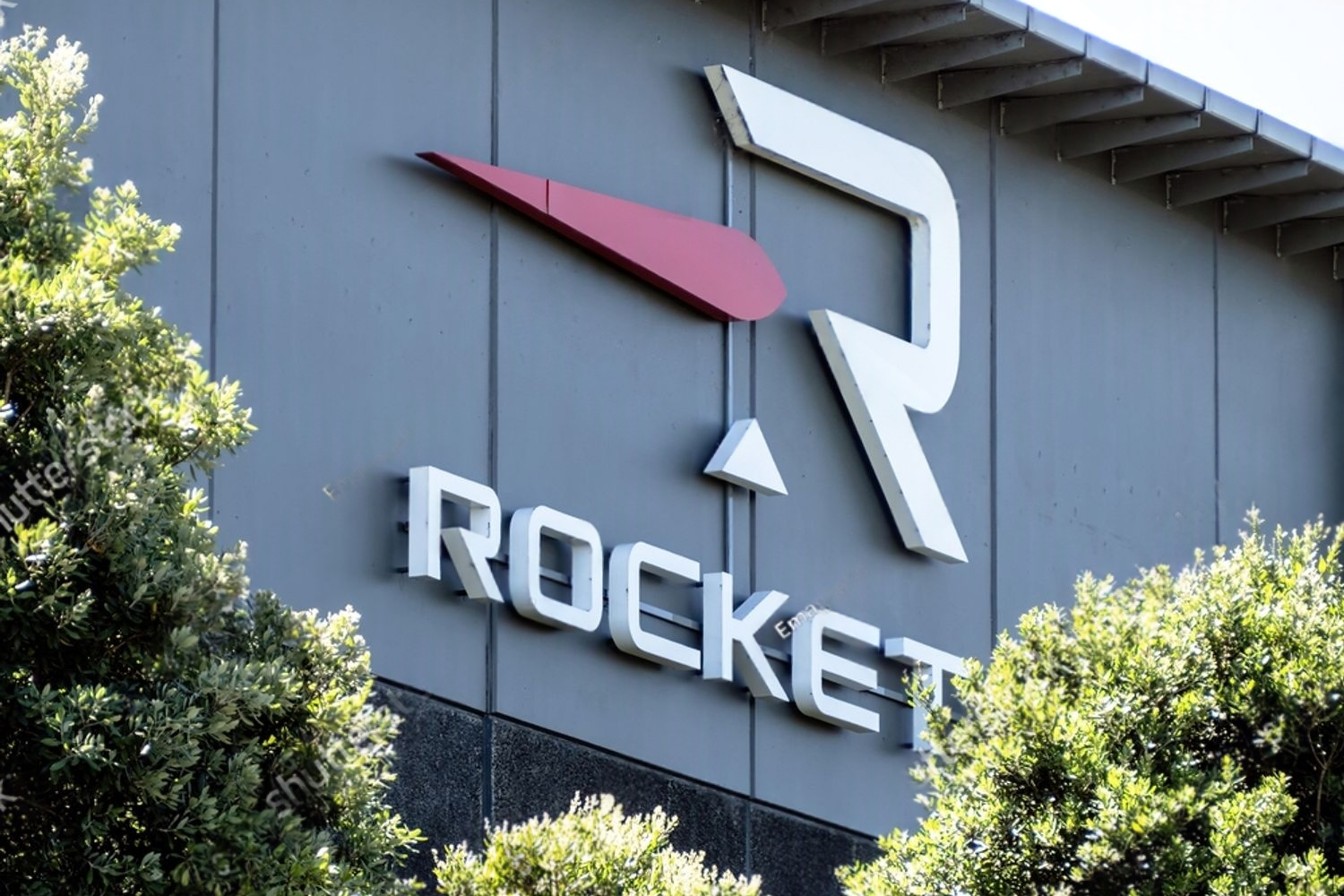
Rocket Lab USA (NASDAQ: RKLB) is approaching another potentially record-setting quarter as demand for launch services, satellites and national-security space systems continues to expand. The company reported a record $200.3 million in first-quarter 2026 revenue, exceeding its own guidance, and entered the second quarter with management forecasting revenue between $225 million and $240 million.
Revenue Growth Is Accelerating
Rocket Lab’s first-quarter performance marked a significant step-up in scale. Revenue increased 63.5% year over year to $200.3 million, while gross profit reached $76.5 million. The company also reported a record backlog of more than $2.2 billion, providing visibility into future activity across launch and space-systems programs.
Management subsequently guided for second-quarter revenue of $225 million to $240 million, implying another quarterly record if the company reaches the upper end of the range. The guidance also included expected GAAP gross margins of 33% to 35% and non-GAAP gross margins of 38% to 40%, illustrating that the company is attempting to scale rapidly while gradually improving the economics of its operations.
The market commentary accompanying the source material estimates approximately $240 million of second-quarter revenue, which would represent roughly 66% year-over-year growth based on the comparable period. That figure is an external estimate rather than Rocket Lab guidance and should therefore be distinguished from management’s official $225 million to $240 million range.
Defense and Satellite Contracts Broaden the Revenue Base
Rocket Lab’s growth is increasingly being driven by more than Electron launches. In May, the company secured a $90 million U.S. Space Force contract to design, manufacture, integrate and operate two geostationary satellites carrying Heimdall space-domain-awareness payloads. The program represents Rocket Lab’s first satellite production program for geostationary orbit and extends its vertically integrated model into a higher-value segment of the space market.
The company has also expanded its NASA relationship. NASA selected Rocket Lab to provide three dedicated Electron launches for two separate missions, PolSIR and TSIS-2, beginning in 2027. Two back-to-back Electron launches will support NASA’s PolSIR mission, while another Electron launch will support TSIS-2. Rocket Lab cited Electron’s launch history, orbital precision and ability to meet time-sensitive schedules as factors behind NASA’s selection.
These contracts are strategically important because they demonstrate demand across commercial, scientific and national-security customers. They also support Rocket Lab’s broader effort to build an integrated space company spanning launch vehicles, spacecraft, components, software and mission services.
Neutron and Execution Remain the Larger Tests
Rocket Lab’s long-term growth opportunity extends beyond Electron. The company is developing Neutron, a larger reusable rocket designed to address medium-lift launch demand and compete for missions that are beyond Electron’s capabilities. The success of that program could materially expand Rocket Lab’s addressable market, but it also introduces significant development and execution risk.
For investors in Israel and globally, the company’s expanding backlog provides an important measure of demand, but backlog alone does not guarantee near-term revenue or profitability. Newly signed contracts can take years to convert into recognized revenue, while launch schedules remain subject to technical, regulatory and customer-related factors. The company must therefore demonstrate that its accelerating sales trajectory can translate into improving cash generation as it continues investing in new capabilities.
Looking ahead, the market will be watching whether Rocket Lab can deliver revenue near the top of its second-quarter guidance, maintain gross-margin progress and continue adding high-quality government and commercial contracts. The performance of Electron, progress toward Neutron’s first missions and the conversion of the company’s substantial backlog into recognized revenue will be particularly important. If execution keeps pace with demand, Rocket Lab’s evolution from a launch provider into a broader space and defense systems company could become increasingly significant; if development costs or schedules move against the company, the gap between expectations and operating results could become more consequential.
Comparison, examination, and analysis between investment houses
Leave your details, and an expert from our team will get back to you as soon as possible
* This article, in whole or in part, does not contain any promise of investment returns, nor does it constitute professional advice to make investments in any particular field.
To read more about the full disclaimer, click here
- orshu
- •
- 8 Min Read
- •
- ago 54 minutes
SKN | ServiceNow’s AI Growth Story Faces a New Test: Can Revenue Expansion Restore Its Former Valuation?
ServiceNow (NYSE: NOW) has become a focal point of the debate over whether enterprise software stocks have been unfairly
- ago 54 minutes
- •
- 8 Min Read
ServiceNow (NYSE: NOW) has become a focal point of the debate over whether enterprise software stocks have been unfairly

- Arik Arkadi Sluzki
- •
- 7 Min Read
- •
- ago 1 hour
SKN | Can Microsoft’s AI Growth and Dividend Discipline Support the Next Leg Higher?
Microsoft (NASDAQ: MSFT) is being highlighted in market commentary as one of several dividend-paying stocks with substantial potential upside,
- ago 1 hour
- •
- 7 Min Read
Microsoft (NASDAQ: MSFT) is being highlighted in market commentary as one of several dividend-paying stocks with substantial potential upside,

- Lior mor
- •
- 7 Min Read
- •
- ago 1 hour
SKN | Could Ondas Be Emerging as a Key Autonomous Defense Platform With Strong Growth Potential?
Ondas Inc. (NASDAQ: ONDS) is increasingly attracting attention as the global defense industry accelerates its adoption of autonomous systems,
- ago 1 hour
- •
- 7 Min Read
Ondas Inc. (NASDAQ: ONDS) is increasingly attracting attention as the global defense industry accelerates its adoption of autonomous systems,

- omer bar
- •
- 8 Min Read
- •
- ago 2 hours
SKN | AMD Expands Its AI Strategy With Taalas Acquisition to Target the Next Phase of Inference Computing
Advanced Micro Devices (AMD) is expanding its artificial intelligence strategy with an agreement to acquire Taalas, a Toronto-based semiconductor
- ago 2 hours
- •
- 8 Min Read
Advanced Micro Devices (AMD) is expanding its artificial intelligence strategy with an agreement to acquire Taalas, a Toronto-based semiconductor


