





- omer bar
- •
- 7 Min Read
- •
- 4 weeks ago


Key Points
- South Korean retail investors increased purchases of U.S. equities to a six-month high after the KOSPI recorded its steepest monthly decline since 2008.
- Government efforts to encourage domestic investment are losing momentum as re-shoring investment account deposits contract for the first time.
- Persistent capital outflows could complicate the outlook for the South Korean won despite its recent appreciation.
South Korea’s sharp equity market correction is driving retail investors back toward U.S. equities, reversing a government campaign designed to encourage domestic investment. As the benchmark KOSPI suffered its worst monthly decline since the global financial crisis, retail investors redirected billions of dollars into Wall Street, highlighting how market performance continues to outweigh policy initiatives in determining capital flows.
The shift illustrates a broader challenge facing global markets. While governments increasingly seek to retain domestic savings and strengthen local capital markets, investors remain highly responsive to relative performance, currency movements, and opportunities in larger international equity markets such as the United States.
Wall Street Regains Appeal as KOSPI Weakens
According to Korea Securities Depository data, South Korean retail investors purchased approximately $4.6 billion worth of U.S. stocks during July, representing the strongest monthly buying activity in six months. The surge followed a difficult period for domestic equities, with the KOSPI posting its largest monthly decline since the depths of the 2008 global financial crisis.
The renewed enthusiasm for U.S. markets reflects investors’ search for stronger earnings growth, deeper liquidity, and continued exposure to sectors such as artificial intelligence, cloud computing, and advanced technology. Despite periodic volatility in U.S. equities, many South Korean retail investors continue to view American markets as offering broader long-term growth opportunities than their domestic counterparts.
Government’s Homecoming Strategy Faces New Challenges
The market downturn has weakened South Korea’s campaign to encourage individual investors to redirect capital into domestic financial assets. Deposits held in government-supported investment accounts designed to promote local equity ownership declined for the first time, signaling that investor confidence remains closely tied to market performance rather than policy incentives.
The reversal highlights the difficulty policymakers face when attempting to influence investment behavior during periods of heightened market volatility. While structural reforms and tax incentives may improve the attractiveness of domestic markets over time, investors often prioritize returns and diversification when allocating capital across global markets.
For policymakers, sustained capital outflows could limit domestic market liquidity and complicate broader efforts to deepen South Korea’s capital markets, particularly as international competition for investment capital continues to intensify.
Currency Outlook Remains Closely Linked to Capital Flows
The renewed migration toward overseas assets also carries implications for the South Korean won. Although the currency appreciated approximately 8% recently, analysts caution that continued overseas equity investment may create renewed pressure on the won by increasing demand for foreign currencies used to purchase international assets.
Market participants note that while recent currency strength has been supported by broader macroeconomic developments, sustained appreciation may prove difficult if portfolio outflows continue. The interaction between equity performance, exchange rates, and capital movements will remain an important factor for investors monitoring South Korea’s financial stability.
For Israeli and global investors, South Korea’s experience serves as a reminder that investor sentiment can shift rapidly when domestic market performance diverges from international opportunities. Similar patterns have emerged across several developed markets, where retail investors increasingly allocate capital globally through digital trading platforms and exchange-traded funds.
Looking ahead, investors will closely monitor whether the KOSPI can stabilize following its sharp correction, as well as the direction of retail investment flows between domestic and international markets. Currency performance, government policy responses, and the earnings outlook for both Korean and U.S. companies will likely determine whether recent capital outflows represent a temporary adjustment or the beginning of a more sustained shift toward overseas assets.
Comparison, examination, and analysis between investment houses
Leave your details, and an expert from our team will get back to you as soon as possible
* This article, in whole or in part, does not contain any promise of investment returns, nor does it constitute professional advice to make investments in any particular field.
To read more about the full disclaimer, click here
- Lior mor
- •
- 9 Min Read
- •
- ago 14 hours
SKN | Is Big Tech’s AI Debt Boom Pushing U.S. Treasury Yields Higher?
The artificial-intelligence investment cycle is increasingly becoming a bond-market story as well as an equity-market story. The latest analysis
- ago 14 hours
- •
- 9 Min Read

The artificial-intelligence investment cycle is increasingly becoming a bond-market story as well as an equity-market story. The latest analysis

- Arik Arkadi Sluzki
- •
- 9 Min Read
- •
- ago 14 hours
SKN | Bitcoin and Gold Move Closer Together: Is the Debasement Trade Reshaping Crypto Markets?
Bitcoin is increasingly trading alongside gold rather than behaving primarily like a high-beta technology asset. The 90-day correlation between
- ago 14 hours
- •
- 9 Min Read

Bitcoin is increasingly trading alongside gold rather than behaving primarily like a high-beta technology asset. The 90-day correlation between

- Ronny Mor
- •
- 8 Min Read
- •
- ago 21 hours
SKN | Strong U.S. Jobs Report Puts Fed Rate Hike Back in Focus as Trump Demands Lower Rates
A stronger-than-expected U.S. employment report has put a Federal Reserve rate hike back at the center of the monetary-policy
- ago 21 hours
- •
- 8 Min Read
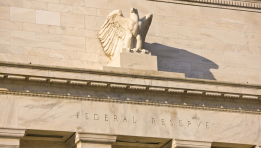
A stronger-than-expected U.S. employment report has put a Federal Reserve rate hike back at the center of the monetary-policy

- sagi habasov
- •
- 8 Min Read
- •
- ago 2 days
SKN | Goldman Sachs Warns of Lower Market Returns as Rising Bond Yields Pressure Equities
Goldman Sachs is urging investors to moderate expectations after an unusually strong period for global equities, with the firm's
- ago 2 days
- •
- 8 Min Read

Goldman Sachs is urging investors to moderate expectations after an unusually strong period for global equities, with the firm's

