





- omer bar
- •
- 8 Min Read
- •
- 2 hours ago
Key Points
- Rocket Lab successfully demonstrated an integrated rapid-response space mission for the U.S. Space Force, launching and activating a satellite within hours of receiving final mission instructions.
- The Victus Haze mission showcased Rocket Lab's ability to provide launch services, spacecraft manufacturing, mission software, and in-orbit operations through a single contract, expanding its revenue opportunities beyond rocket launches.
- While the mission highlights a promising new defense business model, its long-term financial impact will depend on securing additional government contracts and scaling recurring space operations.
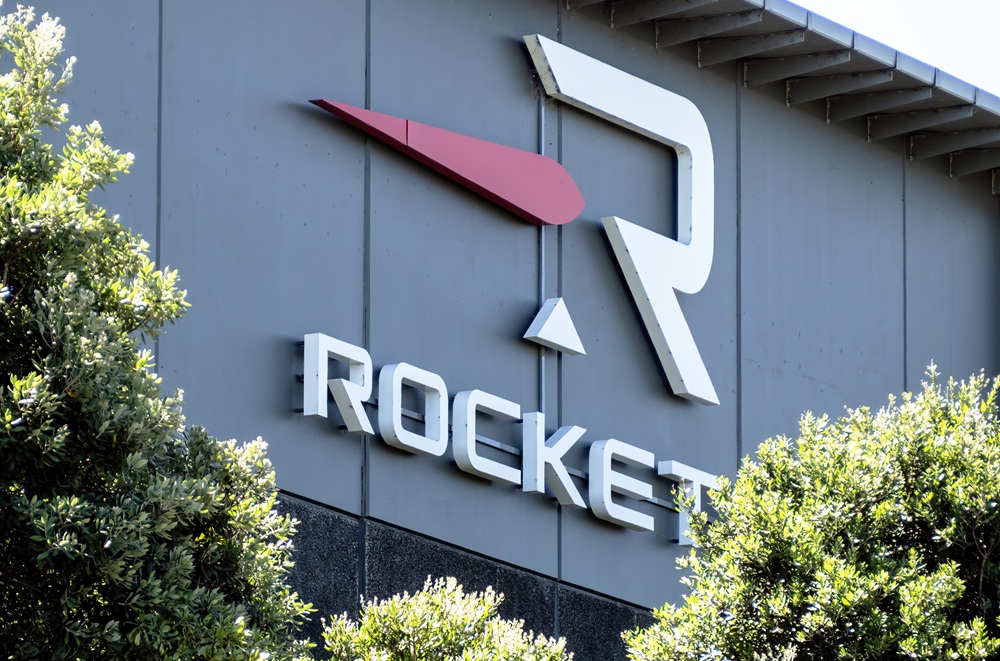
Rocket Lab (NASDAQ: RKLB) has demonstrated a new capability that could significantly expand its role in the growing defense and national security space market, moving beyond its traditional position as a small-launch provider.
Through the successful completion of the U.S. Space Force’s Victus Haze mission, Rocket Lab showcased an integrated service combining launch, spacecraft manufacturing, mission software, ground systems, and in-space operations under a single contractor model.
The achievement positions the company to pursue higher-value government contracts that extend well beyond launch services alone.
Rapid-Response Mission Sets New Operational Milestone
During the Victus Haze mission, Rocket Lab launched its Electron rocket carrying a company-built Pioneer spacecraft just 16 hours and 42 minutes after receiving final mission instructions from the U.S. Space Force.
Following launch, the spacecraft was activated, tested, and made operational within approximately 38 hours, well ahead of the program’s 72-hour operational requirement.
The spacecraft then maneuvered close to a designated target satellite, successfully tracking, observing, and photographing it within 59 hours of mission initiation.
The exercise simulated a military scenario in which the U.S. Space Force must rapidly inspect a satellite exhibiting unexpected behavior or posing a potential threat to other spacecraft in orbit.
Integrated Mission Model Expands Revenue Opportunities
Rather than serving solely as a launch provider, Rocket Lab supplied nearly every critical component of the mission.
The company provided the Electron launch vehicle, Pioneer spacecraft, mission software, ground control infrastructure, and in-orbit operational support under a single contract.
This integrated approach reduces coordination between multiple contractors while potentially shortening deployment timelines for defense customers.
The original Victus Haze contract, valued at approximately $32 million, covered spacecraft design, manufacturing, launch services, and post-launch orbital operations.
Although management has not disclosed profitability for the mission, the project demonstrates Rocket Lab’s ability to capture revenue across multiple segments of a space mission instead of relying exclusively on launch fees.
Defense Market Could Become Larger Growth Driver
The mission required Rocket Lab to complete several technically demanding tasks under compressed timelines.
Because the spacecraft’s final orbital destination was unknown until shortly before launch, engineers had approximately four hours to finalize trajectory calculations, update flight software, and coordinate global ground station operations before liftoff.
Rocket Lab will continue operating the Pioneer spacecraft for several months under additional Space Force assignments designed to test advanced satellite tracking, maneuvering, and observation capabilities.
Successful follow-on missions could strengthen the company’s position as a strategic defense partner in responsive space operations.
Growth Potential Balanced by Execution Risk
While Victus Haze represents a technological milestone, its direct financial contribution remains relatively small compared with Rocket Lab’s reported backlog of approximately $2.2 billion.
For the integrated mission model to become a meaningful earnings contributor, Rocket Lab will need to secure additional government awards and potentially establish recurring operational service contracts.
The company also continues investing heavily in Neutron, its next-generation reusable launch vehicle designed for larger payloads and commercial satellite deployments.
At the end of the first quarter, Rocket Lab reported approximately $1.48 billion in cash and investments and indicated total available liquidity exceeds $2 billion following additional financing activities, providing resources to support its long-term expansion strategy.
Outlook
Rocket Lab’s successful execution of the Victus Haze mission demonstrates its evolution from a launch services provider into a vertically integrated space systems company capable of delivering complete defense space missions. The ability to combine launch vehicles, spacecraft, software, and orbital operations under one provider could become a competitive advantage as governments increasingly prioritize rapid-response space capabilities.
Future contract awards and recurring defense programs will determine whether this integrated business model evolves into a significant long-term revenue driver alongside Rocket Lab’s expanding commercial launch operations.
Comparison, examination, and analysis between investment houses
Leave your details, and an expert from our team will get back to you as soon as possible
* This article, in whole or in part, does not contain any promise of investment returns, nor does it constitute professional advice to make investments in any particular field.
To read more about the full disclaimer, click here
- Lior mor
- •
- 8 Min Read
- •
- ago 2 hours
SKN | Micron’s AI-Driven Rally Tests Traditional Semiconductor Valuation Models
Micron Technology (NASDAQ: MU) has emerged as one of the strongest performers in the semiconductor sector, with shares climbing nearly
- ago 2 hours
- •
- 8 Min Read
Micron Technology (NASDAQ: MU) has emerged as one of the strongest performers in the semiconductor sector, with shares climbing nearly

- omer bar
- •
- 6 Min Read
- •
- ago 5 hours
SKN | Chip Stocks Under Pressure: Why Samsung and SK Hynix Are Sliding on Nvidia Financing Concerns and Rising China Competition
Global semiconductor stocks came under pressure as Samsung Electronics and SK Hynix retreated following investor concerns about financing for large-scale
- ago 5 hours
- •
- 6 Min Read
Global semiconductor stocks came under pressure as Samsung Electronics and SK Hynix retreated following investor concerns about financing for large-scale

- sagi habasov
- •
- 6 Min Read
- •
- ago 9 hours
SKN | Celestica Raises Full-Year Outlook After Powerful AI-Driven Quarter
Celestica Inc. reported a robust second quarter for fiscal 2026, surpassing Wall Street expectations on both revenue and earnings
- ago 9 hours
- •
- 6 Min Read
Celestica Inc. reported a robust second quarter for fiscal 2026, surpassing Wall Street expectations on both revenue and earnings
- Lior mor
- •
- 7 Min Read
- •
- ago 9 hours
SKN | Microsoft Unveils AI Cybersecurity Platform as Autonomous Defense Enters a New Era
Microsoft has unveiled a new artificial intelligence-driven cybersecurity platform aimed at strengthening enterprise defenses as AI increasingly transforms both
- ago 9 hours
- •
- 7 Min Read

Microsoft has unveiled a new artificial intelligence-driven cybersecurity platform aimed at strengthening enterprise defenses as AI increasingly transforms both


