





- orshu
- •
- 6 Min Read
- •
- 2 hours ago
Key Points
- Oracle (NYSE: ORCL) continues to benefit from surging demand for AI infrastructure and cloud computing, supported by major hyperscale customers and AI partnerships.
- The company has reported approximately 40% revenue growth, while market estimates cited in the accompanying analysis suggest a 14.3x P/E ratio, a 0.6x PEG ratio, and a 25% net profit margin.
- Oracle's expanding role in AI compute, cloud infrastructure, and enterprise data management has strengthened its long-term investment narrative, although investors continue to monitor execution and capital spending.
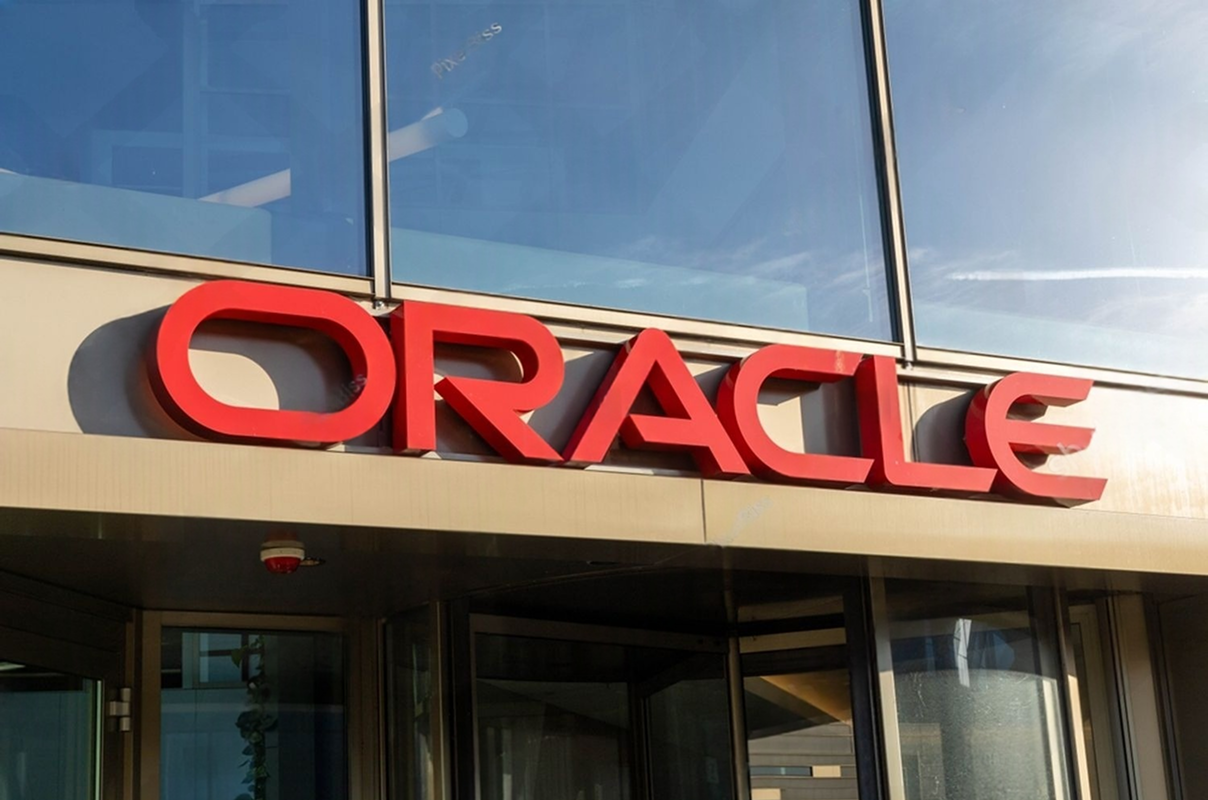
Oracle Corporation (NYSE: ORCL) has emerged as one of the most closely watched beneficiaries of the artificial intelligence investment cycle. Once viewed primarily as a legacy enterprise software provider, Oracle has transformed itself into a major cloud infrastructure provider, leveraging its extensive enterprise customer base and growing portfolio of AI partnerships to accelerate revenue growth.
The accompanying market commentary identifies Oracle as one of several companies with attractive long-term characteristics, citing strong financial metrics and its strategic role in providing computing infrastructure for leading AI developers. While these views represent market opinions rather than investment recommendations, Oracle’s recent operational performance has significantly reshaped investor expectations.
AI Infrastructure Is Driving Oracle’s Growth
Oracle has become an increasingly important provider of cloud infrastructure and AI computing capacity, supplying high-performance computing resources to enterprise customers and artificial intelligence developers. The company’s cloud business has benefited from growing demand for GPU-powered infrastructure, database services, and AI training environments.
According to the market data presented, Oracle has achieved approximately 40% revenue growth, reflecting the rapid expansion of its cloud infrastructure operations. The company’s ability to combine enterprise software, databases, and cloud services into a unified platform has positioned it to capture a larger share of AI-related technology spending.
Financial Metrics Suggest Improving Profitability
The accompanying analysis highlights several valuation and profitability metrics, including a reported 14.3x price-to-earnings (P/E) ratio, a 0.6x PEG ratio, and a 25% net profit margin. While these figures should be independently verified and may change as market prices fluctuate, they suggest Oracle continues to generate substantial earnings while maintaining strong operational efficiency.
Investors frequently monitor the PEG ratio because it compares valuation with expected earnings growth. A lower PEG ratio may indicate that future growth expectations are not fully reflected in the company’s current valuation, although investment decisions should always consider broader business fundamentals and execution risks.
Long-Term Outlook Depends on Continued Execution
Oracle’s long-term investment thesis increasingly centers on artificial intelligence infrastructure rather than its traditional database software business. Continued expansion of cloud capacity, additional enterprise AI deployments, and further strategic partnerships could support revenue growth over the coming years.
At the same time, investors remain focused on Oracle’s elevated capital expenditures, integration of large-scale cloud infrastructure, competitive dynamics with hyperscale cloud providers, and the pace of AI adoption across enterprise customers. These factors will play a significant role in determining whether current growth expectations can be sustained.
Looking ahead, Oracle’s ability to capitalize on accelerating AI infrastructure demand while maintaining profitability will remain a central focus for investors. Future earnings reports, cloud revenue growth, customer expansion, and additional AI partnerships are likely to shape market sentiment as the company continues positioning itself as one of the key infrastructure providers supporting the next generation of artificial intelligence applications.
Comparison, examination, and analysis between investment houses
Leave your details, and an expert from our team will get back to you as soon as possible
* This article, in whole or in part, does not contain any promise of investment returns, nor does it constitute professional advice to make investments in any particular field.
To read more about the full disclaimer, click here
- Arik Arkadi Sluzki
- •
- 6 Min Read
- •
- ago 60 minutes
SKN | Why Are Wall Street Analysts So Divided on Sandisk’s Future?
Sandisk (NASDAQ: SNDK) has become one of the most closely watched companies in the semiconductor sector as analysts struggle
- ago 60 minutes
- •
- 6 Min Read
Sandisk (NASDAQ: SNDK) has become one of the most closely watched companies in the semiconductor sector as analysts struggle

- omer bar
- •
- 5 Min Read
- •
- ago 2 hours
SKN | AMD’s AI Strategy Wins Wall Street Support as Analysts Raise Price Targets
Advanced Micro Devices (NASDAQ: AMD) has received renewed support from Wall Street following its recent Advancing AI event, where
- ago 2 hours
- •
- 5 Min Read
Advanced Micro Devices (NASDAQ: AMD) has received renewed support from Wall Street following its recent Advancing AI event, where

- Ronny Mor
- •
- 6 Min Read
- •
- ago 2 hours
SKN | Has ServiceNow Become a Value Opportunity After a 48% Decline?
ServiceNow Inc. (NYSE: NOW) has become one of the more closely watched software companies following a significant share-price correction
- ago 2 hours
- •
- 6 Min Read
ServiceNow Inc. (NYSE: NOW) has become one of the more closely watched software companies following a significant share-price correction

- sagi habasov
- •
- 7 Min Read
- •
- ago 3 hours
SKN | Nvidia Strengthens AI Supply Chain with Landmark SK Hynix Partnership
Nvidia is reinforcing its leadership in artificial intelligence infrastructure by securing one of the industry's most critical resources: high-bandwidth
- ago 3 hours
- •
- 7 Min Read
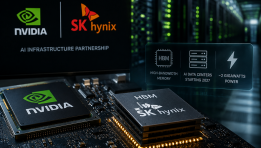
Nvidia is reinforcing its leadership in artificial intelligence infrastructure by securing one of the industry's most critical resources: high-bandwidth


