





- omer bar
- •
- 7 Min Read
- •
- 1 day ago
Key Points
- The USD/HKD currency pair finished the Monday-to-Friday trading week virtually unchanged (0.00%), closing at 7.8397.
- A fractional 0.01% advance in the final session kept the cross anchored near the upper end of its weekly trading range.
- Market sentiment remains tied to the Linked Exchange Rate System (LERS), regional liquidity conditions, and interest rate differentials between the US Federal Reserve and the HKMA.
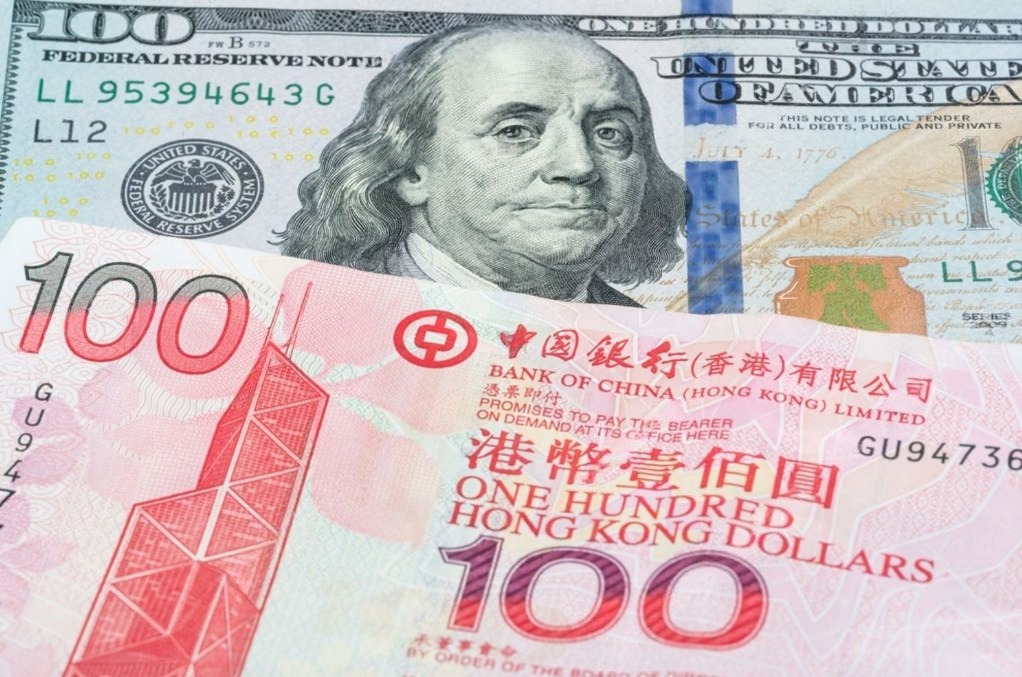
The USD/HKD currency pair finished the trading week virtually unchanged, recording a flat performance (0.00%) from Monday through Friday before closing at 7.8397. While the cross edged up a minor 0.01% in the latest session, it maintained a highly stable weekly performance as investors balanced US interest rate trajectories against regional monetary conditions and Hong Kong’s currency peg system.
The week’s trading reflected cautious navigation across global currency markets, with investors evaluating inflation trends, central bank policy expectations, and the outlook for regional capital flows amid an increasingly complex global macroeconomic environment.
Hong Kong Dollar Peg Navigates Weekly Fluctuations
Throughout most of the week, the USD/HKD cross traded within a tightly controlled range, climbing toward local highs near 7.8410 mid-week before softening slightly into Friday’s close. The flat weekly finish highlights the continuous structural enforcement of the Linked Exchange Rate System (LERS), which restricts the Hong Kong dollar’s fluctuations against the US dollar within a strict convertibility zone of 7.75 to 7.85.
Banking institutions, real estate conglomerates, and international trade operations continued to heavily monitor the pair’s movements. Market participants generally focused on shifting interbank liquidity and Hibor-Libor yield spreads, which heavily dictate short-term capital rotations within Hong Kong’s financial ecosystem.
Macro Developments Continue to Drive Sentiment
Investor attention remained focused on several macroeconomic themes, including East Asia’s growth trajectory, US Federal Reserve policy guidance, and international trade developments. Markets also monitored domestic liquidity indicators within the Hong Kong Monetary Authority (HKMA) framework while evaluating whether cross-border flows would exert pressure near the weak-side convertibility limit of 7.85.
At the same time, external risks continue to shape investor positioning. Evolving geopolitical tensions, regional credit cycles, and uncertainty surrounding global supply chains remain critical variables for companies operating in Hong Kong, many of which derive significant revenues from international trade, logistics, and cross-border commercial activity.
Israeli Investors Monitor Asian Market Diversification
For Israeli investors, Hong Kong remains an important gateway to broader Asian equity and capital markets. Institutional portfolios often gain direct or indirect exposure to regional assets, currency hedges, and Chinese equities listed on the Hong Kong Stock Exchange through global exchange-traded funds and international currency allocations.
However, exposure to the region also carries additional structural considerations, including the long-term stability of the HKD peg, regulatory shifts in East Asia, and variations in global investor risk appetite. As a result, portfolio managers continue emphasizing diversification while closely monitoring interest rate differentials and macro policy announcements that could influence regional capital flows and valuations.
Outlook: The near-term outlook for the USD/HKD pair remains securely bounded but highly dependent on the interest rate path set by the US Federal Reserve and matched by the HKMA. Narrowing interest rate differentials, stabilizing corporate earnings in the region, and stronger regional economic demand could alleviate pressure on the local currency. Conversely, renewed geopolitical tensions, sustained high US interest rates, or weaker economic indicators across East Asia could test capital liquidity buffers. For long-term investors, Hong Kong continues to offer a stable peg mechanism and access to some of Asia’s deepest financial markets, although maintaining a balanced assessment of both opportunities and downside risks remains appropriate as global macroeconomic conditions continue to evolve.
Comparison, examination, and analysis between investment houses
Leave your details, and an expert from our team will get back to you as soon as possible
* This article, in whole or in part, does not contain any promise of investment returns, nor does it constitute professional advice to make investments in any particular field.
To read more about the full disclaimer, click here
- orshu
- •
- 7 Min Read
- •
- ago 5 minutes
SKN | Why Oil Prices Have Remained Stable Despite Five Months of U.S.-Iran Conflict
Despite five months of military conflict involving the United States and Iran, global oil prices have avoided the dramatic
- ago 5 minutes
- •
- 7 Min Read
Despite five months of military conflict involving the United States and Iran, global oil prices have avoided the dramatic
- orshu
- •
- 8 Min Read
- •
- ago 10 hours
SKN | Tel Aviv Equities Edge Lower as TA-90 and TA-125 Face Broad Selling Pressure
Tel Aviv financial markets are trading slightly lower as investors continue to navigate a cautious environment following recent market volatility.
- ago 10 hours
- •
- 8 Min Read
Tel Aviv financial markets are trading slightly lower as investors continue to navigate a cautious environment following recent market volatility.
- orshu
- •
- 7 Min Read
- •
- ago 15 hours
SKN | Global Markets Target United Kingdom Inflation Telemetry and Mega Cap Tech Earnings as Mid Summer Volatility Rises
Global capital markets advance into the trading week of July 20, 2026, navigating a high impact intersection of inflation data
- ago 15 hours
- •
- 7 Min Read
Global capital markets advance into the trading week of July 20, 2026, navigating a high impact intersection of inflation data

- omer bar
- •
- 6 Min Read
- •
- ago 16 hours
SKN | Samsung Biologics’ $1.8 Billion Bid for PolyPeptide Signals a New Push in Global Biopharma Manufacturing
Samsung Biologics is set to launch a $1.8 billion all-cash bid for PolyPeptide, marking one of the biotechnology manufacturing sector's
- ago 16 hours
- •
- 6 Min Read

Samsung Biologics is set to launch a $1.8 billion all-cash bid for PolyPeptide, marking one of the biotechnology manufacturing sector's


