





- omer bar
- •
- 7 Min Read
- •
- 5 hours ago
Key Points
- The German flagship DAX P Index concluded the trading week lower at 25,067.09, locking in a 2.76% percentage change over the trailing five-day window.
- Friday's trading session saw the benchmark decline slightly by 0.20% (51.18 points), consolidating above its morning lows as the index worked to repair a heavy mid-week technical breakdown.
- Institutional asset allocators balanced a sharp deceleration in global labor metrics against immediate headwinds from a backup in sovereign bond yields and heightened Middle East border tensions.
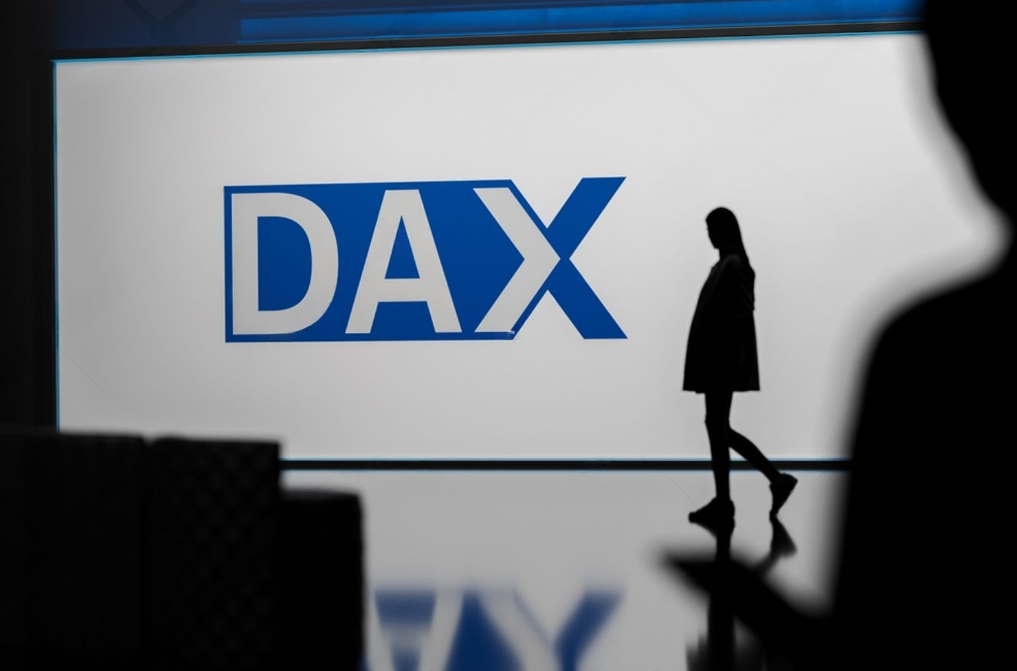
The German flagship DAX P Index (^GDAXI) finished the trading week lower at 25,067.09, securing a net negative return of 2.76% over the selected five-day trailing period across Frankfurt desks. While global equity complexes managed a minor tech-led rescue rally ahead of the weekend, the export-heavy German marketplace spent the latter half of the week digesting a severe mid-week macro shock. This contractive consolidation highlights a highly defensive posture among international portfolio managers as they re-evaluate industrial equity multipliers against a volatile macroeconomic and fixed-income backdrop.
Benchmark Gauge Stabilizes Above Mid-Week Geopolitical Floor
The five-day technical architecture revealed a highly fluid chart pattern that suffered a major structural disruption early in the tracking window. Opening Friday’s session at 25,081.19 compared to its previous close of 25,118.27, the index navigated an intraday range of 24,937.52 to 25,195.83 before finishing the day down slightly. Crucially, the index spent the first half of the tracking week testing local multi-month peaks near 25,750 before a massive distribution wave on July 8 forced the gauge through short-term moving averages. Floating within its wider 52-week parameters of 21,863.81 to 25,900.10, the index’s ability to hold the psychological 25,000 line at the close shows a steady layer of automated institutional support trying to establish a definitive trading floor.
Energy Pricing Fears and Rising Bond Yields Anchor Equities
The primary fundamental mechanism putting pressure on Germany’s corporate baseline centers on a direct clash between global monetary normalization paths and localized energy sensitivities. Updated employment data out of the United States revealed that employers added just 18,200 jobs last month—marking a sharp rollback from early-year labor overheating.
While a cooling global growth framework typically signals upcoming interest-rate relief from major central banks, a brief breakdown in the ceasefire between the United States and Iran injected an immediate “war premium” into global energy streams.
This underlying inflation anxiety triggered a widespread global fixed-income sell-off, keeping the 10-year U.S. Treasury yield elevated at 4.56%. For capital-intensive German manufacturing, automotive, and industrial titans, the combination of high long-term borrowing costs and unstable raw material inputs presents an immediate drag on corporate profit margins and operating predictability.
Cross-Border Portfolios and Foreign Exchange Risk Controls
For internationally diversified portfolio managers and multi-asset institutional investors, the index’s multi-day contraction underscores the vital importance of actively managing currency volatility and shifting geopolitical premiums. Because the Euro area’s primary large-cap entities dictate trade streams across a massive global grid, structural fluctuations in the common currency relative to the U.S. Dollar alter real net total returns for cross-border holders. As global central banks navigate highly distinct disinflationary timelines, deploying sophisticated risk-mitigation filters and robust FX-hedging frameworks remains an essential operational discipline to shield core capital allocations from macro-driven currency noise or unexpected trade realignments.
Outlook
Looking ahead, the near-term outlook for the DAX P Index remains constructively balanced, though price action is highly anticipated to navigate a narrow consolidation track as the market transitions into the second-quarter corporate earnings cycle next week. Trading desks will shift their immediate focus to incoming balance sheets from major regional manufacturing, chemical, and banking conglomerates to verify if core consumer demand lines remain healthy under restrictive financial conditions. While extended energy market volatility and international supply-chain frictions present prominent tactical downside risks, clear evidence that leading enterprises can continue to deliver resilient corporate guidance could provide the necessary technical foundation to launch a steady push back toward the 25,500 resistance zone, though future gains are highly expected to materialize in a gradual rather than linear progression.
Comparison, examination, and analysis between investment houses
Leave your details, and an expert from our team will get back to you as soon as possible
* This article, in whole or in part, does not contain any promise of investment returns, nor does it constitute professional advice to make investments in any particular field.
To read more about the full disclaimer, click here
- Ronny Mor
- •
- 5 Min Read
- •
- ago 36 minutes
SKN | Japanese Yen Index Closes Lower Despite Late-Week Surge as BoJ Policy and Intervention Risks Loom
The Japanese Yen Currency Index (^XDN) concluded the trading week with a net 0.39% decline, ending at 61.83 after
- ago 36 minutes
- •
- 5 Min Read

The Japanese Yen Currency Index (^XDN) concluded the trading week with a net 0.39% decline, ending at 61.83 after

- omer bar
- •
- 5 Min Read
- •
- ago 54 minutes
SKN | SSE Composite Index Retreats Below 4,000 as Macro Headwinds Eclipse Targeted State Support
The SSE Composite Index (000001.SS) concluded the trading week with a net 1.17% weekly decline, ending at 3,996.16 after experiencing
- ago 54 minutes
- •
- 5 Min Read

The SSE Composite Index (000001.SS) concluded the trading week with a net 1.17% weekly decline, ending at 3,996.16 after experiencing
- omer bar
- •
- 6 Min Read
- •
- ago 1 hour
SKN | Euronext 100 Retreats Over the Week as Tech Selloff and Geopolitical Frictions Weigh on European Equities
The Euronext 100 Index (^N100) concluded the trading week with a net 1.58% decline, ending at 1,907.86 and snapping a
- ago 1 hour
- •
- 6 Min Read
The Euronext 100 Index (^N100) concluded the trading week with a net 1.58% decline, ending at 1,907.86 and snapping a

- Lior mor
- •
- 6 Min Read
- •
- ago 2 hours
SKN | British Pound Index Edges Higher Over the Week as Hawkish BoE Rhetoric Offsets Late Profit-Taking
The British Pound Currency Index (^XDB) concluded the trading week with a net 0.41% weekly gain, ending at 134.03
- ago 2 hours
- •
- 6 Min Read

The British Pound Currency Index (^XDB) concluded the trading week with a net 0.41% weekly gain, ending at 134.03


