





- Arik Arkadi Sluzki
- •
- 7 Min Read
- •
- 7 hours ago
Key Points
- Wall Street's premier "fear gauge," the CBOE Volatility Index (^VIX), concluded the trading week slightly lower at 15.03, locking in a minor 0.64% percentage change over the trailing five-day window.
- Friday's session witnessed a sharp 5.11% daily contraction in the index, completely unwinding a dramatic mid-week volatility surge that had briefly propelled the gauge toward local multi-month ceilings near 19.00.
- Institutional options traders aggressively crushed equity hedging premiums as a blockbuster semiconductor debut and a cooling June employment print overrode initial anxieties surrounding Middle East border frictions.
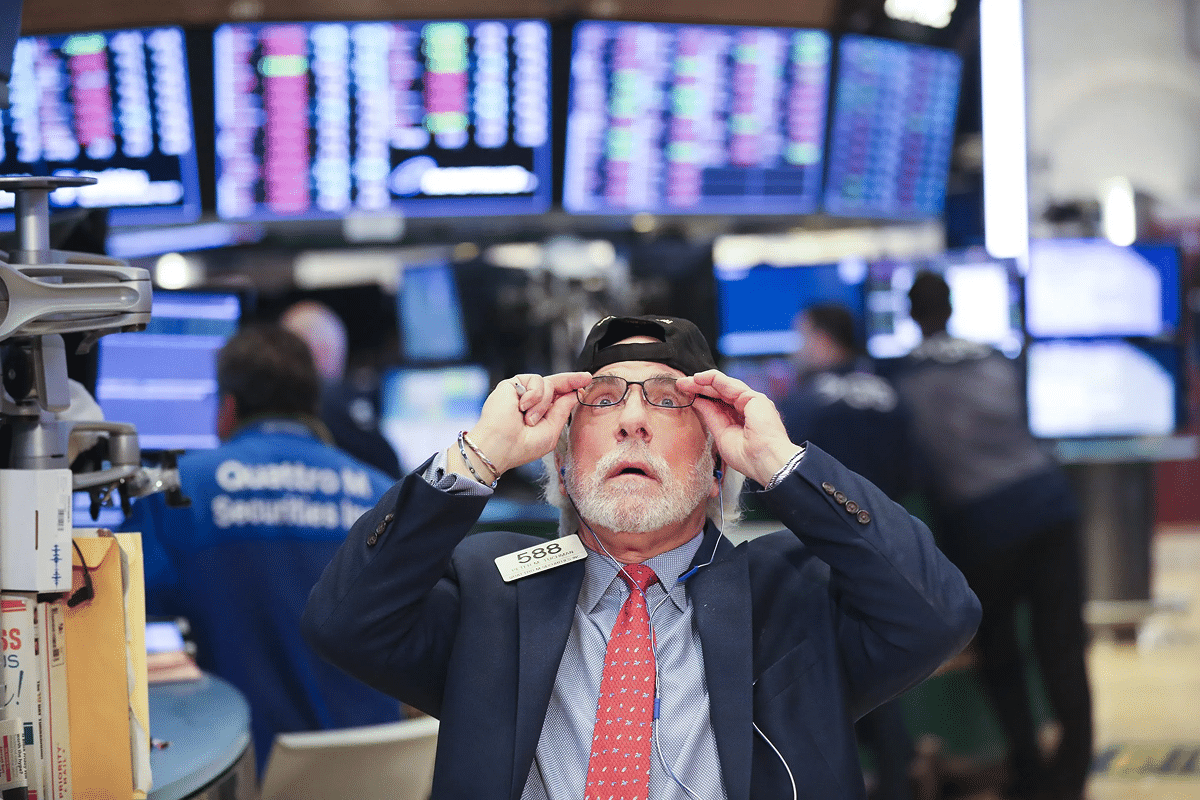
The CBOE Volatility Index (^VIX) finished the trading week lower at 15.03, securing a net negative return of 0.64% over the selected five-day trailing period. While macro derivative desks spent the middle of the week aggressively pricing tail-risk protection due to heightened border friction in the Middle East, a massive relief rally across broad-market equities on Thursday and Friday triggered a synchronized collapse in implied volatility. This downward normalization highlights a rapid return to structural market complacency as global asset allocators pivoted right back into risk-on equity pools ahead of the weekend.
Fear Gauge Deflates to Test Key Technical Baselines
The five-day trading architecture revealed a highly aggressive, mean-reverting chart pattern that ultimately highlighted the resilience of underlying equity support. Opening Friday’s session at 16.06 compared to its previous close of 15.84, the index navigated a compressed intraday range of 14.96 to 16.16 before settling near its daily floor. Crucially, this wipeout follows a massive mid-week acceleration on July 8 that saw the VIX spike toward the 19.00 threshold as equity benchmarks temporarily faltered. Floating comfortably within its broader 52-week parameters of 13.38 to 35.30, the index’s quick return to historical support floors demonstrates that institutional capital is treating near-term market drawdowns as buying opportunities rather than the start of a structural correction.
Soft Payrolls and Landmark Tech Offering Subdue Premium Demands
The primary fundamental mechanism sucking the air out of option pricing centers on a massive influx of technology sector liquidity and fluid updates to domestic employment models. Institutional sentiment received a powerful structural boost on Friday as a multi-billion-dollar semiconductor transaction by memory-chip titan SK Hynix successfully cleared its Nasdaq debut, absorbing speculative float and lifting tech mainstays like Nvidia by 4%.
Concurrently, updated labor statistics showing that U.S. employers added just 18,200 jobs last month helped reassure derivatives desks that the broader economy is undergoing a controlled, non-inflationary cooldown.
Because a softer labor baseline preserves the structural runway for eventual monetary easing by the Federal Reserve, institutional money managers quickly disassembled short-term put-option fences across the S&P 500 and Nasdaq complexes.
Geopolitical Friction and Fixed-Income Volatility Controls
Beyond core equity mechanics, macro trading desks spent the tracking frame actively parsing a brief breakdown in the ceasefire and subsequent military escalations between the United States and Iran. While this geopolitical flashpoint injected an immediate “war premium” into front-month crude oil futures and global currency baskets early in the week, the tension failed to trigger a broader fixed-income panic, even as the 10-year U.S. Treasury yield settled at an elevated 4.56%.
For internationally diversified macro funds, navigating this landscape requires constant adjustments against currency volatility and shifting global risk benchmarks. Fluctuations in the U.S. Dollar relative to major currencies like the Euro or the Israeli Shekel alter real cross-border asset valuations, making active portfolio hedging a necessary discipline to shield underlying organic equity performance from headline-driven macro noise.
Outlook
Looking ahead, the near-term outlook for the CBOE Volatility Index remains constructively suppressed, though price action is highly anticipated to hover within a baseline consolidation track as Wall Street transitions into the second-quarter corporate earnings cycle next week. Trading desks will look directly to incoming financial balance sheets from major banking, consumer, and aviation giants to verify if core corporate credit remains healthy. While extended commodity volatility and unexpected international escalations present prominent tactical upside risks for the fear gauge, evidence that market leaders are continuing to deliver resilient corporate guidance despite high borrowing costs should keep structural volatility firmly capped below the 17.50 resistance threshold, though future adjustments will likely unfold in a gradual rather than linear progression.
Comparison, examination, and analysis between investment houses
Leave your details, and an expert from our team will get back to you as soon as possible
* This article, in whole or in part, does not contain any promise of investment returns, nor does it constitute professional advice to make investments in any particular field.
To read more about the full disclaimer, click here
- Ronny Mor
- •
- 5 Min Read
- •
- ago 39 minutes
SKN | Japanese Yen Index Closes Lower Despite Late-Week Surge as BoJ Policy and Intervention Risks Loom
The Japanese Yen Currency Index (^XDN) concluded the trading week with a net 0.39% decline, ending at 61.83 after
- ago 39 minutes
- •
- 5 Min Read

The Japanese Yen Currency Index (^XDN) concluded the trading week with a net 0.39% decline, ending at 61.83 after

- omer bar
- •
- 5 Min Read
- •
- ago 57 minutes
SKN | SSE Composite Index Retreats Below 4,000 as Macro Headwinds Eclipse Targeted State Support
The SSE Composite Index (000001.SS) concluded the trading week with a net 1.17% weekly decline, ending at 3,996.16 after experiencing
- ago 57 minutes
- •
- 5 Min Read

The SSE Composite Index (000001.SS) concluded the trading week with a net 1.17% weekly decline, ending at 3,996.16 after experiencing
- omer bar
- •
- 6 Min Read
- •
- ago 1 hour
SKN | Euronext 100 Retreats Over the Week as Tech Selloff and Geopolitical Frictions Weigh on European Equities
The Euronext 100 Index (^N100) concluded the trading week with a net 1.58% decline, ending at 1,907.86 and snapping a
- ago 1 hour
- •
- 6 Min Read
The Euronext 100 Index (^N100) concluded the trading week with a net 1.58% decline, ending at 1,907.86 and snapping a

- Lior mor
- •
- 6 Min Read
- •
- ago 2 hours
SKN | British Pound Index Edges Higher Over the Week as Hawkish BoE Rhetoric Offsets Late Profit-Taking
The British Pound Currency Index (^XDB) concluded the trading week with a net 0.41% weekly gain, ending at 134.03
- ago 2 hours
- •
- 6 Min Read

The British Pound Currency Index (^XDB) concluded the trading week with a net 0.41% weekly gain, ending at 134.03


