





- Ronny Mor
- •
- 7 Min Read
- •
- 2 hours ago
Key Points
- Syntiant has filed a prospectus for an initial public pharmaceutical offering (IPO) on NASDAQ, aiming to capitalize on the growing investor demand in the artificial intelligence sector.
- The company, backed by Intel, Microsoft, and Knowles, specializes in developing ultra-low-power AI chips and software systems for edge devices.
- Despite business growth, the company continues to report losses; in the first quarter of 2026, it lost $26.2 million on revenues of $64.5 million.
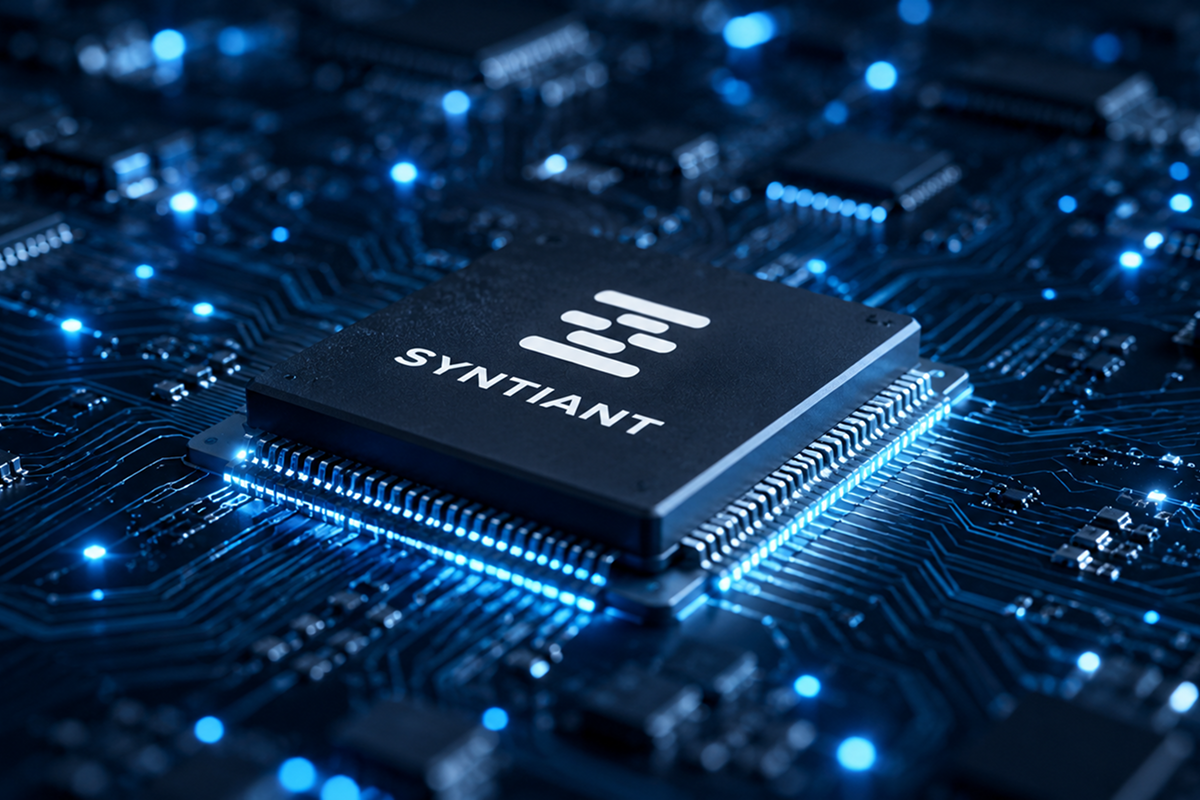
Syntiant Joins the AI IPO Wave
Syntiant, a developer of artificial intelligence chips and software, has filed a prospectus with the U.S. Securities and Exchange Commission (SEC) ahead of an initial public offering (IPO) on the NASDAQ stock exchange. The move comes at a time when companies operating in the AI space continue to enjoy significant investor interest, driven by the rapid expansion of AI adoption across a wide range of industries.
Founded in 2017 and headquartered in Irvine, California, the company plans to trade under the ticker symbol SYTN. The IPO is being led by Citigroup, Bank of America, and UBS, which are considered leading institutions in the U.S. underwriting market.
Syntiant focuses on developing ultra-low-power AI chips designed to perform AI computations directly on the device itself (Edge AI), without relying on the cloud. The company’s products are used in wireless earbuds, wearable devices, industrial systems, smart consumer electronics, and IoT devices.
This strategy allows customers to benefit from faster response times, enhanced user privacy, and reduced energy consumption—advantages that are becoming increasingly vital as the scale of AI usage continues to grow.
Financial Data Points to Continued Investment in Growth
According to the prospectus, in the first quarter of 2026, the company recorded revenues of $64.5 million, a slight decrease compared to $66.6 million in the corresponding period last year. At the same time, the net loss widened to $26.2 million, compared to a loss of $16.8 million in the first quarter of the previous year.
The figures demonstrate that the company continues to invest heavily in new product development, operational expansion, and scaling production capabilities, even at the expense of short-term profitability. This model is characteristic of many technology companies operating in the AI market, where the current emphasis is on growth and expanding market share.
Among Syntiant’s key shareholders are Intel, Microsoft, and Knowles. Since its inception, the company has raised approximately $311 million from private investors. In its last funding round, completed in December 2024, its valuation was estimated at approximately $646.4 million.
In that same month, the company also completed the acquisition of Knowles’ consumer sensor division for $114.4 million. The deal expanded Syntiant’s industrial operations and added manufacturing facilities in China and Malaysia—a move designed to strengthen its supply chain and production capacity ahead of future growth.
Governance Structure and Implications for Investors
According to the IPO documents, the company’s four founders, led by CEO Kurt Busch, will retain voting control even after the completion of the IPO through Class B shares, which carry super-voting rights.
This type of governance structure has become common among technology companies seeking to raise capital from the public while maintaining the founders’ control over strategic decision-making. For investors, this means that their influence over the company’s management will be limited, despite it becoming a public entity.
Syntiant’s IPO joins the broader expansion of the artificial intelligence sector in capital markets. It illustrates that companies focusing on hardware solutions and edge AI are also looking to leverage investor enthusiasm in the field. The success of the offering could serve as another indicator of market demand for growth-stage AI companies, even when they have yet to achieve profitability.
Comparison, examination, and analysis between investment houses
Leave your details, and an expert from our team will get back to you as soon as possible
* This article, in whole or in part, does not contain any promise of investment returns, nor does it constitute professional advice to make investments in any particular field.
To read more about the full disclaimer, click here
- Lior mor
- •
- 8 Min Read
- •
- ago 13 minutes
SKN | Rivian Shares Slide as 75 Million Share Offering Raises Dilution Concerns
Rivian Automotive came under selling pressure after announcing a proposed 75 million share public offering, a move designed to
- ago 13 minutes
- •
- 8 Min Read
Rivian Automotive came under selling pressure after announcing a proposed 75 million share public offering, a move designed to

- omer bar
- •
- 7 Min Read
- •
- ago 4 hours
SKN | Luxshare’s $3.1 Billion Hong Kong IPO: A Strategic Pivot Beyond Apple’s Shadow?
Luxshare Precision Industry’s recent pricing of its Hong Kong public offering at the very ceiling of its targeted range represents
- ago 4 hours
- •
- 7 Min Read

Luxshare Precision Industry’s recent pricing of its Hong Kong public offering at the very ceiling of its targeted range represents

- orshu
- •
- 7 Min Read
- •
- ago 5 hours
SKN | U.S. Markets Trade Mixed as Dow and Small Caps Advance While Technology Stocks Retreat
U.S. equity markets traded with a mixed tone on July 7 as investors rotated away from large-cap technology shares
- ago 5 hours
- •
- 7 Min Read

U.S. equity markets traded with a mixed tone on July 7 as investors rotated away from large-cap technology shares
- Lior mor
- •
- 6 Min Read
- •
- ago 15 hours
SKN | SpaceX Executive Commits $322 Million in Shares to Trump Accounts, Highlighting Growing Private Market Activity
SpaceX Chief Operating Officer Gwynne Shotwell has committed approximately $322 million worth of SpaceX shares to Trump Accounts, drawing attention
- ago 15 hours
- •
- 6 Min Read
SpaceX Chief Operating Officer Gwynne Shotwell has committed approximately $322 million worth of SpaceX shares to Trump Accounts, drawing attention


