





- omer bar
- •
- 8 Min Read
- •
- 2 hours ago
Key Points
- Seagate (STX) shares are declining as investors reassess near-term demand trends in the data storage and HDD market.
- Concerns around cyclical softness in enterprise storage demand and cloud capex normalization are weighing on sentiment.
- The move reflects broader sensitivity in legacy hardware names despite long-term data growth trends.
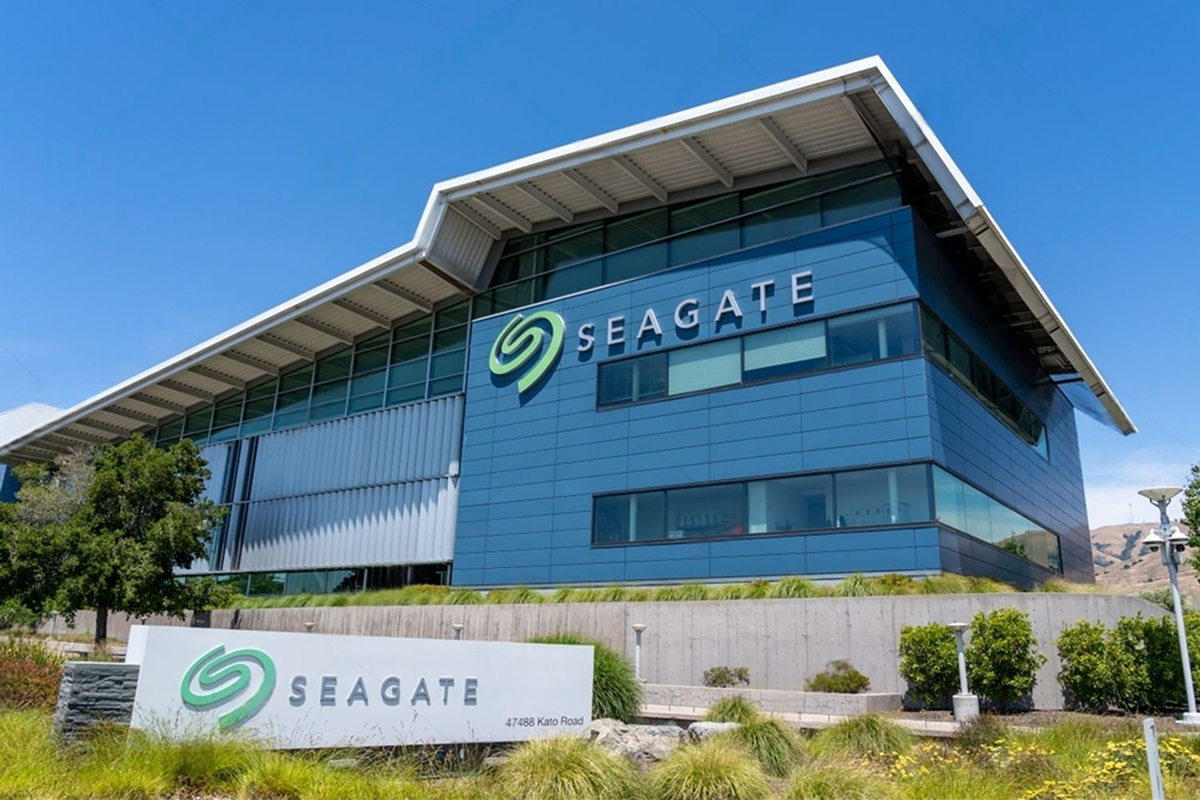
Seagate Technology shares are trading lower as investors react to renewed concerns over cyclical demand in the data storage industry, particularly in hard disk drive (HDD) and enterprise storage segments. The decline comes at a time when technology markets remain divided between strong AI-driven infrastructure demand and weakening trends in more traditional hardware cycles. For investors in Israel and global markets, the move highlights the persistent sensitivity of legacy storage providers to cloud spending and enterprise capital expenditure patterns.
Enterprise Storage Cycle Shows Signs of Normalization
The primary driver behind Seagate’s decline is growing caution around the enterprise storage cycle, which has shown signs of normalization following periods of elevated demand during the global digital expansion phase. As cloud providers and large enterprises adjust capital expenditure plans, demand for large-scale storage solutions has become less consistent.
Seagate, as one of the leading global providers of HDD-based storage systems, is closely tied to hyperscale data center investment cycles. When cloud infrastructure spending slows or becomes more selective, storage orders are often among the first areas to reflect the shift. This cyclical sensitivity contributes to heightened volatility in Seagate’s revenue visibility, particularly during periods of macroeconomic uncertainty.
Market participants are increasingly focusing on whether recent stabilization in storage demand is temporary or part of a broader downshift in enterprise IT investment cycles.
AI Growth Fails to Fully Offset Legacy Storage Weakness
While artificial intelligence continues to drive strong demand for high-performance computing infrastructure, its impact on Seagate is more indirect compared to semiconductor companies supplying GPUs or advanced memory chips. AI workloads do generate increased data creation and storage requirements, but much of the fastest-growing demand is concentrated in high-speed flash and SSD-based solutions rather than traditional HDD products.
This structural shift places pressure on legacy storage providers as the industry gradually transitions toward higher-performance storage architectures. Although HDDs remain essential for cost-efficient, large-scale data retention, especially in archival and cold storage use cases, growth dynamics are slower compared to flash-based alternatives.
As a result, Seagate is navigating a market environment where overall data growth is strong, but the mix of storage technologies is evolving in ways that do not uniformly benefit all providers.
Valuation Pressure and Macro Sensitivity in Hardware Cycles
Beyond demand-specific concerns, Seagate is also affected by broader valuation compression across cyclical technology hardware equities. Elevated interest rate expectations compared to previous years have increased investor focus on cash flow stability and reduced tolerance for earnings volatility.
Storage hardware companies tend to experience amplified market reactions during shifts in macro sentiment, particularly because their earnings are closely tied to global industrial and cloud investment cycles. Even modest changes in demand outlook can significantly influence forward revenue expectations and margin assumptions.
In addition, ongoing uncertainty around global economic momentum is contributing to caution among enterprise customers, many of whom are optimizing IT budgets rather than expanding aggressively.
Outlook: Storage Demand, Cloud Spending, and Technology Transition in Focus
Looking ahead, Seagate’s performance will depend on the trajectory of enterprise and cloud storage demand, as well as the pace of transition toward hybrid storage architectures combining HDD and flash solutions. Key indicators include hyperscaler capital expenditure trends, data center expansion rates, and pricing stability in both HDD and SSD markets.
Risks include prolonged weakness in enterprise IT spending, continued substitution toward flash storage, and slower-than-expected recovery in cloud infrastructure investment. On the other hand, sustained data growth driven by AI workloads and expanding digital content consumption could support long-term storage demand across both traditional and next-generation systems.
For investors in Israel and globally, Seagate’s decline underscores a broader structural theme in the technology sector: even in a world defined by explosive data growth, legacy hardware segments remain highly cyclical and increasingly dependent on the evolving balance between cost efficiency and performance-driven storage innovation.
Comparison, examination, and analysis between investment houses
Leave your details, and an expert from our team will get back to you as soon as possible
* This article, in whole or in part, does not contain any promise of investment returns, nor does it constitute professional advice to make investments in any particular field.
To read more about the full disclaimer, click here
- sagi habasov
- •
- 7 Min Read
- •
- ago 2 hours
SKN | Why Lam Research, Qualcomm, and Western Digital Are Under Pressure as Semiconductor Sentiment Weakens
Global semiconductor equities are under renewed pressure as investors reassess the durability of demand across key hardware segments. Shares of
- ago 2 hours
- •
- 7 Min Read

Global semiconductor equities are under renewed pressure as investors reassess the durability of demand across key hardware segments. Shares of

- Lior mor
- •
- 8 Min Read
- •
- ago 9 hours
SKN | Central Garden & Pet Highlights Diverging Trends in Household Products Sector After Q1 Earnings
The first-quarter earnings season offered investors a fresh perspective on the household products industry, a sector traditionally viewed as
- ago 9 hours
- •
- 8 Min Read
The first-quarter earnings season offered investors a fresh perspective on the household products industry, a sector traditionally viewed as

- Ronny Mor
- •
- 8 Min Read
- •
- ago 11 hours
SKN | Veralto Sets the Pace as Environmental Services Sector Navigates a Mixed Q1 Earnings Season
The first-quarter earnings season offered investors a closer look at how environmental and facilities services companies are performing amid
- ago 11 hours
- •
- 8 Min Read

The first-quarter earnings season offered investors a closer look at how environmental and facilities services companies are performing amid

- orshu
- •
- 8 Min Read
- •
- ago 12 hours
SKN | SoFi’s Growth Story Accelerates as Revenue and Earnings Outlook Continue to Improve
SoFi Technologies (NASDAQ: SOFI) continued to attract investor attention on June 23, with shares rising 2.54% to approximately $17.53
- ago 12 hours
- •
- 8 Min Read

SoFi Technologies (NASDAQ: SOFI) continued to attract investor attention on June 23, with shares rising 2.54% to approximately $17.53


