




- Articles
- •
- 8 Min Read
- •
- 3 months ago


Key Points
- Redwire shares have come under pressure following concerns over dilution, valuation, and recent analyst downgrades.
- The company continues to report strong revenue growth and maintains a sizable contract backlog, but profitability remains elusive.
- Investor enthusiasm surrounding the space sector and the SpaceX IPO has shifted toward caution as valuations face increased scrutiny.

Redwire Corporation (NYSE: RDW), a space infrastructure and defense technology company, has experienced significant volatility in recent weeks despite operating in one of the market’s most closely watched growth sectors. The stock’s decline comes as investors reassess valuations across the broader space industry amid concerns about capital requirements, profitability, and the long-term impact of the highly anticipated SpaceX public listing.
The weakness in Redwire shares highlights a broader shift in market sentiment. While investor interest in space technology remains strong, the focus has increasingly moved from future potential toward financial execution, cash flow generation, and sustainable growth.
Capital Raising Plans Trigger Investor Concerns
One of the primary catalysts behind Redwire’s recent decline was the company’s announcement of a new at-the-market equity offering that could allow it to raise up to $500 million through the sale of common shares. Investors often view such offerings cautiously because they can dilute existing shareholders by increasing the total number of shares outstanding.
The company stated that proceeds could be used for working capital, acquisitions, debt repayment, research and development, and other corporate purposes. While additional capital may strengthen Redwire’s strategic flexibility, the market reaction suggests investors are concerned about the potential dilution and the company’s ongoing need for external financing.
These concerns have been amplified by questions surrounding cash generation. Recent market commentary noted that Redwire continues to rely on capital markets to support growth initiatives while working toward long-term profitability.
Strong Growth Is Being Overshadowed by Profitability Challenges
Despite the stock’s weakness, Redwire’s operational performance presents a more nuanced picture. The company reported first-quarter 2026 revenue of approximately $96.97 million, representing year-over-year growth of nearly 58%. However, revenue fell short of analyst expectations, and the company reported a GAAP loss of $0.40 per share, significantly below consensus forecasts.
At the same time, Redwire continues to build its business pipeline. The company reported a contract backlog approaching $500 million, supported by defense, aerospace, and commercial space projects. Recent contract wins include unmanned aerial systems agreements and innovative space agriculture initiatives aboard the International Space Station.
For investors, the challenge is balancing these positive growth indicators against ongoing losses and the company’s path toward profitability. While revenue growth remains impressive, markets increasingly demand evidence that growth can translate into sustainable earnings and cash flow.
Space Sector Valuations Face a Reality Check
Redwire’s decline cannot be viewed in isolation. The broader space sector has experienced heightened volatility as investors digest the implications of the SpaceX IPO. Earlier enthusiasm surrounding the public debut helped drive significant gains across many space-related stocks, including Redwire. However, as valuations climbed rapidly, analysts began questioning whether expectations had moved ahead of fundamentals.
Recent analyst downgrades added to the pressure. Jefferies downgraded Redwire after a sharp rally, citing valuation concerns and limited near-term upside despite improving industry dynamics. The downgrade contributed to a substantial one-day decline in the stock and signaled growing caution among institutional investors.
At the same time, capital has increasingly rotated toward direct exposure to SpaceX, reducing some of the speculative premium previously assigned to publicly traded space companies viewed as indirect beneficiaries of the industry’s growth.
Looking ahead, investors will likely focus on several critical factors: Redwire’s ability to execute on its growing backlog, progress toward profitability, the use of proceeds from any future equity issuance, and broader sentiment surrounding the commercial space economy. The company’s long-term opportunities in defense technology, satellite infrastructure, and space commercialization remain significant. However, market participants will increasingly demand evidence that these opportunities can translate into consistent earnings growth. In the near term, Redwire’s performance may remain closely tied to developments across the broader space sector, particularly as investors continue reassessing valuations following the SpaceX IPO and evolving expectations for the industry’s next phase of growth.
Comparison, examination, and analysis between investment houses
Leave your details, and an expert from our team will get back to you as soon as possible
* This article, in whole or in part, does not contain any promise of investment returns, nor does it constitute professional advice to make investments in any particular field.
To read more about the full disclaimer, click here
- sagi habasov
- •
- 9 Min Read
- •
- ago 4 hours
SKN | Nscale Pitches $103 Billion in Contracted Revenue as Nvidia-Backed AI Infrastructure Enters IPO Spotlight
Nscale is placing an unusually large contracted-revenue figure at the center of its pitch to prospective investors as the
- ago 4 hours
- •
- 9 Min Read

Nscale is placing an unusually large contracted-revenue figure at the center of its pitch to prospective investors as the

- Ronny Mor
- •
- 8 Min Read
- •
- ago 4 hours
SKN | Nike’s S&P 100 Exit Signals a Deeper Crisis: Can the Sportswear Giant Rebuild Its Market Position?
The deterioration in Nike’s equity value has reached an important symbolic milestone. S&P Dow Jones Indices announced that NIKE
- ago 4 hours
- •
- 8 Min Read

The deterioration in Nike’s equity value has reached an important symbolic milestone. S&P Dow Jones Indices announced that NIKE

- orshu
- •
- 8 Min Read
- •
- ago 4 hours
SKN | Five Below Wins Over Shoppers With a Major Strategy Shift: Can Its Value Model Sustain Double-Digit Growth?
Five Below is demonstrating that value retail can still generate strong growth when low prices are combined with a
- ago 4 hours
- •
- 8 Min Read
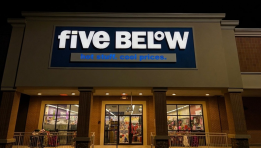
Five Below is demonstrating that value retail can still generate strong growth when low prices are combined with a

- Arik Arkadi Sluzki
- •
- 9 Min Read
- •
- ago 7 hours
SKN | GPT-6 Astra Challenges Claude Fable 5.1 With Lower Enterprise AI Costs and Near-Perfect Task Completion
OpenAI's GPT-6 Astra is emerging as a significant competitor in enterprise artificial intelligence after Signal65's PINNACLE benchmark showed the
- ago 7 hours
- •
- 9 Min Read

OpenAI's GPT-6 Astra is emerging as a significant competitor in enterprise artificial intelligence after Signal65's PINNACLE benchmark showed the
