





- omer bar
- •
- 10 Min Read
- •
- 5 hours ago
Key Points
- Aggressive Pivot in Frankfurt: The European Central Bank (ECB) has raised its benchmark interest rate to 2.25%, marking the first hike in nearly three years, in direct response to the ongoing U.S.-Iran war.
- Global Tightening Vanguard: The ECB becomes the first major global central bank to take active monetary tightening measures in response to the current energy supply shock.
- The Stagflation Trap: Frankfurt has revised its 2026 inflation forecast upward to an average of 3%, while slashing this year's growth outlook to a meager 0.8%.
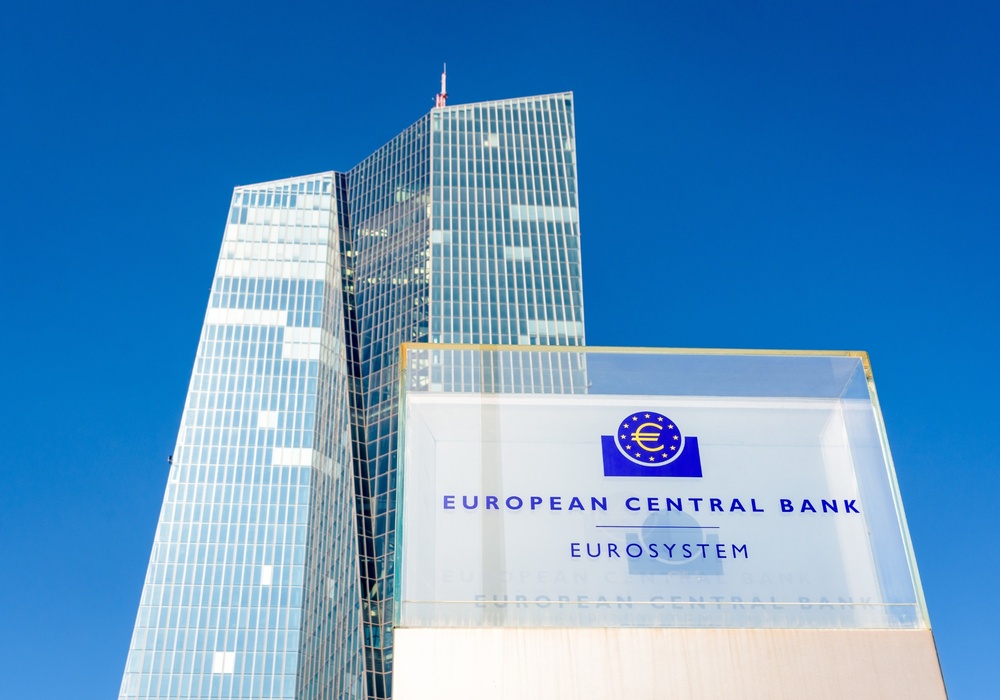
The European Central Bank (ECB) has signaled in the most definitive terms that it is no longer willing to sit on the sidelines waiting for the geopolitical clouds in the Middle East to clear. In a decision that was almost 100% priced in by financial markets, ECB President Christine Lagarde announced a 25-basis-point interest rate hike, bringing the benchmark rate to 2.25%. This represents a dramatic turning point in the Eurozone’s monetary policy, as it marks the first rate hike in nearly three years. The move reflects a growing recognition at the top of the central bank that the secondary effects of the energy shock are permeating too deeply into the real economy, threatening to anchor inflationary expectations far web-above the institution’s price stability target.
The Geopolitical Trap and Escalating Energy Costs
The primary engine behind Frankfurt’s aggressive step is the U.S.-Iran war, which recently crossed the 100-day threshold. The protracted fighting—specifically the prolonged closure of the strategic Strait of Hormuz waterway and the destruction of critical energy production facilities in the Middle East—has triggered an unprecedented chokehold on oil and gas supply chains. For the Eurozone, which is uniquely vulnerable to fluctuations in commodity prices, this represents a classic supply-side shock. The Governing Council made it clear that the decision was aimed at countering these structural pressures, emphasizing that the current rate hike is a robust strategy across a variety of scenarios mapping out how the medium-term outlook could evolve.
While a fragile ceasefire remains technically in place, mounting tensions in recent days between Washington and Tehran signal to investors that the geopolitical risk premium is here to stay. The growing pressure was immediately evident in macro data, with Eurozone CPI surging to 3.2% in May. This print left policymakers with very little room to maneuver, forcing them to concede that the “wait-and-see” strategy had run its course.
Stagflationary Dynamics: Revising Macro Forecasts
Simultaneously with the rate hike, economists in Frankfurt were forced to adjust their models, and the resulting picture points to the materialization of complex stagflationary dynamics. The bank’s headline inflation forecast for 2026 was bumped up to an average of 3%, with expectations of a convergence toward the 2% stability target officially pushed back to 2028. The ECB understands that elevated energy prices are not an isolated event; they are trickling horizontally into food, manufacturing, and services through second-round effects.
Conversely, the bloc’s growth engines are paying the price. The Eurozone GDP forecast for 2026 was slashed to an anemic 0.8%, following a near-stagnant 0.1% expansion in the first quarter of the year. Governing Council officials attributed the lower projections to a “more pronounced impact of the war on commodity markets, real disposable income, and business confidence.” These metrics place Lagarde in an exceptionally delicate position: executing monetary tightening against a stumbling economy.
Investor Psychology and Market Reaction
In her afternoon press conference, Lagarde reiterated that the bank is not pre-committing to any specific rate path, stating that risks to inflation remain tilted to the upside, while risks to economic growth lean to the downside. This statement lays bare the central bank’s psychological dilemma as it attempts to manage market expectations without triggering panic. Mark Wall, Chief Eurozone Economist at Deutsche Bank, characterized the move as a “significant moment,” noting it as a global precedent. However, Wall estimated that the current tightening cycle would be short-lived, likely concluding after one more hike in September due to fears of choking off economic activity entirely. On the other hand, more hawkish voices, such as Neil Birrell at Premier Miton, argue that the inflationary backdrop will leave the bank with no choice but to push ahead with tightening well beyond that.
The bond market reacted with calculated composure, reflecting the fact that the move had already been largely discounted. The yield on the benchmark German 10-year Bund eased by 2 basis points, evidence that investors view the step as a necessary evil to safeguard the bloc’s monetary credibility. In FX markets, the euro held relatively steady against both the U.S. dollar and the British pound, as traders bided their time to see whether the Federal Reserve would choose to follow its European counterpart.
Looking Ahead
The European Central Bank’s decision to break its rate fast serves as a wake-up call to global financial markets, establishing a precedent for how central banks will confront supply shocks in an era of heightened geopolitical instability. Frankfurt has chosen to make it clear that defending price stability takes precedence over supporting short-term growth. The true test for Lagarde and her colleagues in the coming months will not merely be the terminal rate itself, but their ability to navigate the psychology of the markets and the European banking system without converting the current slowdown into a deep, protracted recession. The trajectory of the campaign in the Middle East and the extent of its blow to supply chains will ultimately dictate whether the June 2026 hike is remembered as a timely and successful intervention, or a step that weighed too heavily on an already fragile economy.
Comparison, examination, and analysis between investment houses
Leave your details, and an expert from our team will get back to you as soon as possible
* This article, in whole or in part, does not contain any promise of investment returns, nor does it constitute professional advice to make investments in any particular field.
To read more about the full disclaimer, click here
- omer bar
- •
- 7 Min Read
- •
- ago 17 hours
SKN | Social Security Reform Debate Intensifies as Senators Float Stock Market Exposure and $27 Trillion Debt Strategy—Can Higher Risk Fix Structural Shortfalls?
The debate over the future of U.S. Social Security has intensified as a group of senators explores unconventional approaches that
- ago 17 hours
- •
- 7 Min Read

The debate over the future of U.S. Social Security has intensified as a group of senators explores unconventional approaches that

- Lior mor
- •
- 12 Min Read
- •
- ago 5 days
SKN | Tokyo’s Liquidity Trap: How Japan’s Rate Hike Threatens the Stability of Wall Street’s Equity Indices
The structural shifts in global financing architecture and international capital flow chains are reaching a historic inflection point in the
- ago 5 days
- •
- 12 Min Read

The structural shifts in global financing architecture and international capital flow chains are reaching a historic inflection point in the

- sagi habasov
- •
- 10 Min Read
- •
- ago 1 week
SKN | Global Debt Maxima: How a Unprecedented $353 Trillion Leverage Burden Restricts Global Real GDP Expansion
Structural realignments across the international monetary framework are recording extreme baseline shifts in early June 2026, following the release of
- ago 1 week
- •
- 10 Min Read
Structural realignments across the international monetary framework are recording extreme baseline shifts in early June 2026, following the release of

- orshu
- •
- 8 Min Read
- •
- ago 1 week
SKN | Gold Tumbles as Strong U.S. Jobs Data Revives Interest Rate Hike Concerns
Gold prices came under significant pressure as investors reacted to stronger U.S. employment data that reinforced concerns about the
- ago 1 week
- •
- 8 Min Read
Gold prices came under significant pressure as investors reacted to stronger U.S. employment data that reinforced concerns about the


