





- omer bar
- •
- 6 Min Read
- •
- 3 hours ago
Key Points
- The DAX P Index (^GDAXI) registered a solid daily advance of 1.76% on Friday to close at 24,635.30, driven by intensive late-week institutional buying.
- Programmatic tracking across the rolling five-day window left the index with a net weekly contraction of 0.50%, successfully overcoming an early-week technical washout.
- Global asset allocators are tightly calibrating equity risk weights as fluid regional fiscal outlooks and broad currency volatility reprice valuation multiples.
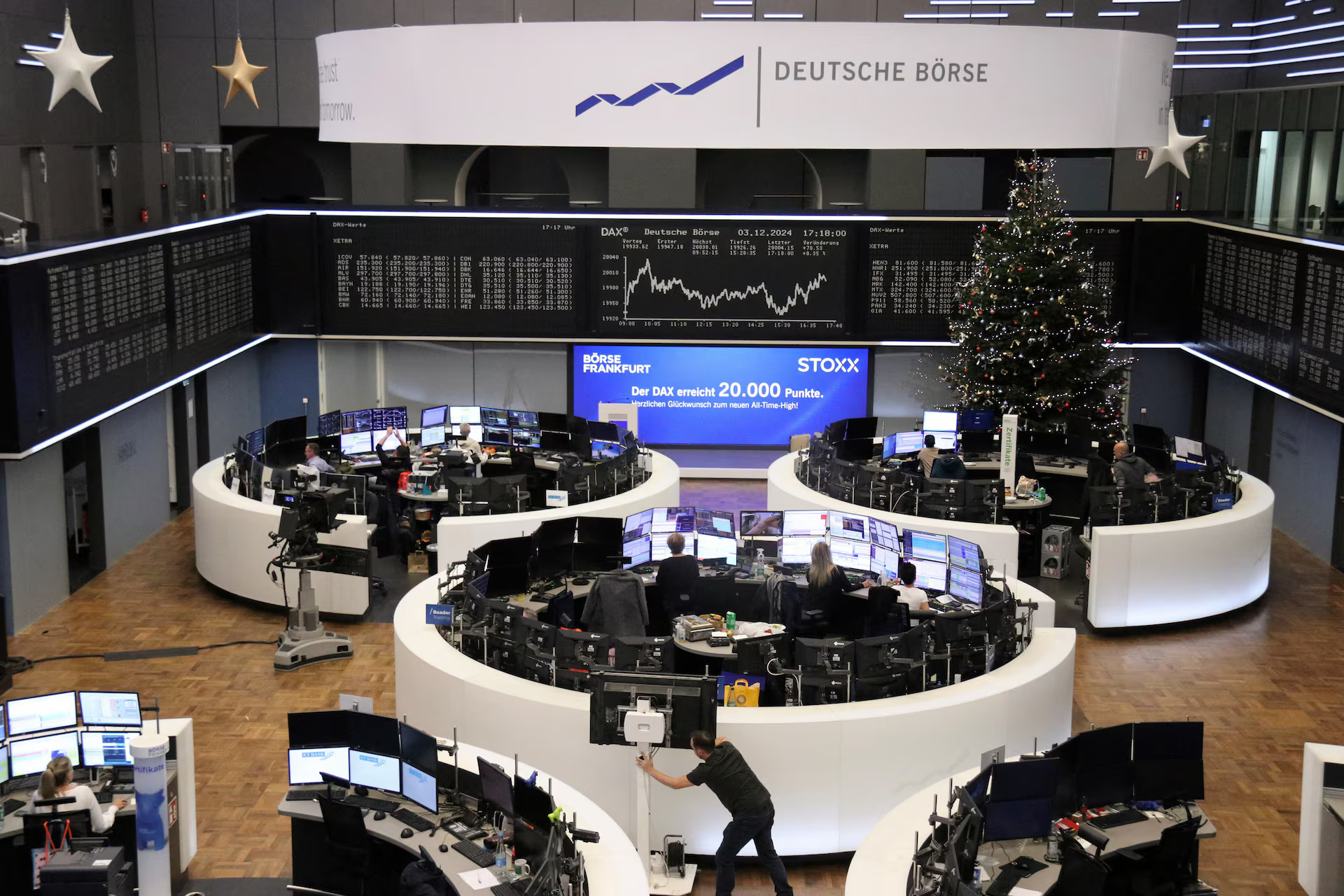
Germany’s primary large-cap equity benchmark, the DAX P index, experienced an impressive late-week reversal, surging to a Friday close of 24,635.30 as global capital flows rotated back into core European industrial assets. This rapid technical mean-reversion underscores an ongoing debate among institutional participants balancing eurozone manufacturing health against restrictive global monetary policy paths. As international macroeconomic indicators present mixed signals, the index continues to carve out a highly reactive path within its structured discovery range.
Technical Distribution and Interday Volatility Bounds
The five-day rolling equity sequence began under visible selling pressure, with an intensive distribution wave driving the benchmark down to an intraweek bottom on June 10 near the lower boundaries of its immediate support shelf. However, programmatic and institutional buy orders aggressively materialized at these discounted baselines, triggering a powerful multi-day upward trajectory that accelerated through Friday’s session to clear the opening mark of 24,549.25 and establish a daily range between 24,421.82 and 24,753.89. This late-cycle technical velocity minimized the net five-day drop to just -0.50% from previous psychological consolidation layers, showing strong execution from global allocators trying to anticipate a durable bottom.
Global Monetary Variables and the Israeli Multi-Asset Framework
The structural driver fueling this week’s large-cap outperformance centers on changing interest rate expectations and shifting cross-border corporate credit adjustments. For global asset allocators and Israeli investors structuring diversified Capital market models, tracking Frankfurt-listed multinationals provides an essential proxy for assessing broad European industrial output and export resilience. As fluid regional fiscal outlooks alter long-term sovereign bond yield curves, the shifting cost of corporate capital directly influences discount models used to evaluate equities. Furthermore, compounding global currency volatility—especially surrounding Euro-denominated asset translation paths—demands sophisticated currency overlay management to protect international portfolios from downstream translation risk.
Incorporating Probability-Based Risks in Large-Cap Models
While premier industrial and automotive blocks continue to demonstrate structural pricing power and consistent corporate execution, institutional investment houses are systematically prioritizing probability-based downside models over absolute structural optimism. The continuous extraction of previously embedded international geopolitical risk premiums leaves developed equity benches highly sensitive to any sudden energy trade updates, fiscal execution shortfalls, or unexpected inflationary prints. Should global manufacturing indices experience extended contractions or commercial bank credit parameters tighten unexpectedly, current equity multiples could encounter rapid compression cycles, exposing lower structural floors to localized distribution waves.
Outlook: Looking ahead, navigating the medium-term path for the DAX P Index demands an exceptionally disciplined risk management framework as fresh macroeconomic metrics unfold. Institutional portfolios are likely to maintain an insulated, defensive posture, closely monitoring critical technical support floors—specifically the index’s structural 52-week trading range floor near 21,863.81—to gauge true market depth. If upcoming regional indicators demonstrate stabilization and corporate balance prints surprise to the upside, the index could build the necessary fundamental support to sustain a prolonged breakout toward the 52-week peak of 25,507.79. Conversely, downside risks remain pronounced; any renewed escalation in sovereign funding stress or fiscal imbalances could instantly prompt widespread profit-taking, proving the necessity of fundamental validation over short-term technical velocity.
Comparison, examination, and analysis between investment houses
Leave your details, and an expert from our team will get back to you as soon as possible
* This article, in whole or in part, does not contain any promise of investment returns, nor does it constitute professional advice to make investments in any particular field.
To read more about the full disclaimer, click here
- Ronny Mor
- •
- 7 Min Read
- •
- ago 1 hour
SKN | SpaceX Makes Historic Nasdaq Debut Following the Largest Public Offering Ever: A New Era for Capital Markets?
The public market debut of SpaceX marks one of the most significant events in modern financial history, bringing one
- ago 1 hour
- •
- 7 Min Read

The public market debut of SpaceX marks one of the most significant events in modern financial history, bringing one
- Ronny Mor
- •
- 6 Min Read
- •
- ago 3 hours
SKN | KOSPI Surges 4.6% in Strong Weekly Rally as South Korean Equities Attract Global Capital
The KOSPI Composite Index delivered one of its strongest weekly performances in recent months, rising approximately 4.63% to close
- ago 3 hours
- •
- 6 Min Read

The KOSPI Composite Index delivered one of its strongest weekly performances in recent months, rising approximately 4.63% to close

- Lior mor
- •
- 6 Min Read
- •
- ago 4 hours
SKN | CAC 40 Index Rallies to 8,350.87 After V-Shaped Reversal — Can French Large-Caps Maintain Velocity Amid Evolving Macro Winds?
France's primary large-cap equity benchmark, the CAC 40 index, experienced an impressive late-week reversal, surging to a Friday close
- ago 4 hours
- •
- 6 Min Read

France's primary large-cap equity benchmark, the CAC 40 index, experienced an impressive late-week reversal, surging to a Friday close

- Arik Arkadi Sluzki
- •
- 6 Min Read
- •
- ago 5 hours
SKN | British Pound Currency Index Stabilizes at 134.05 After V-Shaped Reversal — Can Sterling Sustain Resilience Amid Evolving Global Macro Headwinds?
The British Pound Currency Index (^XDB) experienced volatile bi-directional trading conditions this week, pulling back slightly in Friday's session
- ago 5 hours
- •
- 6 Min Read

The British Pound Currency Index (^XDB) experienced volatile bi-directional trading conditions this week, pulling back slightly in Friday's session


