






- orshu
- •
- 7 Min Read
- •
- 2 hours ago
Key Points
- The Euronext 100 Index led gains across Europe, reflecting resilience in regional blue-chip equities despite broader market uncertainty.
- Germany's DAX recorded the steepest decline among major benchmarks, highlighting continued pressure on Europe's largest economy.
- The euro and British pound posted modest gains, signaling relative stability in currency markets even as equity performance remained uneven.
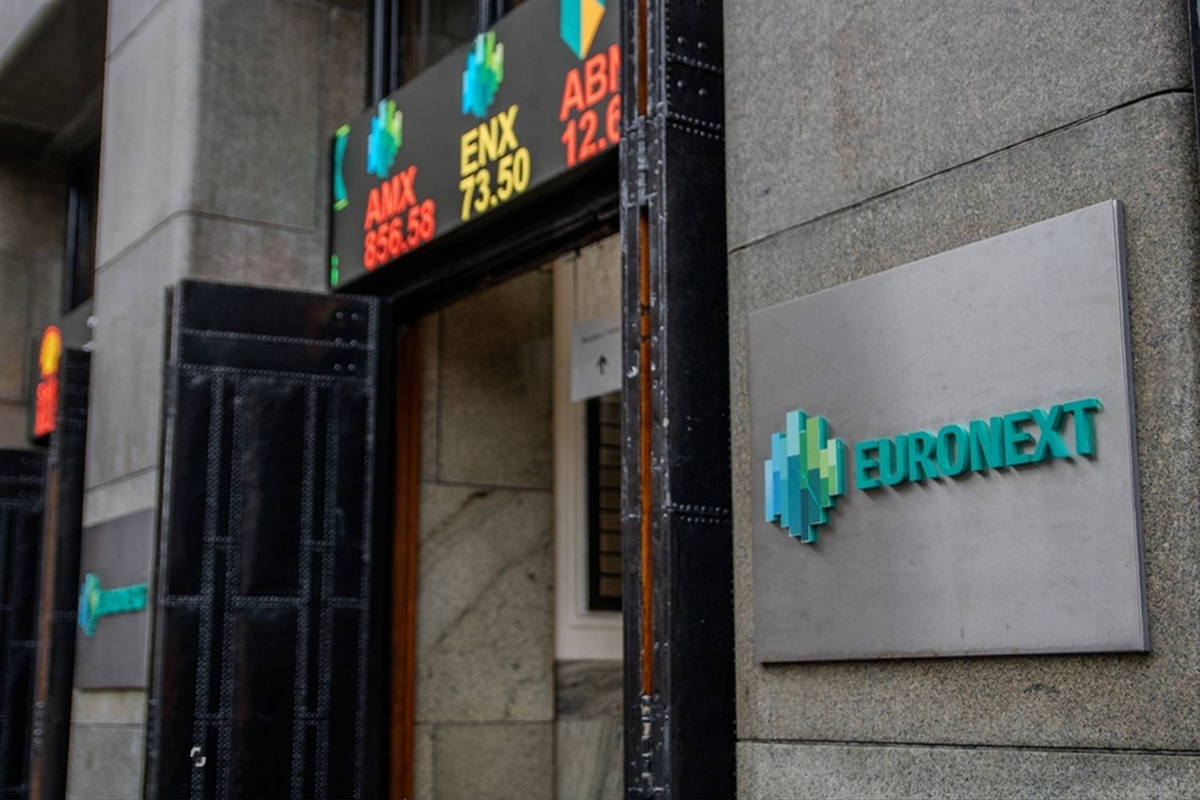
European markets closed with mixed results on June 08, as investors balanced optimism toward select regional equities against persistent concerns surrounding economic growth and industrial activity. While several benchmarks managed to finish in positive territory, weakness in Germany and broader European indices demonstrated that investor sentiment remains cautious.
The session highlighted a market searching for direction following recent volatility across global asset classes. Currency stability offered some support, but investors continued to differentiate between stronger-performing markets and regions facing greater economic headwinds.
Regional Blue Chips Provide Stability Across European Markets
The Euronext 100 Index delivered the strongest performance among the major benchmarks, rising 0.39% to 1,864.94. The gain suggests investors remain willing to allocate capital toward established multinational companies with diversified revenue streams and broad exposure across European markets.
The strength in the Euronext benchmark indicates that institutional investors continue to favor companies capable of navigating a slower-growth environment through scale, pricing power, and international diversification. Such characteristics have become increasingly attractive as investors seek stability amid ongoing economic uncertainty.
Meanwhile, the FTSE 100 edged higher by 0.05% to 10,373.20. Although the advance was modest, the UK’s benchmark maintained positive momentum thanks to its significant exposure to global businesses in sectors such as energy, mining, pharmaceuticals, and financial services. These internationally focused companies often provide resilience during periods of regional economic softness.
The EURO STOXX 50 closed essentially unchanged at 6,062.29, reflecting a balanced market environment where gains in some sectors were offset by weakness elsewhere. The flat performance underscores the lack of a clear directional catalyst for European equities at this stage.
Germany and Broader European Indices Face Selling Pressure
The weakest performance among major benchmarks came from Germany’s DAX, which fell 0.58% to 24,616.22. Germany remains a critical engine of European economic activity, and weakness in its equity market often reflects concerns regarding industrial production, export demand, manufacturing activity, and global trade conditions.
Investors continue monitoring Germany’s economic outlook closely as policymakers and businesses navigate challenges associated with slower global growth and shifting trade dynamics. The DAX’s underperformance suggests investors remain cautious about near-term economic momentum.
France’s CAC 40 also moved lower, declining 0.23% to 8,199.29. The retreat points to moderate selling pressure in one of Europe’s largest financial markets, particularly among sectors sensitive to consumer demand and global economic conditions.
The broader MSCI Europe Index fell 0.28% to 2,729.84, reinforcing the view that investor caution extended beyond individual countries. The decline indicates that while select markets displayed resilience, overall participation across the region remained somewhat defensive.
Currency Markets Reflect Relative Stability
While equities delivered mixed results, European currencies showed modest strength. The Euro Index rose 0.17% to 115.41, suggesting investors maintained confidence in the eurozone’s financial framework despite uneven equity performance.
Similarly, the British Pound Index advanced 0.04% to 133.46. Although the move was relatively small, it highlights stability in currency markets and indicates that investors were not aggressively reducing exposure to European assets.
Currency performance remains an important indicator for global investors, including those in Israel, because exchange-rate movements can significantly influence international investment returns and cross-border capital flows. The stability of both the euro and pound may help support investor confidence if equity-market volatility persists.
Looking ahead, investors will closely monitor upcoming inflation data, economic growth indicators, manufacturing surveys, and central bank communications from both the European Central Bank and the Bank of England. Particular attention will remain focused on Germany’s economic performance and whether broader European growth can regain momentum. Continued stability in currency markets could provide support for investor sentiment, while improving economic data may encourage renewed participation in European equities. However, any deterioration in growth expectations or global trade conditions could place additional pressure on regional markets as June trading continues.
Comparison, examination, and analysis between investment houses
Leave your details, and an expert from our team will get back to you as soon as possible
* This article, in whole or in part, does not contain any promise of investment returns, nor does it constitute professional advice to make investments in any particular field.
To read more about the full disclaimer, click here
- orshu
- •
- 8 Min Read
- •
- ago 3 hours
SKN | Tel Aviv Market Ends Flat as Large-Cap Strength Offsets Mid-Cap Weakness and Bond Market Softens
Israeli markets delivered a mixed performance on Monday, June 8, 2026, as investors balanced selective buying in large-cap stocks against
- ago 3 hours
- •
- 8 Min Read

Israeli markets delivered a mixed performance on Monday, June 8, 2026, as investors balanced selective buying in large-cap stocks against
- orshu
- •
- 7 Min Read
- •
- ago 6 hours
SKN | U.S. Markets Advance as Technology Stocks Rally While Small Caps Face Sharp Selling Pressure
U.S. equity markets traded with a mixed but generally constructive tone on June 08, as investors favored large-cap technology
- ago 6 hours
- •
- 7 Min Read

U.S. equity markets traded with a mixed but generally constructive tone on June 08, as investors favored large-cap technology
- orshu
- •
- 6 Min Read
- •
- ago 9 hours
SKN | Asia Markets Plunge on June 8, 2026 as South Korea Crashes 8.29% and Regional Selloff Intensifies
Asian markets closed sharply lower on June 8, 2026, as a widespread selloff swept through the region. Investors continued
- ago 9 hours
- •
- 6 Min Read

Asian markets closed sharply lower on June 8, 2026, as a widespread selloff swept through the region. Investors continued
- orshu
- •
- 5 Min Read
- •
- ago 12 hours
SKN | European Markets Slide Broadly as Investors Shift Toward Defensive Positioning
European markets opened the week under pressure on Monday, June 8, 2026, as investors adopted a more defensive stance amid
- ago 12 hours
- •
- 5 Min Read

European markets opened the week under pressure on Monday, June 8, 2026, as investors adopted a more defensive stance amid




