






- Lior mor
- •
- 7 Min Read
- •
- 17 hours ago
Key Points
- China says its tightened rules on “illegal” outbound investment will not lead to forced asset liquidation
- Authorities aim to improve regulatory compliance without disrupting cross-border capital flows
- Investors assess implications for global capital allocation, corporate structures, and emerging market sentiment

China has moved to clarify that its intensified scrutiny of “illegal” outbound investment activities will not result in forced liquidation of assets, according to official statements. The clarification comes amid growing global attention on Beijing’s regulatory stance toward capital outflows, foreign acquisitions, and corporate investment structures. For international investors, including those in Israel, the development reflects the delicate balance China is attempting to maintain between financial oversight and preserving confidence in cross-border capital flows within a slowing global economic environment.
Regulatory Tightening Without Forced Asset Sales
Chinese authorities have emphasized that the crackdown is designed to enhance compliance rather than trigger disruptive market events such as forced liquidation of overseas holdings. The focus is reportedly on addressing non-compliant outbound investment channels, including unauthorized capital transfers and improperly structured foreign deals.
While China has long maintained capital account controls, enforcement intensity has varied across cycles depending on macroeconomic conditions and capital flow pressures. The latest messaging appears intended to reassure both domestic corporates and foreign partners that regulatory tightening will remain orderly and predictable.
Officials are seeking to distinguish between legitimate outbound investment activity—such as strategic acquisitions, infrastructure participation, and financial diversification—and transactions deemed to circumvent existing capital controls.
Capital Flows and Corporate Strategy Under Scrutiny
China remains one of the most influential sources of global outbound investment, particularly in sectors such as energy, technology, infrastructure, and real estate. Any perceived tightening of capital mobility rules tends to have immediate implications for multinational corporations with exposure to Chinese financing channels.
However, Beijing’s clarification suggests that approved and compliant outbound investments will continue under existing frameworks. This is particularly relevant for state-owned enterprises and large private firms engaged in Belt and Road-related initiatives and cross-border industrial expansion.
Market participants are also monitoring whether regulatory scrutiny could indirectly influence corporate financing decisions, especially in sectors that rely heavily on offshore structures or complex cross-border funding arrangements.
For global investors, the key issue is not just enforcement, but predictability: whether regulatory frameworks remain stable enough to support long-term planning and capital deployment.
Global Market Implications and Investor Sentiment
The clarification from Chinese authorities arrives at a time when global capital markets are highly sensitive to regulatory and geopolitical developments. Emerging market allocations, in particular, often react to shifts in China’s capital control policies, given the country’s central role in global supply chains and investment flows.
While no immediate market disruption has been reported, sentiment effects can still influence foreign direct investment decisions and portfolio allocations. Institutional investors tend to reassess risk premiums when regulatory environments appear uncertain, even in the absence of direct policy changes affecting existing assets.
At the same time, China’s effort to avoid forced liquidation signals an awareness of the potential spillover effects on global financial stability, particularly in an environment where liquidity conditions and growth expectations remain uneven across major economies.
Outlook: Regulatory Clarity and Cross-Border Capital Stability
Looking ahead, investors will closely watch how enforcement of outbound investment rules is implemented in practice, particularly whether regulatory actions remain targeted and administrative rather than disruptive. Any shift toward stricter enforcement could influence sentiment in sectors with significant offshore exposure.
Key variables include China’s broader economic trajectory, foreign exchange stability, and policy coordination between financial regulators and state-owned financial institutions. Global risk appetite will also play a role in determining how sensitive markets remain to incremental policy adjustments.
For global investors, including those in Israel, the development underscores a broader theme in international capital markets: regulatory tightening does not always translate into immediate disruption, but it can reshape expectations around capital mobility, risk pricing, and long-term investment strategy.
Comparison, examination, and analysis between investment houses
Leave your details, and an expert from our team will get back to you as soon as possible
* This article, in whole or in part, does not contain any promise of investment returns, nor does it constitute professional advice to make investments in any particular field.
To read more about the full disclaimer, click here
- orshu
- •
- 7 Min Read
- •
- ago 3 hours
SKN | European Markets Finish Mixed as Northern Europe Holds Firm While Germany Extends Weakness
European markets closed with mixed results on June 08, as investors balanced optimism toward select regional equities against persistent
- ago 3 hours
- •
- 7 Min Read
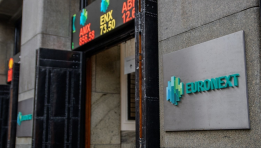
European markets closed with mixed results on June 08, as investors balanced optimism toward select regional equities against persistent
- orshu
- •
- 7 Min Read
- •
- ago 6 hours
SKN | U.S. Markets Advance as Technology Stocks Rally While Small Caps Face Sharp Selling Pressure
U.S. equity markets traded with a mixed but generally constructive tone on June 08, as investors favored large-cap technology
- ago 6 hours
- •
- 7 Min Read

U.S. equity markets traded with a mixed but generally constructive tone on June 08, as investors favored large-cap technology

- Ronny Mor
- •
- 7 Min Read
- •
- ago 17 hours
SKN | Could SpaceX Be Preparing a Strategic AI Acquisition Instead of a Tesla Merger?
SpaceX has once again become the center of market speculation as investors assess potential long-term strategic moves involving Elon Musk’s
- ago 17 hours
- •
- 7 Min Read

SpaceX has once again become the center of market speculation as investors assess potential long-term strategic moves involving Elon Musk’s
- orshu
- •
- 8 Min Read
- •
- ago 3 days
SKN | European Markets Retreat as Investors Turn Defensive Amid Broad-Based Equity and Currency Weakness
European markets closed lower on June 5 as investors reduced risk exposure across both equities and currencies. The decline
- ago 3 days
- •
- 8 Min Read

European markets closed lower on June 5 as investors reduced risk exposure across both equities and currencies. The decline




