


- orshu
- •
- 6 Min Read
- •
- 9 seconds ago
Key Points
- The Dow Jones Industrial Average (DJIA) declined approximately 1.35% over the week, closing at 50,866.78.
- Despite a strong midweek rebound, selling pressure returned in the final trading sessions, pushing the index lower.
- Investor sentiment reflected caution amid evolving economic expectations, interest-rate uncertainty, and geopolitical risks.

The Dow Jones Industrial Average finished the week in negative territory, highlighting a more cautious tone across U.S. equity markets. While major indices remain near historically elevated levels, the week’s trading activity suggested investors are becoming increasingly selective as they assess economic growth prospects, monetary policy expectations, and geopolitical developments.
The index closed Friday at 50,866.78, representing a weekly decline of approximately 1.35%. The move came despite periods of resilience during the week, underscoring the market’s struggle to maintain upward momentum following a prolonged rally in large-cap U.S. equities.
Volatility Returns as Markets Reassess Risk
Trading throughout the week reflected shifting investor sentiment. Early weakness pushed the Dow below the 51,000 level before a strong rebound emerged midweek, briefly lifting the benchmark above 51,500. However, the recovery proved difficult to sustain as renewed selling pressure appeared during the latter part of the week.
The inability to hold gains near weekly highs suggests investors remain sensitive to macroeconomic developments. Market participants continue to evaluate the implications of inflation trends, labor market conditions, and the trajectory of Federal Reserve policy. While economic growth remains positive, uncertainty surrounding the timing and magnitude of future interest-rate adjustments continues to influence asset allocation decisions.
Large-Cap Stocks Face Valuation Questions
The Dow’s decline reflects broader discussions surrounding valuation levels across U.S. large-cap equities. Following substantial gains over recent quarters, investors appear increasingly focused on earnings quality, profit margins, and corporate guidance rather than simply rewarding growth narratives.
Industrial, financial, and consumer-focused companies—which represent a significant portion of the Dow Jones—remain particularly exposed to changes in economic expectations. Any signs of slowing business activity, weaker consumer spending, or tighter financial conditions could influence performance in these sectors. At the same time, relatively resilient corporate earnings continue to provide underlying support for the broader market.
Global Investors Monitor U.S. Market Signals
For international investors, including those in Israel, movements in the Dow Jones remain an important indicator of global risk appetite. U.S. equity performance often influences capital flows, currency movements, and investor sentiment across international markets, including the Tel Aviv Stock Exchange.
Recent strength in the U.S. dollar and elevated volatility measures suggest that investors are maintaining a degree of caution despite the overall resilience of global equities. Ongoing geopolitical developments, fiscal policy debates, and energy-market fluctuations continue to contribute to a more complex investment environment.
Outlook: The coming week is likely to be shaped by upcoming economic data releases, inflation indicators, Federal Reserve commentary, and developments in global geopolitical hotspots. While the Dow remains close to record territory, investors may continue to balance optimism regarding economic resilience against downside risks including persistent inflation pressures, elevated valuations, fiscal uncertainty, and currency-market volatility. A sustained move above recent highs could reinforce confidence in the broader market trend, while further weakness may indicate growing caution among institutional investors. Professional market participants are likely to remain focused on data-driven signals rather than directional assumptions as the next trading week unfolds.
Comparison, examination, and analysis between investment houses
Leave your details, and an expert from our team will get back to you as soon as possible
* This article, in whole or in part, does not contain any promise of investment returns, nor does it constitute professional advice to make investments in any particular field.
To read more about the full disclaimer, click here
- Ronny Mor
- •
- 6 Min Read
- •
- ago 12 minutes
SKN: US Dollar Rebounds Sharply as Investors Seek Stability Amid Rising Global Uncertainty
The US Dollar Index (DXY) strengthened over the past trading week, reversing earlier weakness and ending Friday at 100.07.
- ago 12 minutes
- •
- 6 Min Read

The US Dollar Index (DXY) strengthened over the past trading week, reversing earlier weakness and ending Friday at 100.07.

- omer bar
- •
- 6 Min Read
- •
- ago 1 hour
SKN | VIX Surges Nearly 40% in Five Days as Investors Rush to Hedge Rising Market Risks
A sharp rise in the CBOE Volatility Index (VIX) has captured investors' attention, with Wall Street's widely followed "fear
- ago 1 hour
- •
- 6 Min Read
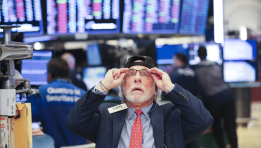
A sharp rise in the CBOE Volatility Index (VIX) has captured investors' attention, with Wall Street's widely followed "fear

- orshu
- •
- 8 Min Read
- •
- ago 20 hours
SKN | U.S. Markets Diverge as Small Caps Advance While Technology Stocks Extend Pullback
U.S. markets traded with mixed performance on June 5 as investors balanced optimism toward domestically focused companies against continued weakness
- ago 20 hours
- •
- 8 Min Read

U.S. markets traded with mixed performance on June 5 as investors balanced optimism toward domestically focused companies against continued weakness
- orshu
- •
- 7 Min Read
- •
- ago 1 day
SKN | Tel Aviv Stock Exchange Turns Mixed as TA-125 and TA-35 Drift Lower While Bonds Outperform
Israeli markets traded lower during the session, with broad declines across major Tel Aviv Stock Exchange equity indices, while bond
- ago 1 day
- •
- 7 Min Read

Israeli markets traded lower during the session, with broad declines across major Tel Aviv Stock Exchange equity indices, while bond


