


- orshu
- •
- 6 Min Read
- •
- 1 minute ago
Key Points
- The USD/GBP exchange rate ended the week near 0.7434, reflecting a modest five-day gain of approximately 0.22% despite elevated currency market volatility.
- Movements were driven by shifting expectations surrounding Federal Reserve and Bank of England policy trajectories, as investors reassessed global interest-rate differentials.
- For Israeli investors and global asset allocators, currency management remains increasingly important amid geopolitical risks, fiscal uncertainty, and fluctuating capital flows.
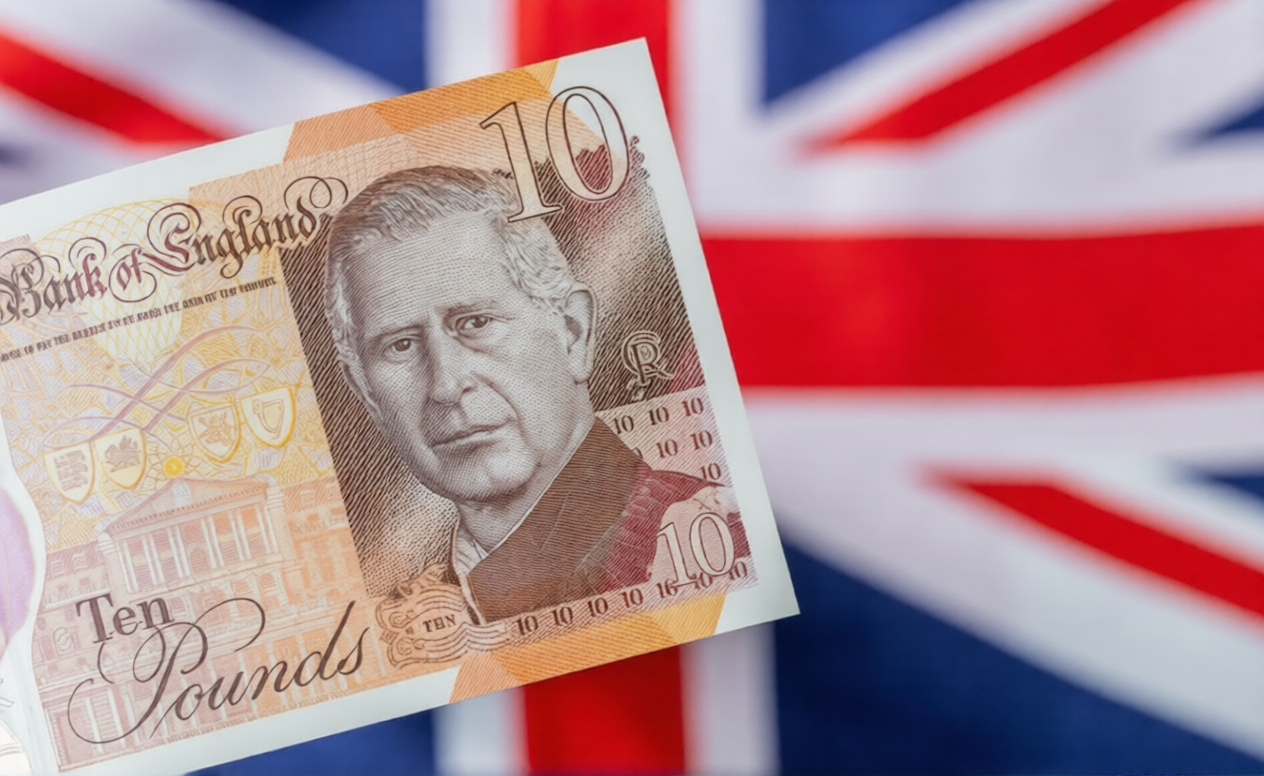
The USD/GBP currency pair closed the week at approximately 0.7434, finishing modestly higher despite several episodes of volatility during the trading period. While the weekly movement was relatively contained, the price action reflected broader shifts in global capital markets as investors balanced monetary policy expectations, inflation risks, and economic growth concerns across both sides of the Atlantic.
Monetary Policy Expectations Continue to Drive Currency Markets
Foreign exchange markets remain highly sensitive to central bank communication, and the dollar-pound exchange rate was no exception this week. Investors continued to evaluate the likelihood of future interest-rate adjustments by both the U.S. Federal Reserve and the Bank of England. While inflation has moderated compared with peak levels seen over the past two years, policymakers remain cautious regarding premature policy easing.
This has created an environment where relatively small shifts in economic data can trigger significant repositioning among institutional investors. The resulting fluctuations kept the USD/GBP pair within a relatively narrow range, suggesting that markets are currently seeking clearer macroeconomic direction before establishing larger directional positions.
Economic Fundamentals Remain Mixed
The British pound has demonstrated resilience in recent months, supported by a labor market that remains comparatively stable and inflation trends that continue to move gradually lower. However, growth expectations across the United Kingdom remain subdued, while fiscal constraints limit the scope for significant economic stimulus.
In the United States, economic activity has remained relatively robust compared with many developed economies. Nevertheless, persistent questions regarding government debt levels, budget deficits, and the long-term trajectory of monetary policy continue to influence investor sentiment toward the U.S. dollar. These competing forces have contributed to a market environment characterized by tactical rather than conviction-driven positioning.
Implications for Global and Israeli Investors
For Israeli institutional investors, pension funds, and multinational corporations, currency developments between the dollar and pound carry important portfolio implications. Both currencies remain key components of international trade, global investment flows, and cross-border financing arrangements.
A stable USD/GBP relationship can help reduce foreign exchange volatility for diversified portfolios, but sudden shifts in interest-rate expectations or geopolitical developments may rapidly alter currency valuations. Investors with exposure to British or U.S. assets therefore continue to prioritize hedging strategies and dynamic risk management frameworks designed to mitigate unexpected exchange-rate movements.
Furthermore, ongoing geopolitical tensions, global trade realignments, and evolving fiscal policies across major economies remain significant variables that could influence currency markets over the coming quarters.
Outlook: Looking ahead, the USD/GBP exchange rate appears to be entering a period of consolidation rather than establishing a decisive trend. Market participants will closely monitor upcoming inflation releases, labor market data, and central bank communications for indications regarding future interest-rate policy. While a relatively stable trading range remains the most probable near-term scenario, downside risks—including renewed geopolitical premiums, fiscal deterioration, and unexpected economic slowdowns—could trigger elevated volatility. For professional investors, maintaining a probability-based framework and preserving portfolio flexibility may remain the most prudent approach as global macroeconomic conditions continue to evolve.
Comparison, examination, and analysis between investment houses
Leave your details, and an expert from our team will get back to you as soon as possible
* This article, in whole or in part, does not contain any promise of investment returns, nor does it constitute professional advice to make investments in any particular field.
To read more about the full disclaimer, click here
- Ronny Mor
- •
- 6 Min Read
- •
- ago 29 minutes
SKN | EUR/USD Holds Firm Above 1.16: Is the Euro Building Momentum or Facing Resistance Ahead?
The EUR/USD exchange rate ended the week at 1.1659, representing a modest 0.14% gain over the five-day period. While
- ago 29 minutes
- •
- 6 Min Read

The EUR/USD exchange rate ended the week at 1.1659, representing a modest 0.14% gain over the five-day period. While

- omer bar
- •
- 7 Min Read
- •
- ago 1 hour
SKN | Silver Holds Above $75 Despite Volatility: Consolidation Before the Next Move?
Silver futures experienced a volatile trading week, with July 2026 COMEX Silver (SI=F) ending the period near $75.88 per
- ago 1 hour
- •
- 7 Min Read

Silver futures experienced a volatile trading week, with July 2026 COMEX Silver (SI=F) ending the period near $75.88 per

- Lior mor
- •
- 6 Min Read
- •
- ago 2 hours
SKN | Copper Futures Consolidate Near $6.39 — Is the Red Metal Gearing Up for a Structural Breakout?
Copper futures for July 2026 delivery navigated a highly turbulent trading week, ultimately settling at $6.389 per pound following
- ago 2 hours
- •
- 6 Min Read

Copper futures for July 2026 delivery navigated a highly turbulent trading week, ultimately settling at $6.389 per pound following

- Arik Arkadi Sluzki
- •
- 6 Min Read
- •
- ago 3 hours
SKN | Brent Crude Futures Tumble Over 11% — Are Global Macroeconomic Shifts Redefining Energy Valuations?
Brent Crude futures for July 2026 delivery underwent a sharp downward recalibration this week, recording a steep 11.17% weekly
- ago 3 hours
- •
- 6 Min Read

Brent Crude futures for July 2026 delivery underwent a sharp downward recalibration this week, recording a steep 11.17% weekly


