


- Lior mor
- •
- 8 Min Read
- •
- 12 seconds ago
Key Points
- Bond traders increasingly expect global interest rates and sovereign yields to remain structurally higher for longer
- Persistent inflation, elevated government borrowing, and changing central bank policies are reshaping fixed income markets
- Higher yields are influencing portfolio allocation strategies across equities, bonds, currencies, and global capital flows

Global bond traders are increasingly positioning for what many market participants view as a structural transition toward a higher-yield environment, marking a sharp departure from the ultra-low interest rate era that dominated financial markets for more than a decade. The shift reflects a combination of persistent inflation pressures, elevated fiscal deficits, and central banks maintaining restrictive monetary policy stances longer than previously expected. For investors, the changing yield environment is reshaping valuation models, capital allocation strategies, and risk management frameworks across global markets.
Higher Yields Reflect Structural Changes in Global Monetary Conditions
Government bond yields across major economies have remained elevated as central banks continue prioritizing inflation control over aggressive monetary easing. US Treasury yields, German Bund yields, and other sovereign debt benchmarks have all reflected the market’s reassessment of long-term interest rate expectations.
The shift is particularly significant because global markets spent much of the previous decade operating under near-zero or negative interest rate conditions. During that period, central banks injected substantial liquidity into financial systems through quantitative easing programs and historically accommodative policy frameworks.
Now, however, inflation dynamics appear more persistent than many policymakers initially anticipated. Wage growth, energy costs, geopolitical disruptions, and supply chain restructuring have contributed to an environment where inflation risks remain embedded in broader economic expectations. As a result, bond investors increasingly believe central banks may keep policy rates elevated even if economic growth moderates.
Government Borrowing and Fiscal Pressures Add to Yield Momentum
Another major factor driving higher yields is the sharp increase in government borrowing requirements across developed economies. Fiscal spending related to infrastructure investment, defense, industrial policy, and social programs has expanded sovereign debt issuance globally.
Higher debt supply requires stronger investor demand absorption, which often translates into upward pressure on yields. In the United States, Treasury issuance has remained particularly significant as fiscal deficits continue widening. Similar dynamics are visible in parts of Europe and Asia.
Bond traders are therefore assessing not only inflation and central bank policy but also the sustainability of long-term fiscal trajectories. This combination has increased volatility across fixed income markets and contributed to steeper risk premiums in longer-duration government debt.
For Israeli institutional investors, rising global yields carry important implications for currency exposure, international bond portfolios, and local capital market conditions. Changes in US and European yields often influence funding costs and valuation dynamics across Israeli financial assets.
Portfolio Allocation Strategies Are Being Reassessed
The transition toward higher yields is also reshaping broader investment behavior. During the low-rate era, investors frequently moved into equities, private assets, and higher-risk instruments in search of returns. Higher sovereign yields now provide more competition for capital allocation decisions.
Fixed income instruments once again offer relatively attractive income generation potential, particularly in investment-grade government and corporate bond markets. At the same time, higher yields can pressure equity valuations by increasing discount rates used in financial modeling, especially in growth-oriented sectors such as technology.
Currency markets are also adjusting to the new environment. Countries maintaining relatively higher interest rates may continue attracting international capital inflows, supporting currency strength and influencing global liquidity patterns.
Institutional investors are increasingly focused on duration management, inflation protection strategies, and diversification approaches designed to navigate an environment where interest rate volatility may remain structurally elevated.
Outlook: Markets Watch Whether Higher Yields Become the New Normal
Looking ahead, investors will closely monitor inflation trends, central bank communication, labor market data, and sovereign borrowing trajectories for confirmation that the higher-yield environment is becoming structurally embedded. Any renewed inflation acceleration or stronger-than-expected economic activity could reinforce upward pressure on global yields.
Risks include tighter financial conditions weighing on economic growth, increased refinancing pressure for governments and corporations, and higher volatility across equity and credit markets. On the other hand, more normalized bond yields could eventually restore stronger price discovery and improve long-term income opportunities within fixed income portfolios.
Overall, bond markets appear increasingly aligned around the view that the era of exceptionally low interest rates may have ended, creating a fundamentally different investment landscape for global institutions, governments, and private investors alike.
Comparison, examination, and analysis between investment houses
Leave your details, and an expert from our team will get back to you as soon as possible
* This article, in whole or in part, does not contain any promise of investment returns, nor does it constitute professional advice to make investments in any particular field.
To read more about the full disclaimer, click here
- Arik Arkadi Sluzki
- •
- 7 Min Read
- •
- ago 2 days
SKN | The 5% Threshold: 30-Year Treasury Yields Hit Two-Decade Highs
Structural Breakout in Long-Duration Yields The breakout of the 30-year Treasury yield to levels not seen in nearly twenty years
- ago 2 days
- •
- 7 Min Read

Structural Breakout in Long-Duration Yields The breakout of the 30-year Treasury yield to levels not seen in nearly twenty years

- Lior mor
- •
- 8 Min Read
- •
- ago 3 days
SKN | Could Looser Bank Liquidity Rules Undermine the Federal Reserve’s Balance Sheet Strategy?
Federal Reserve Vice Chair for Supervision Michael Barr signaled opposition to lowering bank liquidity requirements as a tool to support
- ago 3 days
- •
- 8 Min Read
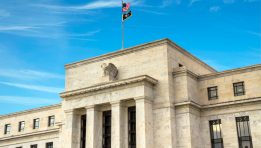
Federal Reserve Vice Chair for Supervision Michael Barr signaled opposition to lowering bank liquidity requirements as a tool to support
- Lior mor
- •
- 8 Min Read
- •
- ago 5 days
SKN | Will Japan’s Interest Rate Path Shift Global Currency and Bond Market Expectations?
Japan may be entering a prolonged monetary tightening cycle, according to new projections from the OECD, which sees the Bank
- ago 5 days
- •
- 8 Min Read

Japan may be entering a prolonged monetary tightening cycle, according to new projections from the OECD, which sees the Bank

- orshu
- •
- 8 Min Read
- •
- ago 5 days
SKN | U.S. Dollar Index Strengthens as Investors Reassess Global Growth and Interest Rate Expectations
The U.S. Dollar Index (DXY) moved higher on Tuesday, May 12 as investors increased exposure to the dollar amid
- ago 5 days
- •
- 8 Min Read

The U.S. Dollar Index (DXY) moved higher on Tuesday, May 12 as investors increased exposure to the dollar amid

