


- omer bar
- •
- 9 Min Read
- •
- 19 minutes ago
Key Points
- AMD invested approximately $6.5 million into Marvell Technology during the first quarter of 2026.
- Investors increasingly view AI networking and silicon photonics as critical next-generation infrastructure technologies.
- Nvidia’s earlier partnership with Marvell has strengthened confidence in the company’s long-term strategic positioning.
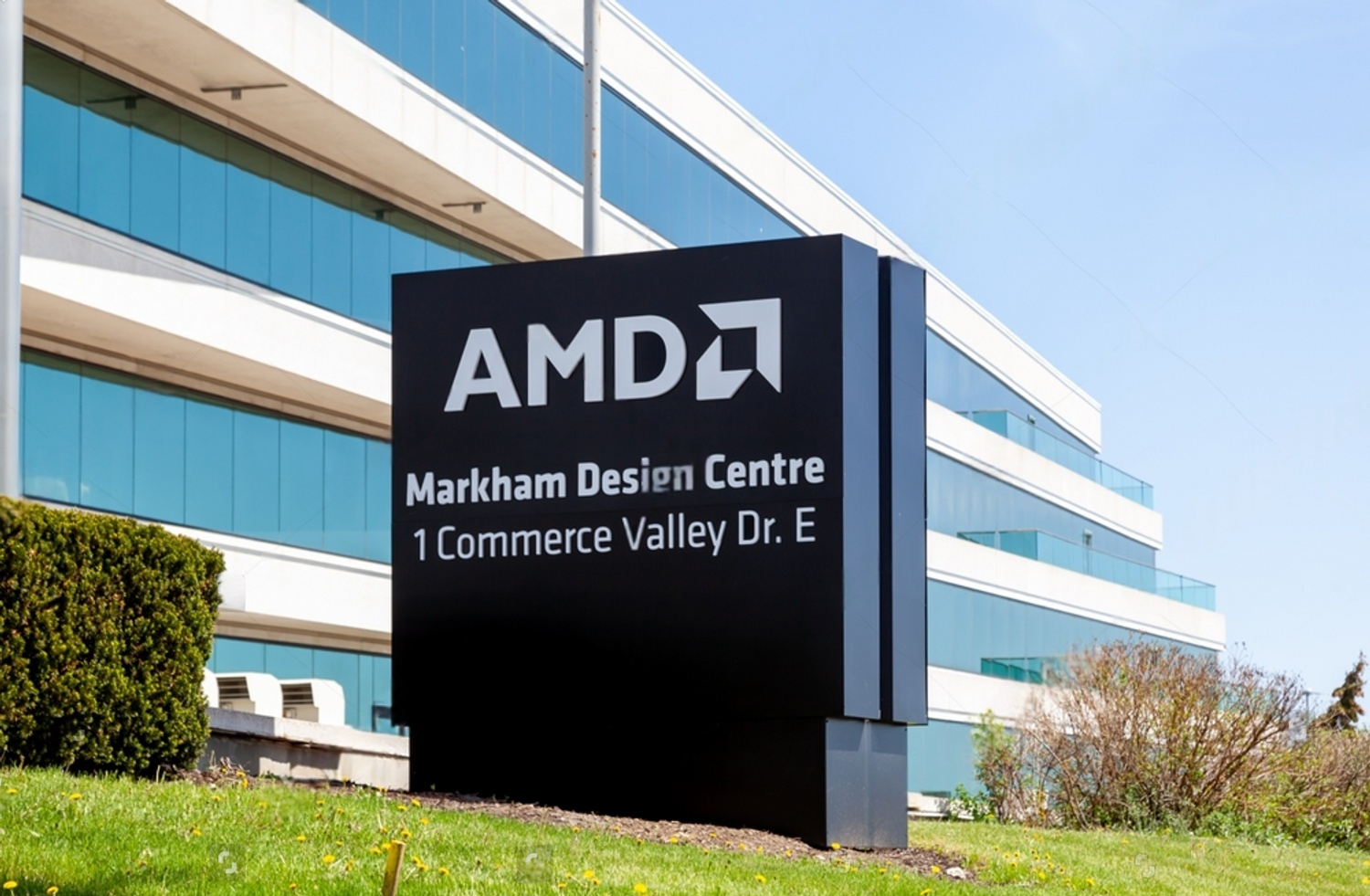
The artificial intelligence boom continues reshaping the semiconductor industry as major chipmakers race to secure strategic advantages across data center infrastructure, networking, and next-generation computing technologies. While investors have largely focused on the explosive growth of Nvidia and AMD, new investment activity suggests the industry’s next competitive battleground may extend far beyond traditional AI accelerators.
AMD’s recent $6.5 million investment in Marvell Technology is now drawing significant attention as investors increasingly speculate that silicon photonics and AI networking infrastructure could become some of the most important technologies powering the next phase of artificial intelligence expansion.
AMD Continues Riding the Artificial Intelligence Boom
AMD has emerged as one of the strongest-performing semiconductor companies of 2026, with shares climbing nearly 98% year-to-date and significantly outperforming the broader equity market.
The rally has been fueled largely by accelerating demand tied to artificial intelligence infrastructure, hyperscale data centers, and cloud computing expansion. Investor confidence has also strengthened following AMD’s deeper integration into enterprise AI deployments and growing competition against Nvidia across high-performance computing markets.
Analysts pointed to improving semiconductor sector momentum following strong earnings reports from both AMD and Taiwan Semiconductor Manufacturing Company earlier this year. Several Wall Street firms also raised long-term forecasts tied to continued AI infrastructure spending.
However, AMD’s investment in Marvell suggests the company may be positioning itself not only as an AI chip competitor, but also as a strategic participant in the broader infrastructure ecosystem required to support future artificial intelligence growth.
Marvell Is Becoming a Major AI Infrastructure Player
According to AMD’s recent Form 13F filing, the company purchased approximately 65,516 shares of Marvell Technology at an average price near $99 per share during the first quarter.
Since then, Marvell shares have surged sharply, with the position now valued at more than $11 million despite recent volatility across semiconductor markets.
Marvell has increasingly attracted investor attention because of its growing role in AI networking, optical interconnects, and data center infrastructure. The company’s technologies are becoming increasingly important as hyperscale AI systems require faster and more efficient methods of transferring enormous amounts of data between processors, memory systems, and servers.
The investment also stands out because Nvidia announced its own strategic partnership with Marvell earlier this year, reinforcing investor belief that the company could become a foundational infrastructure supplier within the expanding AI ecosystem.
Silicon Photonics Could Become the Next Semiconductor Battleground
One of the key technologies driving enthusiasm surrounding Marvell is silicon photonics, a rapidly emerging field designed to improve high-speed communication inside artificial intelligence data centers.
Unlike traditional copper-based networking systems, silicon photonics uses optical laser-based connections that allow significantly faster data transmission while reducing energy consumption and latency. As AI workloads continue expanding exponentially, analysts increasingly believe existing copper interconnect technologies may eventually reach scalability limitations.
Industry executives have repeatedly emphasized that the transition toward optical networking appears increasingly inevitable as AI infrastructure becomes larger and more complex.
Marvell strengthened its position within this market through acquisitions and investments tied to advanced optical interconnect technologies specifically designed for large-scale AI deployments.
Investors now view silicon photonics as one of the most important long-term growth areas within the semiconductor industry because future AI systems may require dramatically more bandwidth and energy efficiency than current architectures can provide.
The AI Infrastructure Race Is Expanding Beyond GPUs
Looking ahead, AMD’s investment in Marvell may ultimately be viewed less as a financial trade and more as a strategic signal about where semiconductor industry growth is heading next.
While AI accelerators and GPUs remain at the center of investor enthusiasm, the broader infrastructure supporting artificial intelligence — including networking, optical systems, memory architecture, and data transfer technologies — is becoming equally important.
As hyperscale cloud providers continue spending aggressively on AI infrastructure, companies positioned within these secondary layers of the ecosystem could experience substantial long-term growth opportunities.
At the same time, investors remain aware that semiconductor valuations have become increasingly sensitive to geopolitical developments, interest rates, supply chain conditions, and any signs of slowing AI capital expenditures.
Outlook
The semiconductor industry is increasingly entering a new phase where the focus extends beyond processing power alone toward the infrastructure required to sustain massive AI workloads. AMD’s investment in Marvell reinforces growing investor belief that networking speed, optical connectivity, and data movement efficiency may become some of the most valuable components of the next-generation AI economy.
If AI infrastructure spending continues accelerating globally, companies tied to silicon photonics and advanced networking systems could emerge as major beneficiaries alongside traditional chip manufacturers. However, elevated valuations, macroeconomic uncertainty, and geopolitical risks remain important variables that investors will continue monitoring closely throughout 2026.
Comparison, examination, and analysis between investment houses
Leave your details, and an expert from our team will get back to you as soon as possible
* This article, in whole or in part, does not contain any promise of investment returns, nor does it constitute professional advice to make investments in any particular field.
To read more about the full disclaimer, click here
- omer bar
- •
- 8 Min Read
- •
- ago 4 hours
SKN | Can Nvidia Sustain the AI Rally as Bond Yields and Inflation Pressure Global Markets?
Global investors are entering a critical trading week as rising Treasury yields, persistent inflation concerns, and geopolitical uncertainty continue reshaping
- ago 4 hours
- •
- 8 Min Read
Global investors are entering a critical trading week as rising Treasury yields, persistent inflation concerns, and geopolitical uncertainty continue reshaping

- sagi habasov
- •
- 8 Min Read
- •
- ago 6 hours
SKN | Is Alibaba Becoming One of the Most Undervalued AI Stocks in Global Markets?
Artificial intelligence continues driving a historic wave of investment across global equity markets, but many of the sector’s leading companies
- ago 6 hours
- •
- 8 Min Read

Artificial intelligence continues driving a historic wave of investment across global equity markets, but many of the sector’s leading companies

- Lior mor
- •
- 9 Min Read
- •
- ago 2 days
SKN | Chip Stocks Fall as US-China Summit Ends Without Major Semiconductor Breakthroughs
Global semiconductor stocks moved lower after high-level talks between the United States and China ended without major agreements related
- ago 2 days
- •
- 9 Min Read
Global semiconductor stocks moved lower after high-level talks between the United States and China ended without major agreements related

- orshu
- •
- 8 Min Read
- •
- ago 2 days
SKN | U.S. Stock Market Valuations Reach Highest Levels Since the Dot-Com Era
U.S. stock market valuations have risen to their highest levels since the late 1990s dot-com boom, as artificial intelligence
- ago 2 days
- •
- 8 Min Read

U.S. stock market valuations have risen to their highest levels since the late 1990s dot-com boom, as artificial intelligence

