


- omer bar
- •
- 8 Min Read
- •
- 10 minutes ago
Key Points
- Samsung Electronics shares fell sharply after the company’s labour union confirmed plans to proceed with an 18-day strike beginning next week.
- The union remains dissatisfied with Samsung’s proposals regarding wages and bonus structures despite the company offering to resume negotiations without conditions.
- Analysts warn that a prolonged strike could disrupt semiconductor production, hurt delivery reliability, and potentially benefit competitors such as SK Hynix.

Samsung Electronics is facing growing uncertainty after its South Korean labour union reaffirmed plans to proceed with a large-scale strike despite the company’s offer to restart negotiations.
The union announced on Friday that workers still intend to begin an 18-day strike on May 21, even as Samsung proposed resuming pay talks without preconditions.
The dispute centers primarily on compensation issues, including wages and bonus structures, with union members arguing that Samsung workers are receiving significantly less favorable bonus payouts compared with rival semiconductor companies.
Government-mediated negotiations between the two sides collapsed earlier this week, increasing concerns that the strike could materially disrupt operations at one of the world’s largest semiconductor manufacturers.
Shares Fall as Investors Weigh Production Risks
Investor sentiment weakened sharply following the latest developments.
Samsung shares fell as much as 5.9% during trading before partially recovering, while still underperforming the broader South Korean market.
Analysts attributed the decline to rising fears that labour disruptions could affect production schedules, customer deliveries, and Samsung’s competitiveness in the global memory chip market.
According to NH Investment & Securities analyst Ryu Young-ho, markets are becoming increasingly concerned about delivery reliability if the strike proceeds, especially given growing demand across the semiconductor and artificial intelligence sectors.
There is also rising speculation that competitors could benefit if Samsung experiences supply disruptions during a critical period for global chip demand.
Memory Chip Industry Faces Additional Pressure
The timing of the labour dispute comes as the semiconductor sector is already navigating intense competition and accelerating AI-related demand growth.
Samsung remains one of the world’s largest producers of DRAM and NAND memory chips, products viewed as critical components for artificial intelligence infrastructure, cloud computing, smartphones, and data centers.
At the same time, rivals such as SK Hynix have gained momentum in high-bandwidth memory products used in advanced AI systems.
The prospect of production instability at Samsung could therefore carry broader implications for global memory supply chains and pricing dynamics.
Potential Financial Impact Could Be Significant
Financial analysts are increasingly warning that the economic consequences of a strike could become substantial if worker participation expands.
According to estimates from JPMorgan Chase & Co., Samsung’s operating profit could face an impact ranging between 21 trillion won and 31 trillion won, equivalent to roughly $14 billion to $21 billion.
The bank also estimated potential sales losses of approximately 4.5 trillion won if production disruptions intensify.
These projections are significantly higher than earlier expectations because of concerns that more workers may participate in the strike than initially anticipated.
Government Officials Push for Resolution
South Korean government officials have become increasingly vocal about the importance of avoiding a prolonged labour disruption at Samsung.
Industry Minister Kim Jung-kwan warned that a strike could cause severe economic damage given Samsung’s central role in South Korea’s exports, technology sector, and broader economy.
The South Korean Labour Commission has reportedly urged both sides to participate in another round of government-mediated negotiations in an effort to avoid the planned strike.
Some officials have even raised the possibility of emergency arbitration if negotiations fail completely, though such action would require formal approval from the labour ministry.
Union Remains Firm on Demands
Despite Samsung’s offer to restart talks without conditions, union leaders said the company has not yet presented sufficiently detailed proposals addressing key worker concerns.
The union has indicated willingness to resume negotiations after June 7 while still maintaining its strike schedule.
Labour representatives have also highlighted frustration over what they describe as a widening compensation gap between Samsung employees and workers at rival firms benefiting more directly from the AI-driven semiconductor boom.
The union has warned that more than 50,000 workers could participate in the strike if an agreement is not reached.
AI Boom Raises Stakes for Semiconductor Industry
The dispute arrives during one of the most important periods for the semiconductor industry in years.
Global demand for AI infrastructure, memory chips, and advanced computing hardware has accelerated rapidly as companies expand artificial intelligence investments worldwide.
Samsung’s ability to maintain stable production and fulfill customer orders remains especially important as hyperscalers, cloud providers, and AI developers continue ramping up spending on advanced semiconductors.
Markets will now closely monitor whether renewed negotiations this weekend can reduce tensions before the planned strike begins next week.
Comparison, examination, and analysis between investment houses
Leave your details, and an expert from our team will get back to you as soon as possible
* This article, in whole or in part, does not contain any promise of investment returns, nor does it constitute professional advice to make investments in any particular field.
To read more about the full disclaimer, click here
- sagi habasov
- •
- 7 Min Read
- •
- ago 57 minutes
SKN | Will Samsung’s Call for Unconditional Union Talks Defuse Escalating Labor Tensions?
Samsung Electronics has proposed unconditional talks with its labor union in an effort to ease escalating tensions, even as the
- ago 57 minutes
- •
- 7 Min Read
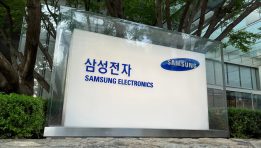
Samsung Electronics has proposed unconditional talks with its labor union in an effort to ease escalating tensions, even as the

- Lior mor
- •
- 8 Min Read
- •
- ago 3 hours
SKN | Will Anthropic’s $1.5 Billion Author Settlement Reshape AI Copyright Risk Across the Tech Sector?
A US federal judge is considering whether to approve Anthropic’s proposed $1.5 billion settlement in a lawsuit brought by authors
- ago 3 hours
- •
- 8 Min Read

A US federal judge is considering whether to approve Anthropic’s proposed $1.5 billion settlement in a lawsuit brought by authors
- sagi habasov
- •
- 8 Min Read
- •
- ago 13 hours
SKN | Lightwave Logic Surges as AI Data Center and Silicon Photonics Demand Accelerates
Lightwave Logic continued attracting significant investor attention as shares climbed more than 14% in recent trading activity. The stock has
- ago 13 hours
- •
- 8 Min Read

Lightwave Logic continued attracting significant investor attention as shares climbed more than 14% in recent trading activity. The stock has

- orshu
- •
- 8 Min Read
- •
- ago 13 hours
SKN | Nvidia Surpasses $5.5 Trillion Valuation as AI Boom Drives Historic Stock Rally
Nvidia extended its extraordinary market rally after its valuation reportedly surpassed $5.5 trillion, reinforcing its position as one of
- ago 13 hours
- •
- 8 Min Read
Nvidia extended its extraordinary market rally after its valuation reportedly surpassed $5.5 trillion, reinforcing its position as one of


