


- omer bar
- •
- 8 Min Read
- •
- 8 seconds ago
Key Points
- Alibaba Group and Tencent Holdings are facing growing investor pressure after aggressive artificial intelligence spending weighed on earnings and revenue growth.
- Alibaba has committed roughly $56 billion toward AI infrastructure and services over the next three years while prioritizing long-term AI expansion over short-term profitability.
- Both companies continue battling intense competition across AI, cloud computing, advertising, gaming, and digital commerce markets as Chinese technology rivals accelerate their own AI development efforts.

Alibaba and Tencent are facing renewed scrutiny from investors after recent earnings reports highlighted the growing financial burden tied to their artificial intelligence expansion strategies.
Although both companies remain among China’s dominant technology firms, recent quarterly results suggested that heavy AI investment has not yet translated into significantly stronger revenue growth.
Investors are increasingly questioning how quickly massive spending on AI infrastructure, models, cloud services, and user acquisition can generate sustainable profitability.
Alibaba Reports Weak Revenue Growth
Alibaba reported March-quarter revenue growth of approximately 3%, falling short of analyst expectations and intensifying concerns about slowing momentum within its core businesses.
The company also posted its first operating loss since early 2021 as rising AI investment costs pressured profitability.
Management has made clear that artificial intelligence development is now a strategic priority even if it weighs on near-term earnings performance.
Chief Executive Officer Eddie Wu told analysts that Alibaba may ultimately spend far more on AI than its previously announced targets.
Alibaba Expands AI Ecosystem Aggressively
Alibaba has pledged approximately 380 billion yuan, or roughly $56 billion, toward artificial intelligence initiatives over a three-year period.
The company is rapidly expanding its Qwen AI ecosystem while integrating AI capabilities across e-commerce, cloud computing, enterprise software, and digital services.
Management expects annual recurring revenue from AI models and services to reach approximately 10 billion yuan by June and potentially exceed 30 billion yuan by year-end.
Alibaba is also raising pricing for certain cloud and AI offerings while embedding Qwen technology into platforms such as Taobao.
Additionally, the company is developing enterprise-focused AI tools including WuKong and preparing a future listing for its T-Head semiconductor division after securing external customers such as China Unicom.
Tencent Also Faces AI Monetization Questions
Tencent is confronting similar investor concerns regarding whether its growing AI investments can meaningfully accelerate long-term growth.
The company has reportedly lost roughly $160 billion in market value this year as investors reassess profitability expectations and competitive risks.
Tencent recently upgraded its Hunyuan foundation AI model following a restructuring of its AI operations under former OpenAI researcher Yao Shunyu.
The company is also integrating technology from DeepSeek into its primary ChatGPT-style chatbot products.
Despite slowing overall revenue growth, Tencent’s advertising and gaming divisions remained more resilient than Alibaba’s broader business performance.
Competition Intensifies Across China’s AI Sector
Both companies are now competing in an increasingly crowded Chinese artificial intelligence market.
Rivals including Moonshot, MiniMax, ByteDance, and other domestic AI startups are rapidly expanding their own models, enterprise tools, and consumer-facing AI services.
The growing competition is forcing larger technology firms to spend aggressively on infrastructure, talent acquisition, semiconductors, cloud capacity, and AI product development.
At the same time, investors are becoming more focused on whether these enormous investments can produce durable monetization opportunities rather than simply fueling costly market share battles.
Broader Business Pressures Continue
Outside of AI, both Alibaba and Tencent continue facing pressure across several traditional business segments.
Alibaba remains locked in an expensive food delivery and e-commerce competition against rivals such as Meituan and JD.com.
Meanwhile, Tencent continues battling ByteDance for user engagement, advertising share, and digital platform dominance.
Even so, Tencent’s advertising business has remained relatively strong, with AI-driven targeting reportedly helping full-year advertising revenue grow nearly 20%.
AI Race Reshapes Chinese Technology Sector
The rapid expansion of artificial intelligence is fundamentally reshaping China’s technology industry as companies race to secure leadership positions across cloud infrastructure, enterprise software, semiconductors, and consumer AI applications.
Investors increasingly view AI as both a massive growth opportunity and a significant financial risk, particularly for firms spending aggressively without immediate profit acceleration.
Alibaba and Tencent remain among the most important players in this race, but market participants now appear increasingly focused on execution, monetization, and long-term return on investment rather than AI ambitions alone.
Comparison, examination, and analysis between investment houses
Leave your details, and an expert from our team will get back to you as soon as possible
* This article, in whole or in part, does not contain any promise of investment returns, nor does it constitute professional advice to make investments in any particular field.
To read more about the full disclaimer, click here
- sagi habasov
- •
- 8 Min Read
- •
- ago 2 hours
SKN | Is SK Hynix Closing in on a $1 Trillion Valuation as the AI Memory Boom Accelerates?
The rapid expansion of artificial intelligence infrastructure is reshaping global semiconductor demand, pushing memory chipmakers such as SK Hynix closer
- ago 2 hours
- •
- 8 Min Read

The rapid expansion of artificial intelligence infrastructure is reshaping global semiconductor demand, pushing memory chipmakers such as SK Hynix closer

- Ronny Mor
- •
- 7 Min Read
- •
- ago 3 hours
SKN | Can Alibaba’s AI Ambitions Offset Slowing Core Business Growth?
Alibaba Group is signaling a deeper strategic pivot toward artificial intelligence as growth in its core e-commerce and cloud segments
- ago 3 hours
- •
- 7 Min Read

Alibaba Group is signaling a deeper strategic pivot toward artificial intelligence as growth in its core e-commerce and cloud segments

- omer bar
- •
- 8 Min Read
- •
- ago 4 hours
SKN | Is AI Infrastructure Becoming a Philanthropic Investment Channel? Nvidia CEO’s Foundation Deploys $108 Million CoreWeave Compute Grant
A foundation associated with Nvidia CEO Jensen Huang has reportedly secured approximately $108 million worth of AI computing capacity from
- ago 4 hours
- •
- 8 Min Read
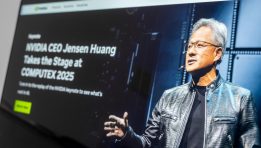
A foundation associated with Nvidia CEO Jensen Huang has reportedly secured approximately $108 million worth of AI computing capacity from

- Arik Arkadi Sluzki
- •
- 7 Min Read
- •
- ago 10 hours
SKN | Palantir Pulls Back as Investors Reassess AI Valuations and Government Spending Outlook
Palantir Technologies Inc. came under pressure during Tuesday’s trading session as investors reassessed valuations across artificial intelligence and software-related
- ago 10 hours
- •
- 7 Min Read

Palantir Technologies Inc. came under pressure during Tuesday’s trading session as investors reassessed valuations across artificial intelligence and software-related


