


- Lior mor
- •
- 8 Min Read
- •
- 19 seconds ago
Key Points
- L3Harris’ IPO could unlock hidden value by isolating a high-growth missile business in a strong demand environment.
- Government-backed investment enhances revenue visibility and reduces typical IPO uncertainty.
- The offering reflects a broader shift in investor sentiment toward defense as a long-term growth sector.

The global defense sector continues to attract investor attention as geopolitical tensions and military spending reshape capital markets. In this context, L3Harris Technologies has confidentially filed for an initial public offering (IPO) of its missile solutions unit, signaling a strategic move to unlock value while aligning with rising demand for advanced weapons systems. The development reflects a broader trend in defense contractors restructuring operations to capitalize on investor appetite for specialized, high-growth segments tied to national security priorities.
Strategic Separation to Unlock Value
L3Harris’ decision to spin off its missile solutions business comes at a time when capital markets are increasingly rewarding focused, pure-play companies. By separating this segment, the company aims to highlight the underlying growth profile of its rocket motor operations, which might otherwise be diluted within a diversified defense portfolio.
The IPO structure remains in early stages, with the number of shares and pricing yet to be determined. However, the confidential filing suggests management is positioning itself to move quickly when market conditions align. This approach allows flexibility while avoiding premature valuation pressures, a tactic often used by companies seeking to optimize timing in volatile equity markets.
Government Backing Signals Demand Stability
A key pillar of the offering is the previously announced $1 billion U.S. government convertible security investment. This funding mechanism is notable not only for its scale but also for its structure, as it will convert into equity upon the company’s public listing expected in 2026.
From a market perspective, this arrangement provides a rare level of demand visibility. The investment effectively secures long-term production capacity for critical missile components used in systems such as Tomahawk cruise missiles and Patriot air defense interceptors. For investors, this reduces one of the core risks typically associated with IPOs—uncertain future demand—by anchoring revenue expectations to government-backed procurement.
Growth Outlook and Market Positioning
According to CEO Chris Kubasik, the missile business is projected to deliver annual growth in the mid- to high-teen percentages. This growth trajectory stands out even within the defense sector, which is already experiencing elevated spending cycles driven by geopolitical tensions in Europe, the Middle East, and Asia.
The rocket motor segment, in particular, has become a bottleneck in global defense supply chains. Limited manufacturing capacity and increasing demand have elevated its strategic importance, turning it into a critical asset class within the broader defense ecosystem. By creating a standalone entity, L3Harris is effectively positioning the business as a key supplier in a constrained market, potentially commanding premium valuation multiples.
Investor Sentiment and Broader Implications
Investor psychology is likely to play a significant role in the success of this IPO. Defense stocks have historically traded at modest multiples due to regulatory risks and dependence on government contracts. However, recent shifts in global security dynamics have altered this perception, with investors increasingly viewing defense as a structural growth sector rather than a cyclical one.
The IPO also reflects a broader capital markets trend where governments and private investors are becoming more intertwined. The U.S. government’s direct financial involvement signals not only strategic necessity but also a willingness to support domestic industrial capacity through innovative financing structures.
Forward-Looking Perspective
Looking ahead, the success of the missile unit IPO will depend on market timing, valuation discipline, and sustained defense spending trends. Investors will closely monitor geopolitical developments, Pentagon budgets, and supply chain constraints, all of which could influence both demand and pricing power.
If executed effectively, the transaction could set a precedent for similar defense-sector carve-outs, reshaping how military contractors access capital. At the same time, risks remain, including potential budget shifts, political scrutiny, and execution challenges in scaling production capacity to meet growing demand.
Comparison, examination, and analysis between investment houses
Leave your details, and an expert from our team will get back to you as soon as possible
* This article, in whole or in part, does not contain any promise of investment returns, nor does it constitute professional advice to make investments in any particular field.
To read more about the full disclaimer, click here
- omer bar
- •
- 8 Min Read
- •
- ago 5 hours
SKN | SoftBank’s AI and Robotics IPO Plans Signal New Phase for Global Tech Capital Markets
SoftBank is preparing to list its artificial intelligence and robotics company Roze in the United States, according to a Financial
- ago 5 hours
- •
- 8 Min Read

SoftBank is preparing to list its artificial intelligence and robotics company Roze in the United States, according to a Financial

- Lior mor
- •
- 8 Min Read
- •
- ago 19 hours
SKN | Why Is Amadeus Acquiring Idemia Public Security — and What Does It Mean for Travel Tech?
Amadeus has announced a strategic €1.2 billion acquisition of Idemia Public Security, marking a significant expansion beyond its core travel
- ago 19 hours
- •
- 8 Min Read

Amadeus has announced a strategic €1.2 billion acquisition of Idemia Public Security, marking a significant expansion beyond its core travel
- Lior mor
- •
- 8 Min Read
- •
- ago 24 hours
SKN | Why Did TSMC Exit Arm Holdings — And What Does It Signal for Chip Market Strategy?
Taiwan Semiconductor Manufacturing Company, the world’s largest contract chipmaker, has completed its exit from Arm Holdings, closing a chapter that
- ago 24 hours
- •
- 8 Min Read
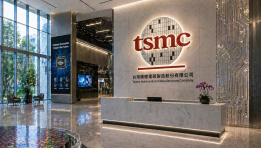
Taiwan Semiconductor Manufacturing Company, the world’s largest contract chipmaker, has completed its exit from Arm Holdings, closing a chapter that
- Lior mor
- •
- 8 Min Read
- •
- ago 2 days
SKN | Is Hongqi’s Push Into Europe via Stellantis a Strategic Shortcut or a Sign of Deeper Industry Realignment?
Chinese automaker Hongqi, long associated with state prestige and historical symbolism, is taking a pragmatic turn in its global ambitions.
- ago 2 days
- •
- 8 Min Read

Chinese automaker Hongqi, long associated with state prestige and historical symbolism, is taking a pragmatic turn in its global ambitions.


