


- Lior mor
- •
- 7 Min Read
- •
- 19 seconds ago
Key Points
- Tesla shares have fallen for eight consecutive weeks, underperforming the broader market in 2026.
- Investors are increasingly focused on upcoming catalysts in AI, robotics, and autonomous driving.
- High valuation levels continue to amplify pressure for tangible execution and near-term progress.
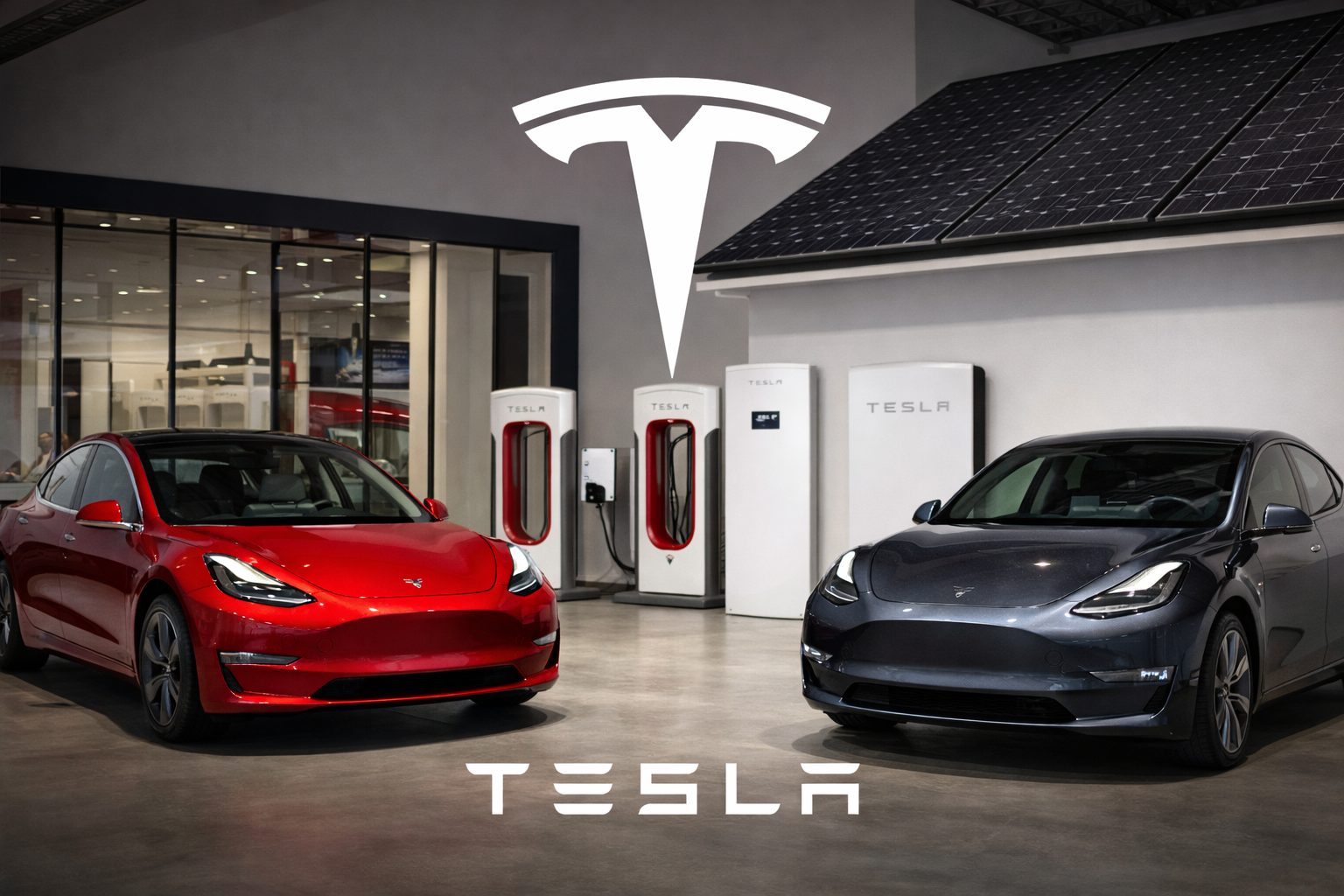
Tesla stock is extending a prolonged downturn, marking its eighth straight week of losses as investor patience begins to wear thin. The shares are down more than 22% year-to-date, significantly lagging the S&P 500, which has remained relatively stable over the same period.
The persistent decline reflects a growing disconnect between Tesla’s long-term vision and the market’s demand for near-term catalysts. With earnings approaching, attention is shifting toward whether the company can reignite momentum.
Valuation Pressure Builds as Growth Narrative Stalls
Tesla’s valuation remains one of the most debated aspects of the stock. With a forward price-to-earnings ratio near 170, the company is priced for aggressive future growth—particularly in artificial intelligence, robotics, and autonomous driving.
However, the lack of recent updates or breakthroughs in these areas has left investors searching for confirmation that the growth narrative is still intact.
Without clear progress, high expectations can quickly turn into downside pressure, as seen in the stock’s recent performance.
Robotics and AI Seen as Critical Catalysts
Much of Tesla’s long-term valuation is tied to its ambitions beyond electric vehicles. CEO Elon Musk has repeatedly emphasized the importance of AI and robotics, particularly through the Optimus humanoid robot program.
An expected update on the next version of Optimus could serve as a key catalyst, but the lack of recent communication has created uncertainty around timing and readiness.
While Tesla has indicated internal use of robots within its factories, the absence of commercial deployment keeps the narrative largely speculative for now.
Robotaxi Progress Lags Behind Competitors
Autonomous driving is another area where investors are seeking clarity. Tesla continues to operate supervised robotaxi services in limited regions, but fully autonomous deployment remains a key milestone.
In contrast, Waymo, a division of Alphabet, has made notable progress with largely unsupervised operations and expanding service areas.
This competitive gap is becoming increasingly relevant, as the market evaluates which companies are best positioned to dominate the future of autonomous mobility.
Core Auto Business Still Matters
While Tesla’s valuation is heavily influenced by its AI ambitions, its core automotive business remains a critical driver of near-term performance.
Updates related to vehicle demand, production, and new model rollouts could provide a more immediate catalyst for the stock. The company’s Cybercab initiative has reached production milestones, but commercialization timelines remain unclear.
In the absence of breakthroughs in AI or robotics, traditional automotive metrics may play a larger role in shaping investor sentiment.
Technical Weakness Reflects Investor Uncertainty
An eight-week losing streak is a strong technical signal, indicating sustained selling pressure and a lack of buying conviction.
Such extended declines often reflect broader uncertainty rather than a single negative event. In Tesla’s case, the combination of high valuation, limited updates, and competitive pressures has created a challenging environment for the stock.
However, prolonged weakness can also set the stage for sharp reversals if new catalysts emerge.
Outlook: All Eyes on Execution and Communication
Looking ahead, Tesla’s ability to reverse its downward trend will depend on delivering tangible progress across its key growth areas.
Updates on Optimus, robotaxi deployment, and AI capabilities could help restore confidence. At the same time, strong earnings results or positive developments in the automotive segment may provide near-term support.
Without these catalysts, the stock may continue to face pressure as investors reassess expectations.
Comparison, examination, and analysis between investment houses
Leave your details, and an expert from our team will get back to you as soon as possible
* This article, in whole or in part, does not contain any promise of investment returns, nor does it constitute professional advice to make investments in any particular field.
To read more about the full disclaimer, click here
- Ronny Mor
- •
- 5 Min Read
- •
- ago 4 hours
SKN | Is Warren Buffett Invested in McDonald’s? What Berkshire Hathaway’s Portfolio Reveals
Warren Buffett, widely regarded as one of the most influential investors globally, is often associated with iconic consumer brands—including
- ago 4 hours
- •
- 5 Min Read
Warren Buffett, widely regarded as one of the most influential investors globally, is often associated with iconic consumer brands—including

- sagi habasov
- •
- 5 Min Read
- •
- ago 4 hours
SKN | Bill Gates’ Portfolio Concentration—What His Top 3 Holdings Reveal About Long-Term Strategy
The Bill & Melinda Gates Foundation Trust, managing roughly $36 billion in assets, has allocated a significant portion of
- ago 4 hours
- •
- 5 Min Read

The Bill & Melinda Gates Foundation Trust, managing roughly $36 billion in assets, has allocated a significant portion of

- orshu
- •
- 6 Min Read
- •
- ago 4 hours
SKN | Palantir Volatility Deepens—Political Support Clashes With Investor Skepticism
Shares of Palantir Technologies came under pressure after a high-profile investor critique raised concerns about valuation and fundamentals, even
- ago 4 hours
- •
- 6 Min Read
Shares of Palantir Technologies came under pressure after a high-profile investor critique raised concerns about valuation and fundamentals, even

- Lior mor
- •
- 5 Min Read
- •
- ago 6 hours
SKN | AI Boom Still Runs on Chips—Why Semiconductors Remain the Core of the Trade
The global surge in artificial intelligence investment continues to center around one critical component: semiconductors. As AI adoption expands
- ago 6 hours
- •
- 5 Min Read
The global surge in artificial intelligence investment continues to center around one critical component: semiconductors. As AI adoption expands

