





- omer bar
- •
- 7 Min Read
- •
- 5 months ago


Key Points
- Levi Strauss beats earnings and revenue expectations while raising full-year guidance.
- Growth is split between volume gains and higher pricing, signaling mixed demand dynamics.
- Tariff assumptions could provide upside to earnings later in 2026.

Levi Strauss delivered a stronger-than-expected quarterly performance, surpassing Wall Street estimates on both revenue and earnings while lifting its full-year outlook. The results reflect a combination of resilient consumer demand and effective pricing strategies—but also raise questions about how sustainable this growth trajectory will be in a shifting economic environment.
Strong Earnings Beat Signals Operational Momentum
Levi Strauss & Co. reported adjusted earnings per share of $0.42, comfortably ahead of the $0.37 expected by analysts. Revenue came in at $1.74 billion, also beating forecasts of $1.65 billion and marking a 14% increase from the same period last year.
Net income rose to $175.8 million, up from $135 million a year earlier, highlighting improved profitability alongside top-line growth. The company’s performance indicates that demand for its core denim and apparel offerings remains solid despite broader macroeconomic pressures.
This level of outperformance suggests operational discipline and brand resilience, particularly in a consumer environment that has shown signs of uneven spending patterns.
Growth Driven by Both Volume and Pricing Power
A closer look at Levi’s growth reveals a balanced—but nuanced—story. Approximately half of the company’s revenue increase came from higher unit sales, while the remaining portion was driven by price increases.
This dual-driver model is significant. Volume growth signals continued consumer demand, while pricing power reflects brand strength and the ability to pass on costs without materially impacting sales.
However, reliance on pricing introduces a potential risk. If consumer sentiment weakens or price sensitivity increases, sustaining this level of pricing-driven growth may become more challenging.
The current environment suggests that Levi is benefiting from both demand resilience and strategic pricing—but maintaining both simultaneously could prove difficult over time.
Guidance Raised, but With Conservative Assumptions
Levi Strauss raised its full-year adjusted earnings guidance to a range of $1.42 to $1.48 per share, broadly in line with market expectations. The company also expects sales growth between 5.5% and 6.5%, slightly ahead of consensus estimates.
Notably, the guidance includes conservative assumptions around tariffs, specifically factoring in a 20% global tariff rate. With current U.S. policy closer to 10%, there is potential upside embedded in Levi’s outlook.
Management indicated that if lower tariffs persist, earnings could benefit by approximately $35 million, or about $0.07 per share. This introduces a macro-driven tailwind that could support performance in the second half of the year.
Macro Factors and Cost Pressures Remain Key Variables
While the earnings beat is encouraging, Levi’s outlook remains sensitive to external factors. Tariffs, currency movements, and global supply chain dynamics continue to influence both costs and margins.
The company also benefited from favorable foreign exchange conditions in the quarter, which may not persist at the same magnitude. Additionally, consumer spending patterns—particularly in discretionary categories like apparel—remain closely tied to inflation and economic confidence.
As a result, Levi’s performance must be viewed within the broader context of global retail trends and macroeconomic uncertainty.
Outlook: Can Levi Sustain Its Momentum?
Looking ahead, Levi Strauss appears well-positioned, supported by brand strength, pricing flexibility, and operational execution. However, the balance between volume growth and pricing power will be critical.
If consumer demand remains stable and tariff conditions improve, the company could outperform its current guidance. Conversely, any slowdown in spending or increased price sensitivity could pressure margins and growth.
For investors, Levi represents a case study in how legacy consumer brands are navigating a complex environment—leveraging both pricing and demand, while managing evolving macro risks.
Comparison, examination, and analysis between investment houses
Leave your details, and an expert from our team will get back to you as soon as possible
* This article, in whole or in part, does not contain any promise of investment returns, nor does it constitute professional advice to make investments in any particular field.
To read more about the full disclaimer, click here
- orshu
- •
- 8 Min Read
- •
- ago 15 hours
SKN | Five Below Wins Over Shoppers With a Major Strategy Shift: Can Its Value Model Sustain Double-Digit Growth?
Five Below is demonstrating that value retail can still generate strong growth when low prices are combined with a
- ago 15 hours
- •
- 8 Min Read
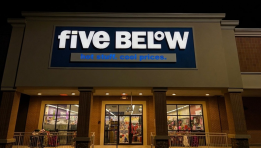
Five Below is demonstrating that value retail can still generate strong growth when low prices are combined with a

- omer bar
- •
- 7 Min Read
- •
- ago 22 hours
SKN | Foxconn Raises Third-Quarter Outlook as AI Demand Drives Stronger Server and ICT Activity
Foxconn has raised expectations for its third-quarter performance as accelerating artificial intelligence demand continues to support its server and
- ago 22 hours
- •
- 7 Min Read

Foxconn has raised expectations for its third-quarter performance as accelerating artificial intelligence demand continues to support its server and
- omer bar
- •
- 7 Min Read
- •
- ago 2 days
SKN | Why Did Asana Stock Fall 13% Despite Beating Earnings Expectations?
Asana shares suffered a sharp sell-off after investors focused less on the company's latest earnings beat and more on the
- ago 2 days
- •
- 7 Min Read

Asana shares suffered a sharp sell-off after investors focused less on the company's latest earnings beat and more on the

- Arik Arkadi Sluzki
- •
- 8 Min Read
- •
- ago 2 days
SKN | Central Banks Keep Buying Gold as China and Poland Lead July Reserve Accumulation
Central banks continued to accumulate gold in July, reinforcing one of the most persistent structural themes in global bullion
- ago 2 days
- •
- 8 Min Read
Central banks continued to accumulate gold in July, reinforcing one of the most persistent structural themes in global bullion

