


- omer bar
- •
- 6 Min Read
- •
- 11 seconds ago
Key Points
- SGOL provides direct exposure to physical gold, offering a hedge against inflation and currency risk.
- Gold’s historical role as a store of value supports portfolio resilience during macro uncertainty.
- ETF structure enables liquidity and accessibility without the need for physical ownership.

As inflation remains a persistent concern across global markets, investors are increasingly turning to assets that can preserve purchasing power. The Aberdeen Standard Physical Gold Shares ETF (NYSE Arca: SGOL) has emerged as a key instrument, offering direct exposure to physical gold within a liquid, exchange-traded structure.
Gold as a Strategic Inflation Hedge
Gold has long been regarded as a store of value, particularly during periods of rising inflation and economic instability. Unlike fiat currencies, which can lose purchasing power over time, gold tends to retain intrinsic value, making it a widely used hedge in diversified portfolios.
SGOL tracks the price of gold by holding allocated physical bullion stored in secure vaults, primarily in Switzerland. This structure allows investors to gain exposure to gold price movements without the logistical complexities associated with direct ownership.
In inflationary environments, gold often benefits from declining real interest rates, as the opportunity cost of holding non-yielding assets decreases. For investors in Israel and globally, this dynamic reinforces gold’s role as a stabilizing component in portfolios exposed to currency volatility and macroeconomic risk.
Portfolio Diversification and Risk Management
One of SGOL’s key advantages lies in its ability to enhance portfolio diversification. Gold typically exhibits low or negative correlation with traditional asset classes such as equities and bonds, particularly during periods of market stress.
This characteristic makes SGOL a valuable tool for mitigating downside risk. During equity market drawdowns or geopolitical events, gold prices often rise or remain stable, providing a counterbalance to losses in other parts of a portfolio.
Additionally, the ETF structure offers high liquidity and transparency, allowing investors to adjust exposure efficiently in response to changing market conditions. This flexibility is particularly important in volatile environments where rapid shifts in sentiment can occur.
Macro Drivers and Market Sensitivity
The performance of SGOL is closely tied to broader macroeconomic factors, including interest rate trends, US dollar strength, and geopolitical developments. A weaker dollar and lower real yields typically support gold prices, while rising yields can exert downward pressure.
Central bank policies also play a critical role. As monetary authorities navigate inflation and growth trade-offs, shifts in policy expectations can influence gold demand. In recent years, increased central bank gold purchases have further supported the asset’s long-term outlook.
For global investors, including those in Israel, exposure to SGOL provides a way to hedge against both local and international risks, particularly in an environment characterized by uncertainty and evolving economic conditions.
Looking ahead, SGOL’s role in portfolios will depend on the trajectory of inflation, interest rates, and global risk sentiment. Investors are likely to monitor central bank actions, currency movements, and geopolitical developments as key drivers of gold prices. While gold does not generate income, its ability to preserve value and provide diversification makes it a relevant component in strategies designed to withstand economic volatility. As markets continue to adjust to shifting macro conditions, SGOL remains positioned as a tactical and strategic tool for risk management in diversified portfolios.
Comparison, examination, and analysis between investment houses
Leave your details, and an expert from our team will get back to you as soon as possible
* This article, in whole or in part, does not contain any promise of investment returns, nor does it constitute professional advice to make investments in any particular field.
To read more about the full disclaimer, click here
- Ronny Mor
- •
- 7 Min Read
- •
- ago 19 hours
SKN | Is SIXG Quietly Emerging as the Next Big Bet in Connectivity and Space Tech?
The Defiance Connective Technologies ETF (SIXG) rose 3.37% to $71.71, extending its recent upward trend and drawing attention to one
- ago 19 hours
- •
- 7 Min Read
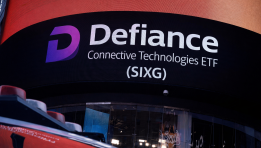
The Defiance Connective Technologies ETF (SIXG) rose 3.37% to $71.71, extending its recent upward trend and drawing attention to one

- orshu
- •
- 6 Min Read
- •
- ago 23 hours
SKN | US Oil Fund (USO) Surges as Energy Markets Tighten — Momentum Builds in Crude Exposure
The United States Oil Fund, LP (NYSEArca: USO) moved significantly higher on April 2, rising by 11.05% to trade
- ago 23 hours
- •
- 6 Min Read

The United States Oil Fund, LP (NYSEArca: USO) moved significantly higher on April 2, rising by 11.05% to trade

- sagi habasov
- •
- 5 Min Read
- •
- ago 1 day
SKN | Managing Nasdaq Volatility with ProShares UltraPro Short QQQ (SQQQ)
Recent volatility in the technology sector has renewed investor focus on risk management strategies, with ProShares UltraPro Short QQQ (SQQQ)
- ago 1 day
- •
- 5 Min Read

Recent volatility in the technology sector has renewed investor focus on risk management strategies, with ProShares UltraPro Short QQQ (SQQQ)
- orshu
- •
- 6 Min Read
- •
- ago 2 days
SKN | Gold ETF Gains Momentum — Is iShares Gold Trust (IAU) Reflecting Renewed Safe-Haven Demand?
The iShares Gold Trust (NYSEARCA: IAU) is trading higher on April 1, reaching 89.79 as investors rotate toward safe-haven
- ago 2 days
- •
- 6 Min Read

The iShares Gold Trust (NYSEARCA: IAU) is trading higher on April 1, reaching 89.79 as investors rotate toward safe-haven

