


- sagi habasov
- •
- 6 Min Read
- •
- 15 seconds ago
Key Points
- Hyundai’s Boulder concept highlights a stronger “built in America” strategy amid evolving trade and policy dynamics.
- Localization of production aims to reduce costs and geopolitical risk while improving market competitiveness.
- EV and innovation focus remain central to Hyundai’s long-term growth strategy.

Hyundai Motor’s unveiling of its Boulder concept underscores a broader strategic pivot toward localized manufacturing in the United States. The move comes as global automakers increasingly respond to policy incentives, supply chain risks, and shifting trade dynamics, particularly within the electric vehicle (EV) sector.
Localization Strategy Gains Momentum
The Boulder concept represents more than a design showcase—it signals Hyundai’s commitment to expanding its US-based manufacturing footprint. As governments incentivize domestic production, particularly through legislation tied to clean energy and EV adoption, automakers are adjusting their strategies to align with regulatory frameworks.
Producing vehicles locally allows Hyundai to benefit from tax credits and avoid tariffs, while also reducing logistical costs associated with global supply chains. This shift reflects a broader industry trend where localization is becoming a key competitive factor.
For investors, this strategy highlights Hyundai’s proactive approach to navigating an increasingly complex geopolitical and economic landscape.
EV Transition and Competitive Positioning
The Boulder concept also aligns with Hyundai’s ongoing investment in electric vehicle platforms and next-generation mobility solutions. As competition intensifies in the EV market, automakers are focusing on innovation, design, and scalability to differentiate their offerings.
Hyundai has positioned itself as a strong competitor in the EV space, with a growing lineup of electric models and continued investment in battery technology. The emphasis on US production may further enhance its ability to compete with domestic manufacturers benefiting from local incentives.
This development is particularly relevant for global investors, including those in Israel, where interest in EV technologies and sustainable transportation continues to grow.
Supply Chain Resilience and Strategic Implications
The shift toward domestic production also reflects lessons learned from recent supply chain disruptions. By localizing manufacturing, Hyundai aims to improve supply chain resilience and operational flexibility, reducing dependence on international shipping and external suppliers.
This approach can mitigate risks associated with geopolitical tensions, trade restrictions, and fluctuating transportation costs. It also allows for faster response times to changes in consumer demand, an important factor in a rapidly evolving automotive market.
However, the transition requires significant capital investment and operational adjustments, which may impact short-term margins. Balancing these costs with long-term benefits will be critical for Hyundai’s financial performance.
Looking ahead, Hyundai’s “built in America” strategy will likely play a central role in its global growth trajectory. Investors will monitor developments in production capacity, EV adoption rates, and policy support as key indicators of success. While localization offers clear strategic advantages, execution risks and competitive pressures remain. As the automotive industry continues to evolve, Hyundai’s ability to integrate innovation, efficiency, and regional alignment will determine its positioning in an increasingly competitive global market.
Comparison, examination, and analysis between investment houses
Leave your details, and an expert from our team will get back to you as soon as possible
* This article, in whole or in part, does not contain any promise of investment returns, nor does it constitute professional advice to make investments in any particular field.
To read more about the full disclaimer, click here
- Lior mor
- •
- 9 Min Read
- •
- ago 4 hours
SKN | Are Middle East Shipping Disruptions Threatening Hyundai’s Global Supply Chain Stability?
Hyundai Motor has warned that escalating conflict in the Middle East is disrupting key export routes, underscoring how geopolitical instability
- ago 4 hours
- •
- 9 Min Read
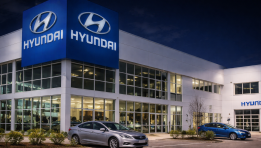
Hyundai Motor has warned that escalating conflict in the Middle East is disrupting key export routes, underscoring how geopolitical instability

- Ronny Mor
- •
- 8 Min Read
- •
- ago 6 hours
SKN | Are Rising Geopolitical Risks and Trade Tensions About to Disrupt U.S. Market Momentum?
U.S. stock futures slipped slightly on Friday, reflecting a cautious tone among investors heading into the Good Friday market closure.
- ago 6 hours
- •
- 8 Min Read

U.S. stock futures slipped slightly on Friday, reflecting a cautious tone among investors heading into the Good Friday market closure.
- Lior mor
- •
- 7 Min Read
- •
- ago 7 hours
SKN | Can Microsoft’s $10 Billion Japan Bet Redefine the Global AI and Cybersecurity Landscape?
Microsoft’s announcement of a ¥1.6 trillion ($10 billion) investment in Japan marks a pivotal moment in the global race for
- ago 7 hours
- •
- 7 Min Read

Microsoft’s announcement of a ¥1.6 trillion ($10 billion) investment in Japan marks a pivotal moment in the global race for

- orshu
- •
- 7 Min Read
- •
- ago 12 hours
SKN | Asia Markets Open Mixed on April 03, 2026 as Nikkei Surges While Regional Weakness Deepens
Asian markets opened on Friday, April 03, 2026, with a sharply mixed performance as gains in Japan contrasted against widespread
- ago 12 hours
- •
- 7 Min Read

Asian markets opened on Friday, April 03, 2026, with a sharply mixed performance as gains in Japan contrasted against widespread

