


- omer bar
- •
- 7 Min Read
- •
- 15 seconds ago
Key Points
- Ukraine’s drone attacks have disabled roughly 40% of storage capacity at Russia’s Primorsk oil terminal.
- Disruptions extend across key Baltic export hubs, including Ust-Luga, impacting logistics and flows.
- The situation raises concerns over global supply stability and potential upward pressure on oil prices.
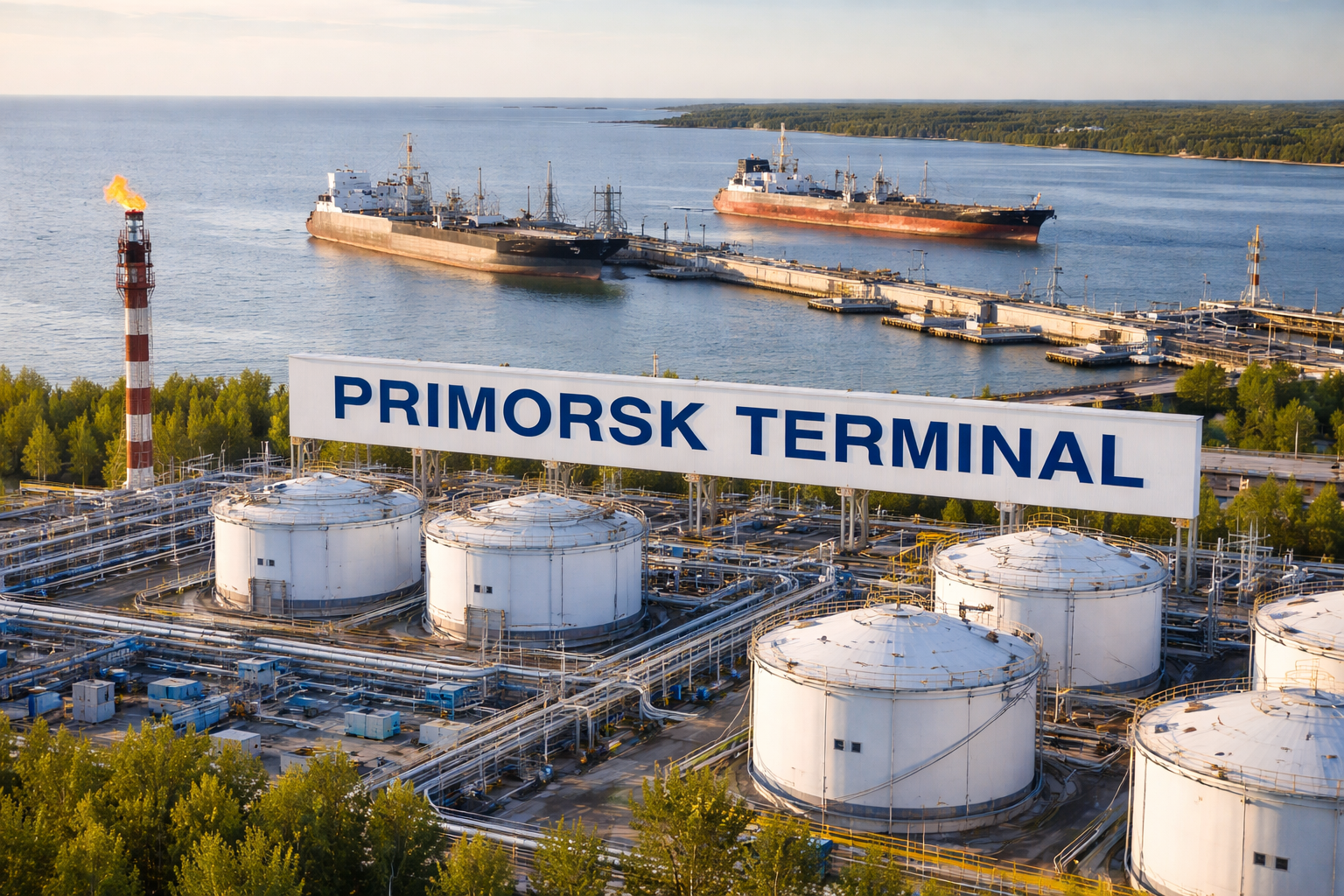
A new wave of Ukrainian drone strikes targeting Russia’s critical energy infrastructure is beginning to ripple through global oil markets. Satellite imagery indicates that the Primorsk terminal—one of Russia’s largest export gateways—has lost at least 40% of its storage capacity following sustained attacks. Combined with disruptions to pipeline routes and tanker seizures, the developments highlight how geopolitical conflict is increasingly intersecting with energy logistics, introducing new volatility into an already fragile supply environment.
Primorsk Damage Signals Strategic Disruption
Primorsk plays a pivotal role in Russia’s oil export system, with the capacity to handle approximately 1 million barrels per day—nearly 1% of global oil supply. Damage to at least eight large storage reservoirs, each capable of holding 50,000 cubic meters, represents a significant operational setback. Storage infrastructure is not merely passive capacity; it is central to maintaining flow continuity, blending operations, and shipment scheduling.
The loss of such capacity is likely to reduce throughput efficiency, forcing exporters to either delay shipments or reroute volumes through alternative, potentially less efficient channels. From a market perspective, this introduces logistical friction that can tighten effective supply even if upstream production remains unchanged.
Broader Baltic Disruptions Amplify Supply Risks
The impact extends beyond Primorsk. The nearby Ust-Luga port has also faced repeated attacks, leading to temporary suspensions of loading operations. Satellite data indicates that approximately a quarter of its storage capacity has been damaged, including multiple oil product reservoirs affected by fires.
These coordinated disruptions across multiple nodes of Russia’s export network suggest a strategic effort to constrain energy flows rather than isolated incidents. The Baltic Sea corridor is a critical artery for Russian crude and refined products reaching global markets, particularly Europe and parts of Asia. Any sustained impairment in this region could force a reshaping of trade routes, potentially increasing transportation costs and delivery times.
Market Implications and Investor Sentiment
From a market standpoint, the immediate question is whether these disruptions will translate into sustained price pressure. Historically, oil markets tend to react not only to actual supply losses but also to perceived risks of escalation. The temporary shutdown of infrastructure handling up to 1% of global supply is material, particularly in a market already sensitive to geopolitical developments.
Investor psychology plays a crucial role here. Even partial disruptions can trigger precautionary positioning, with traders pricing in risk premiums. This can amplify price movements beyond what fundamentals alone would justify. Additionally, uncertainty surrounding the duration of outages and the potential for further attacks adds a layer of unpredictability that markets typically discount conservatively.
Geopolitical Escalation and Energy Security Outlook
The Kremlin has characterized the strikes as terrorist attacks, signaling the potential for further escalation. At the same time, Russia is likely to increase defensive measures around critical infrastructure, though the effectiveness of such efforts remains uncertain given the evolving nature of drone warfare.
Looking Ahead
The key variables will include the pace of infrastructure repairs, the frequency of additional strikes, and the ability of global markets to absorb logistical disruptions. For energy-importing nations, particularly in Europe, these developments may reinforce the urgency of diversification strategies and energy security planning. For investors, the evolving situation underscores the importance of closely monitoring geopolitical risk alongside traditional supply-demand metrics, as the intersection of conflict and infrastructure becomes an increasingly dominant force in shaping energy markets.
Comparison, examination, and analysis between investment houses
Leave your details, and an expert from our team will get back to you as soon as possible
* This article, in whole or in part, does not contain any promise of investment returns, nor does it constitute professional advice to make investments in any particular field.
To read more about the full disclaimer, click here
- Lior mor
- •
- 7 Min Read
- •
- ago 1 day
SKN | Can Intel’s Fab 34 Buyback and Debt Bet Reinforce Its Semiconductor Comeback?
Strategic Buyback Signals Confidence in Core Manufacturing Intel is doubling down on its manufacturing strategy, announcing that it will fund
- ago 1 day
- •
- 7 Min Read

Strategic Buyback Signals Confidence in Core Manufacturing Intel is doubling down on its manufacturing strategy, announcing that it will fund
- Lior mor
- •
- 7 Min Read
- •
- ago 1 day
SKN | Energy Shock Reorders Trade: Are Asian Buyers Turning to Russian Oil Out of Necessity?
The escalation of conflict in the Middle East has sent shockwaves through global energy markets, pushing Asian economies into a
- ago 1 day
- •
- 7 Min Read

The escalation of conflict in the Middle East has sent shockwaves through global energy markets, pushing Asian economies into a

- Ronny Mor
- •
- 9 Min Read
- •
- ago 2 days
SKN | Why Are Oil Prices Swinging Wildly as War Signals and Supply Shocks Collide?
Oil prices ended a turbulent month with heightened volatility, as traders navigated a complex mix of geopolitical developments and physical
- ago 2 days
- •
- 9 Min Read

Oil prices ended a turbulent month with heightened volatility, as traders navigated a complex mix of geopolitical developments and physical
- Lior mor
- •
- 9 Min Read
- •
- ago 2 days
SKN | Can Oil Prices Stabilize as War Strategy Shifts but Supply Disruptions Persist?
Oil markets swung sharply as traders digested reports that U.S. President Donald Trump may seek to end military operations in
- ago 2 days
- •
- 9 Min Read

Oil markets swung sharply as traders digested reports that U.S. President Donald Trump may seek to end military operations in

