


- Lior mor
- •
- 7 Min Read
- •
- 5 seconds ago
Key Points
- Tesla’s Q1 deliveries missed expectations, signaling continued demand softness.
- Rising global competition and policy shifts are reshaping EV market dynamics.
- Investor optimism remains tied to long-term bets on autonomy and AI-driven growth.
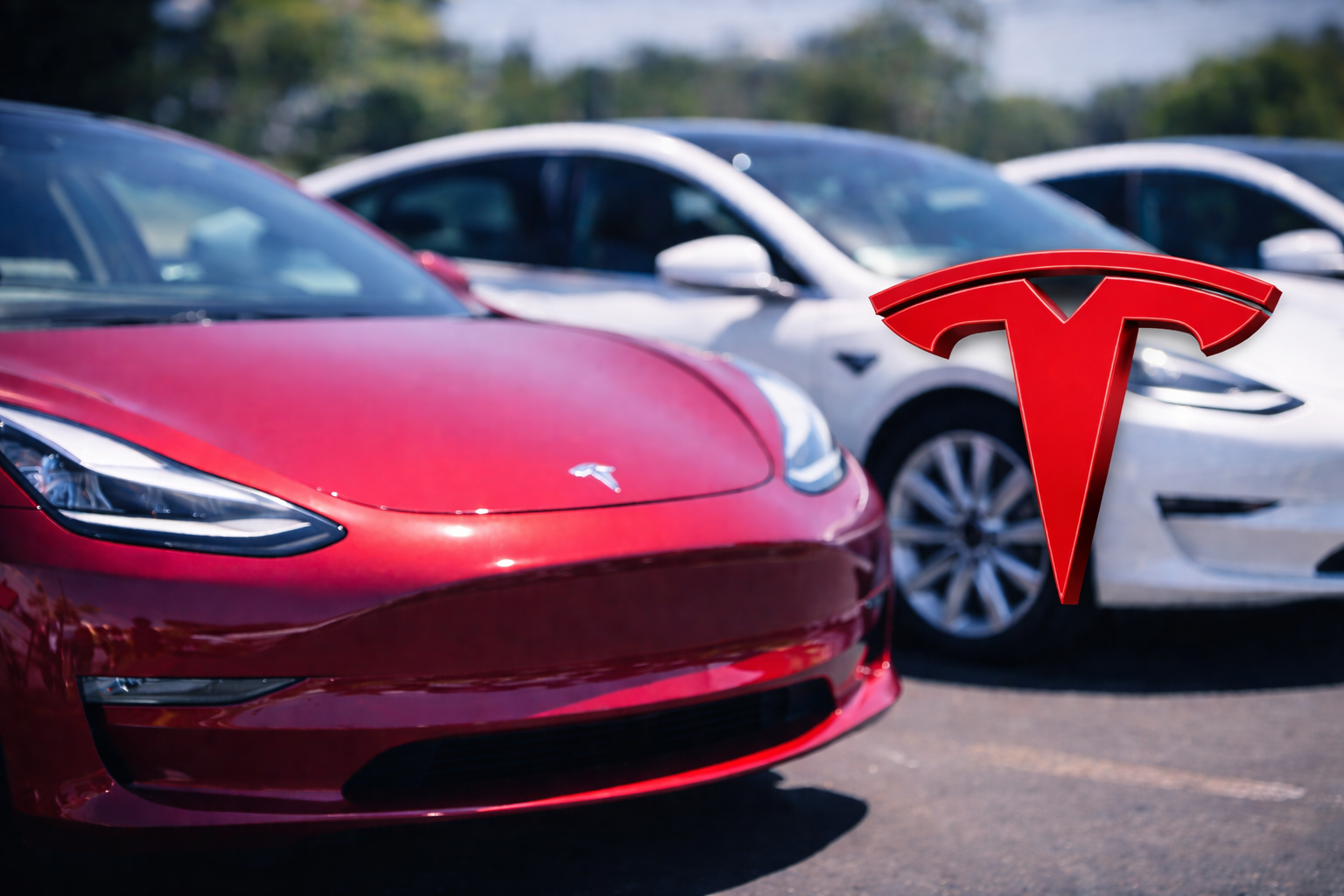
Tesla’s first-quarter delivery report has reignited debate over whether the electric vehicle leader is facing a cyclical slowdown or a deeper structural shift in demand. Deliveries reached 358,023 vehicles, falling short of the roughly 364,645 units expected by Wall Street. While the figure still represents modest year-over-year growth, it comes against a weak comparison base and highlights mounting pressure across Tesla’s core markets. The reaction in equity markets was immediate, with shares slipping in early trading amid broader geopolitical concerns and investor unease about growth sustainability.
Delivery Miss Reflects Demand Friction and Transition Challenges
Tesla’s delivery shortfall cannot be viewed in isolation. The company is navigating a transition phase, particularly with the rollout of its updated Model Y, which temporarily disrupted production and sales momentum. Total production reached over 408,000 vehicles, indicating that supply capacity remains intact, but demand conversion appears less robust than in previous cycles.
The marginal year-over-year growth also masks a more concerning trend. Tesla has now experienced two consecutive years of declining annual deliveries after peaking in 2023. This suggests that the company is no longer operating in a pure hyper-growth phase, but rather entering a more mature and competitive stage of the EV adoption curve.
Global Competition and Policy Shifts Intensify Pressure
Tesla’s challenges are increasingly global in nature. In the United States, the expiration of federal EV tax credits has materially impacted demand elasticity, contributing to weaker sequential sales trends. In Europe, brand perception issues and intensifying competition from legacy automakers such as Volkswagen, alongside aggressive Chinese entrants, have eroded Tesla’s market share.
Asia presents perhaps the most acute competitive threat. Domestic manufacturers, particularly Chinese EV leaders, are offering comparable technology at significantly lower price points. This pricing pressure forces Tesla into a difficult balancing act between maintaining margins and defending volume.
Beyond competition, political and reputational factors have also played a role. Backlash tied to CEO Elon Musk’s political involvement has, at times, translated into consumer sentiment shifts, demonstrating how brand equity can influence purchasing behavior in a highly visible global company.
Energy Segment and Diversification Efforts
Tesla’s energy business, often positioned as a secondary growth engine, showed mixed signals. The deployment of 8.8 GWh of energy storage products marked a decline from the previous quarter’s 14.2 GWh, suggesting some near-term volatility in non-automotive revenue streams.
While the energy division remains strategically important—particularly as grid-scale storage demand rises globally—it has yet to fully offset fluctuations in the core automotive segment. Investors continue to watch this division closely as a potential stabilizer in Tesla’s broader revenue mix.
Valuation Resilience Driven by Long-Term Narrative
Despite operational headwinds, Tesla’s stock performance reflects a disconnect between current fundamentals and future expectations. Shares remain significantly higher on a year-over-year basis, even after a notable pullback in early 2026.
This resilience is largely driven by investor belief in Tesla’s long-term innovation pipeline. Autonomous driving technology, robotaxi networks, humanoid robotics, and broader AI integration are central to the company’s valuation narrative. In addition, external factors such as potential developments linked to Musk’s broader ecosystem continue to influence sentiment.
Looking ahead
Tesla’s upcoming earnings report will be critical in clarifying whether demand softness is temporary or indicative of a longer-term recalibration. Investors should closely monitor pricing strategies, margin trends, and updates on autonomy initiatives. The evolving competitive landscape, coupled with macroeconomic and geopolitical uncertainties, suggests that volatility will remain a defining feature of Tesla’s trajectory in the near term.
Comparison, examination, and analysis between investment houses
Leave your details, and an expert from our team will get back to you as soon as possible
* This article, in whole or in part, does not contain any promise of investment returns, nor does it constitute professional advice to make investments in any particular field.
To read more about the full disclaimer, click here
- sagi habasov
- •
- 8 Min Read
- •
- ago 6 hours
SKN | Do Strong Q4 Results and Higher Shareholder Returns Signal a Turning Point for Signet Jewelers?
Signet Jewelers (NYSE: SIG) has strengthened its near-term investment narrative following robust fourth-quarter results and an increase in shareholder returns.
- ago 6 hours
- •
- 8 Min Read

Signet Jewelers (NYSE: SIG) has strengthened its near-term investment narrative following robust fourth-quarter results and an increase in shareholder returns.

- omer bar
- •
- 9 Min Read
- •
- ago 9 hours
SKN | Is Pop Mart’s $33 Billion Selloff a Warning That the Labubu Craze Has Peaked?
Pop Mart International Group Ltd. is facing a sharp reversal in fortune, as a prolonged selloff underscores growing skepticism over
- ago 9 hours
- •
- 9 Min Read

Pop Mart International Group Ltd. is facing a sharp reversal in fortune, as a prolonged selloff underscores growing skepticism over

- Arik Arkadi Sluzki
- •
- 6 Min Read
- •
- ago 17 hours
SKN | Penguin Solutions (PENG) Surges 13.7% After Q1 Beat — Sustainable Momentum or Short-Term Spike?
Penguin Solutions (NASDAQ: PENG) delivered a stronger-than-anticipated first-quarter performance, sending its stock up roughly 13.7% in a single session.
- ago 17 hours
- •
- 6 Min Read

Penguin Solutions (NASDAQ: PENG) delivered a stronger-than-anticipated first-quarter performance, sending its stock up roughly 13.7% in a single session.
- sagi habasov
- •
- 6 Min Read
- •
- ago 22 hours
SKN | Nike Stock Drops After Earnings — What Are the Key Risks and Turning Points Ahead?
Nike, Inc. (NYSE: NKE) saw its stock decline following its latest earnings report, as investors reacted to signs of
- ago 22 hours
- •
- 6 Min Read

Nike, Inc. (NYSE: NKE) saw its stock decline following its latest earnings report, as investors reacted to signs of

